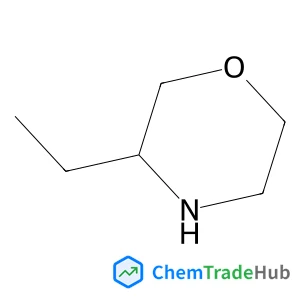
![2,2'-[(Abieta-8,11,13-trien-18-ylimino)bis(2,1-ethanediyloxy)]diethanol structure](https://static.chemtradehub.com/structs/513/51344-62-8-8518.webp "2,2'-[(Abieta-8,11,13-trien-18-ylimino)bis(2,1-ethanediyloxy)]diethanol structure")
2,2'-[(Abieta-8,11,13-trien-18-ylimino)bis(2,1-ethanediyloxy)]diethanol
CAS番号:
51344-62-8
分子式:
C28H47NO4
Chaewon Song, Dasol Jin, Subin Choi, Youngmi Lee
Electrospun RuxCr1−xOy nanomaterials were produced using an electrospinning technique followed by a thermal annealing process under oxidative atmospheric conditions. The morphology of the materials was controlled by adjusting the atmospheric O2 concentration during calcination, resulting in various shapes, including core–shell structures and nanofibers. The electrocatalytic activity of RuxCr1−xOy nanomaterials for the oxygen evolution reaction (OER) was assessed with voltammetry under various pH conditions. Specifically, RuxCr1−xOy_20 nanofibers (synthesized in a calcination environment composed of 20% oxygen and 80% helium gases), featuring a fiber-in-tube structure, exhibited the lowest potentials (V vs. RHE) at 10 mA cm−2, reaching 1.47 V under alkaline, 1.49 V under neutral, and 1.44 V under acidic conditions. Furthermore, these nanomaterials displayed the smallest Tafel slopes of 37.5 mV dec−1 in alkaline, 68.9 mV dec−1 in neutral, and 40.8 mV dec−1 in acidic environments. These results clearly indicate the superior OER activity of RuxCr1−xOy_20 in comparison to that of commercial Ir (Ir/C), pure RuOx (Ru/RuO2), and Ru-based electrocatalysts reported in the literature. Additionally, it displayed remarkable stability over 20 h continuous chronopotentiometry tests across all pH ranges and facilitated the desorption of oxygen bubbles generated during the OER process, leading to improved OER activity. The unique core–shell structure of RuxCr1−xOy_20, which dilutes expensive Ru with cheap Cr, presents excellent feasibility as a practical and cost-effective OER catalyst, especially considering the scarcity of pH-universal OER catalysts reported.
Charlotte E. Ellis, Tomoya Fukui, Cristina Cordoba, Arthur Blackburn, Ian Manners
DOI: 10.1039/D1PY00571E
R. R. Gibson, A. Fernyhough, O. M. Musa, S. P. Armes
DOI: 10.1039/D1PY00572C
Chen-Lu He, Zeyu Feng, Yan Li, Manman Zhou, Liyang Zhao, Sizhen Shan, Mengqiao Wang, Xin Chen, Xi-Sheng Wang, Gang Zou
DOI: 10.1039/D1PY00082A
Simone Lazar, Ruiqing Shen, Yufeng Quan, Bethany Palen, Qingsheng Wang, Christopher J. Ellison
DOI: 10.1039/D1PY00111F
Matilde Concilio, Nga Nguyen, C. Remzi Becer
DOI: 10.1039/D1PY00534K
Georg M. Scheutz, Justine Elgoyhen, Kyle C. Bentz, Hao Sun, Junpeng Zhao, Daniel A. Savin, Brent S. Sumerlin
DOI: 10.1039/D1PY00780G
Eleftheria Dossi, Jacob Earnshaw, Laurence Ellison, Gabriella Rabello dos Santos, Hamish Cavaye, Douglas J. Cleaver
DOI: 10.1039/D1PY00233C
Shunsuke Ohtani, Natsumi Yamada, Masayuki Gon, Kazuo Tanaka, Yoshiki Chujo
DOI: 10.1039/D1PY00213A
CAS番号66981-77-9の噻奈普汀乙酯は、結晶性白色粉末であり、分子量は476.9 g/molです。この化合物は水に溶けにくく、一般的には有機溶媒で溶解し...
アミピシリン不純物Fは、CAS番号124774-48-7の化合物です。これは、抗生物質アミピシリンの生産過程で生成される不純物の一つであり、(4S)-2-({[...
イリジウム(I)ヘキサフルオロフォスファートの代替品として、他の有機金属化合物や非有機金属化合物が使用されることがあります。具体的には、ダイゾニウム塩や他の金属...
含有3-(苯氧基甲基)苯硼酸频那醇酯の廃棄物は、安全な方法で処理する必要があります。まず、廃棄物を適切な容器に収集し、避けて保管します。次に、専門の廃棄処理業者...
取り扱う際は、密閉のゴーグルと手袋を着用することが推奨されます。ドラフトチャンバーを使用し、漏洩時には速やかに取り扱いを中止し、適切な排気設備を使用してください...
3α-アセトキノイドコレステロールエステルは、常温から低温(0-5℃)の暗所で保存し、密閉容器に入れることで安定性を保つことが推奨されます。また、湿気や酸素から...
2-ぶンジロキシ-4-(トリフルオロメチル)フェノルビノン酸は、化学合成の触媒としての使用や、医薬品の合成材料としての役割があります。また、特定の合成路線で使用...
(2S,3R)-2-氨基-3-甲基丁二酸は、2-ヒドロキシ-3-メチル丁酸とアミノ化反応を行うことで合成されます。触媒としてジクロロメタンが使用され、選択性と収...
この化合物は常温で避けてください。直射日光を避け、密閉容器で保存し、湿気を防水の容器に入れて保管してください。

Journal of Materials Chemistry A, B & C cover high quality studies across all fields of materials chemistry. The journals focus on those theoretical or experimental studies that report new understanding, applications, properties and synthesis of materials. The journals have a strong history of publishing quality reports of interest to interdisciplinary communities and providing an efficient and rigorous service through peer review and publication. The journals are led by an international team of Editors-in-Chief and Associate Editors who are all active researchers in their fields. Journal of Materials Chemistry A, B & C are separated by the intended application of the material studied. Broadly, applications in energy and sustainability are of interest to Journal of Materials Chemistry A, applications in biology and medicine are of interest to Journal of Materials Chemistry B, and applications in optical, magnetic and electronic devices are of interest to Journal of Materials Chemistry C. More than one Journal of Materials Chemistry journal may be suitable for certain fields and researchers are encouraged to submit their paper to the journal that they feel best fits for their particular article. Example topic areas within the scope of Journal of Materials Chemistry A are listed below. This list is neither exhaustive nor exclusive. Artificial photosynthesis Batteries Carbon dioxide conversion Catalysis Fuel cells Gas capture/separation/storage Green/sustainable materials Hydrogen generation Hydrogen storage Photocatalysis Photovoltaics Self-cleaning materials Self-healing materials Sensors Supercapacitors Thermoelectrics Water splitting Water treatment
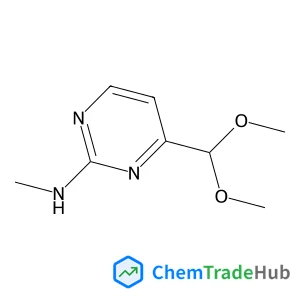
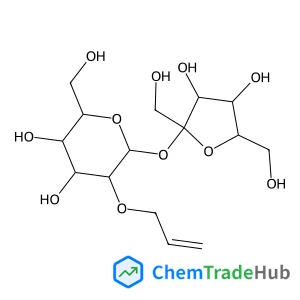
methanone structure](https://static.chemtradehub.com/structs/814/81449-01-6-786d.webp "[4-(Hydroxymethyl)phenyl](phenyl)methanone structure")