












methanone structure](https://static.chemtradehub.com/structs/814/81449-01-6-786d.webp "[4-(Hydroxymethyl)phenyl](phenyl)methanone structure")
rGO coated cotton fabric and thermoelectric module arrays for efficient solar desalination and electricity generation
文献情報
出版日
2023-11-29
DOI
10.1039/D3TA04715F
インパクトファクター
12.732
著者
Amrit Kumar Thakur, Wayesh Qarony, Md Shamim Ahamed, Y. Ma
原文を見る
要旨
One promising solution to the freshwater crisis is solar-driven interfacial evaporation-based desalination. However, an alternate strategy is needed to address both water and energy shortages in parallel. Additionally, the disposal of desalination brine necessitates specific consideration while designing a sustainable solar interfacial desalination system. Herein, we demonstrate a single system that utilizes incident solar irradiance to produce interfacial steam using reduced graphene oxide (rGO) coated cotton fabric (CF) to desalinate seawater with an evaporation efficiency of 86.98%. The high thermal conductivity and excellent optical absorption of rGO contribute to the absorption of a broad solar spectrum. The system also produces 339.26 mW of electricity simultaneously by deploying commercially available thermoelectric generator (TEG) modules that use the squandered heat, increasing the overall system efficiency by 7.3%. The use of a custom-made power electronics module ensures operating at the maximum power point which has also been verified by computer simulation. Finally, hydrogen gas with zero carbon emission is produced by electrolyzing the seawater utilizing the electricity generated by the TEG module using solar-induced heat at a rate of 0.52 mmol h−1. Converting brine into hydrogen and oxygen gas by electrolysis demonstrates a potential in situ approach for desalination waste remediation.
関連文献
Towards scalable, low dispersity, and dimensionally tunable 2D platelets using living crystallization-driven self-assembly
Charlotte E. Ellis, Tomoya Fukui, Cristina Cordoba, Arthur Blackburn, Ian Manners
2021-05-27
Paper
DOI: 10.1039/D1PY00571E
Heterobimetallic Au(i)/Y(iii) single chain nanoparticles as recyclable homogenous catalysts
Josina L. Bohlen, Bragavie Kulendran, Hannah Rothfuss, Peter W. Roesky
2021-06-28
Paper
DOI: 10.1039/D1PY00552A
Polyamides containing a biorenewable aromatic monomer based on coumalate esters: from synthesis to evaluation of the thermal and mechanical properties
Jurrie Noordijk, Bert Gebben, Monique H. M. Meeusen-Wierts, Katrien V. Bernaerts
2021-03-23
Paper
DOI: 10.1039/D1PY00005E
Conjugated microporous polymers using a copper-catalyzed [4 + 2] cyclobenzannulation reaction: promising materials for iodine and dye adsorption
Saleh Al-Mousawi
2021-03-17
Paper
DOI: 10.1039/D1PY00193K
Self-catalyzing photoredox polymerization for recyclable polymer catalysts
Jacob J. Lessard, Georg M. Scheutz, Angie B. Korpusik, Rebecca A. Olson, C. Adrian Figg, Brent S. Sumerlin
2021-04-07
Communication
DOI: 10.1039/D1PY00208B
A pillar[5]arene-based 3D polymer network for efficient iodine capture in aqueous solution
Jiajun Cao, Huangtianzhi Zhu, Liqing Shangguan, Yuezhou Liu, Peiren Liu, Qi Li, Yitao Wu
2021-05-27
Communication
DOI: 10.1039/D1PY00535A
Nitroreductase-responsive polymeric micelles based on 4-nitrobenzyl and AIE moieties for intracellular doxorubicin release
Xue-Yi Sun, Ya-Xuan Liang, Cheng-Yan Wu, Quan Tang, Rui Liu, Zhong-Lin Lu, Lan He
2021-04-05
Paper
DOI: 10.1039/D1PY00232E
A quinine-based quaternized polymer: a potent scaffold with bactericidal properties without resistance
Huan-Huan Ding, Mu-Han Zhao, Le Zhai, Jian-Bin Zhen, Le-Yun Sun, Jia-Zhu Chigan, Cheng Chen, Jia-Qi Li, Han Gao, Ke-Wu Yang
2021-03-25
Paper
DOI: 10.1039/D0PY01751E
こちらもおすすめ
化合物よくある質問
噻奈普汀乙酯の物理化学的性質は何ですか?
CAS番号66981-77-9の噻奈普汀乙酯は、結晶性白色粉末であり、分子量は476.9 g/molです。この化合物は水に溶けにくく、一般的には有機溶媒で溶解し...
66981-77-9Ethyl 7-[(3-chloro-6...
化合物よくある質問
アミピシリン不純物Fとは何ですか?
アミピシリン不純物Fは、CAS番号124774-48-7の化合物です。これは、抗生物質アミピシリンの生産過程で生成される不純物の一つであり、(4S)-2-({[...
124774-48-7Ampicillin impurity ...
化合物よくある質問
イリジウム(I)ヘキサフルオロフォスファートの代替品はありますか?
イリジウム(I)ヘキサフルオロフォスファートの代替品として、他の有機金属化合物や非有機金属化合物が使用されることがあります。具体的には、ダイゾニウム塩や他の金属...
870077-94-43-Di-i-propylphosphi...
化合物よくある質問
含有3-(苯氧基甲基)苯硼酸频那醇酯の廃棄物はどのように処理すべきですか?
含有3-(苯氧基甲基)苯硼酸频那醇酯の廃棄物は、安全な方法で処理する必要があります。まず、廃棄物を適切な容器に収集し、避けて保管します。次に、専門の廃棄処理業者...
912569-68-74,4,5,5-Tetramethyl-...
化合物よくある質問
2-甲基辛-1-醇を取り扱う際の実験室安全事項は何ですか?
取り扱う際は、密閉のゴーグルと手袋を着用することが推奨されます。ドラフトチャンバーを使用し、漏洩時には速やかに取り扱いを中止し、適切な排気設備を使用してください...
818-81-52-Methyl-1-octanol
14066-05-8Scandium triperchlor...
化合物よくある質問
3α-アセトキノイドコレステロールエステルはどのように保存すればよいですか?
3α-アセトキノイドコレステロールエステルは、常温から低温(0-5℃)の暗所で保存し、密閉容器に入れることで安定性を保つことが推奨されます。また、湿気や酸素から...
30365-63-0Methyl (3alpha,5beta...
化合物よくある質問
2-ぶンジロキシ-4-(トリフルオロメチル)フェノルビノン酸の主な用途は何ですか?
2-ぶンジロキシ-4-(トリフルオロメチル)フェノルビノン酸は、化学合成の触媒としての使用や、医薬品の合成材料としての役割があります。また、特定の合成路線で使用...
1701435-39-3[2-(Benzyloxy)-4-(tr...
化合物よくある質問
(2S,3R)-2-氨基-3-甲基丁二酸はどのように合成されますか?
(2S,3R)-2-氨基-3-甲基丁二酸は、2-ヒドロキシ-3-メチル丁酸とアミノ化反応を行うことで合成されます。触媒としてジクロロメタンが使用され、選択性と収...
121570-10-3(2S,3R)-2-amino-3-me...
化合物よくある質問
1-Benzyl-2-phenyl-1H-imidazoleはどのように保存すればよいですか?
この化合物は常温で避けてください。直射日光を避け、密閉容器で保存し、湿気を防水の容器に入れて保管してください。
37734-89-71-Benzyl-2-phenyl-1H...
掲載誌
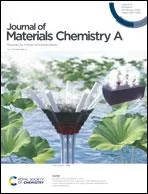
Journal of Materials Chemistry A
CiteScore:
19.5
自己引用率:
4.7%
年間論文数:
2211
Journal of Materials Chemistry A, B & C cover high quality studies across all fields of materials chemistry. The journals focus on those theoretical or experimental studies that report new understanding, applications, properties and synthesis of materials. The journals have a strong history of publishing quality reports of interest to interdisciplinary communities and providing an efficient and rigorous service through peer review and publication. The journals are led by an international team of Editors-in-Chief and Associate Editors who are all active researchers in their fields. Journal of Materials Chemistry A, B & C are separated by the intended application of the material studied. Broadly, applications in energy and sustainability are of interest to Journal of Materials Chemistry A, applications in biology and medicine are of interest to Journal of Materials Chemistry B, and applications in optical, magnetic and electronic devices are of interest to Journal of Materials Chemistry C. More than one Journal of Materials Chemistry journal may be suitable for certain fields and researchers are encouraged to submit their paper to the journal that they feel best fits for their particular article. Example topic areas within the scope of Journal of Materials Chemistry A are listed below. This list is neither exhaustive nor exclusive. Artificial photosynthesis Batteries Carbon dioxide conversion Catalysis Fuel cells Gas capture/separation/storage Green/sustainable materials Hydrogen generation Hydrogen storage Photocatalysis Photovoltaics Self-cleaning materials Self-healing materials Sensors Supercapacitors Thermoelectrics Water splitting Water treatment
おすすめ化合物
![Methyl 8-azabicyclo[3.2.1]octane-3-carboxylate hydrochloride structure](https://static.chemtradehub.com/structs/179/179022-43-6-77f5.webp "Methyl 8-azabicyclo[3.2.1]octane-3-carboxylate hydrochloride structure")
![4,4'-[2,5-Biphenyldiylbis(oxy)]dianiline structure](https://static.chemtradehub.com/structs/941/94148-67-1-24c6.webp "4,4'-[2,5-Biphenyldiylbis(oxy)]dianiline structure")
おすすめサプライヤー




免責事項
このページに表示される学術雑誌情報は、参考および研究目的のみを目的としています。当社は雑誌出版社とは提携しておらず、投稿の取り扱いも行っておりません。出版に関するお問い合わせは、各雑誌出版社に直接ご連絡ください。
表示されている情報に誤りがある場合は、support@chemtradehub.com までご連絡ください。迅速に確認し、対応いたします。