












![2,6-Di(thiophen-2-yl)dithieno[3,2-b:2',3'-d]thiophene structure](https://static.chemtradehub.com/structs/910/910788-24-8-5b70.webp "2,6-Di(thiophen-2-yl)dithieno[3,2-b:2',3'-d]thiophene structure")
Cu-based catalyst designs in CO2 electroreduction: precise modulation of reaction intermediates for high-value chemical generation
文献情報
出版日
2023-10-16
DOI
10.1039/D3SC04353C
インパクトファクター
9.825
著者
Liangyiqun Xie, Yujing Jiang, Wenlei Zhu, Shichao Ding, Yang Zhou, Jun-Jie Zhu
原文を見る
要旨
The massive emission of excess greenhouse gases (mainly CO2) have an irreversible impact on the Earth's ecology. Electrocatalytic CO2 reduction (ECR), a technique that utilizes renewable energy sources to create highly reduced chemicals (e.g. C2H4, C2H5OH), has attracted significant attention in the science community. Cu-based catalysts have emerged as promising candidates for ECR, particularly in producing multi-carbon products that hold substantial value in modern industries. The formation of multi-carbon products involves a range of transient intermediates, the behaviour of which critically influences the reaction pathway and product distribution. Consequently, achieving desirable products necessitates precise regulation of these intermediates. This review explores state-of-the-art designs of Cu-based catalysts, classified into three categories based on the different prospects of the intermediates' modulation: heteroatom doping, morphological structure engineering, and local catalytic environment engineering. These catalyst designs enable efficient multi-carbon generation in ECR by effectively modulating reaction intermediates.
関連文献
Chemoenzymatic synthesis of GDP-azidodeoxymannoses: non-radioactive probes for mannosyltransferase activity
Silvia Marchesan, Derek Macmillan
2008-07-18
Communication
DOI: 10.1039/B807016D
Dynamic resolution of N-Boc-2-lithiopiperidine
Iain Coldham, Sophie Raimbault, Praful T. Chovatia, Jignesh J. Patel, Daniele Leonori, Nadeem S. Sheikh, David T. E. Whittaker
2008-08-08
Communication
DOI: 10.1039/B810988E
Microwave-assisted synthesis of near-infrared fluorescent sphingosine derivatives
Kumar R. Bhushan, Fangbing Liu, Preeti Misra, John V. Frangioni
2008-07-28
Communication
DOI: 10.1039/B807930G
Nanoparticles of iron(ii) spin-crossover
Thibaut Forestier, Stéphane Mornet, Nathalie Daro, Taishi Nishihara, Shin-ichiro Mouri, Koichiro Tanaka, Olivier Fouché, Eric Freysz, Jean-François Létard
2008-07-16
Communication
DOI: 10.1039/B806347H
Cyanide-bridged tetradecanuclear RuII3MII11clusters (MII = ZnII and CuII) based on the high connectivity building block [Ru3(HAT)(CN)12]6−: structural and photophysical properties‡
Juan Manuel Herrera, Enrique Colacio, Corine Mathonière, Duane Choquesillo-Lazarte, Michael D. Ward
2008-07-25
Communication
DOI: 10.1039/B807364C
Apoferritinprotein cages: a novel drug nanocarrier for photodynamic therapy
Fei Yan, Yan Zhang, Hsiang-kuo Yuan, Molly K. Gregas, Tuan Vo-Dinh
2008-08-21
Communication
DOI: 10.1039/B810949D
A diastereo- and enantioselective synthesis of α-substituted anti-α,β-diaminophosphonic acid derivatives
Jeremy C. Wilt, Maren Pink, Jeffrey N. Johnston
2008-08-06
Communication
DOI: 10.1039/B808393B
Binary stacks of [CuC6F5]4 with arenes
Ami Doshi, Krishnan Venkatasubbaiah, Arnold L. Rheingold, Frieder Jäkle
2008-07-25
Communication
DOI: 10.1039/B807128D
Direct observation of time and temperature dependent transition from spherical micelles to vesicles
Hua Wei, Cui-yun Yu, Cong Chang, Chang-yun Quan, Shao-bo Mo, Si-xue Cheng, Xian-zheng Zhang, Ren-xi Zhuo
2008-08-01
Communication
DOI: 10.1039/B811553B
Strategic synthesis of SBA-15 nanorods
Xiulei Ji, Kyu T. Lee, Muguette Monjauze, Linda F. Nazar
2008-06-20
Communication
DOI: 10.1039/B804327B
こちらもおすすめ
化合物よくある質問
2-ブロモ-9,9-ジフェニル-9H-フルオレンの主な用途は何ですか?
2-溴-9,9-二苯基芴は、医薬品、工業材料、有機合成の研究分野で応用されます。特に、レーザー材料や機能性ポリマーの合成に使用されることがあります。また、蛍光色...
474918-32-62-Bromo-9,9-diphenyl...
化合物よくある質問
四氯化铱の市場動向や研究トレンドはどうですか?
四氯化铱の市場は研究開発分野で注目されており、特にナノ技術や金属有機框架(MOFs)の分野での需要が増加傾向にあります。価格は安定しており、中国や韓国での生産が...
207399-11-9Tetrachloroiridium h...
882-06-44-Nitrocinnamic acid
化合物よくある質問
1-(4-溴-3-氟苯基)-2-氯乙酮を含む廃棄物はどのように処理すべきですか?
1-(4-溴-3-氟苯基)-2-氯乙酮 (CAS番号: 1260857-14-4) の廃棄物は専門的な廃棄処理が必要です。まず、廃棄物は密閉された容器に収集し、...
1260857-14-41-(4-Bromo-3-fluorop...
化合物よくある質問
苦参酚Kとは何ですか?
苦参酚Kは、CAS番号101236-49-1を持つ化合物で、主に天然由来の生薬から抽出されます。この化合物は、抗炎症作用や抗癌作用を持つことが報告されています。
101236-49-1Kushenol K
化合物よくある質問
POTASSIUM (1-(TERTBUTOXYCARBONYL)AZETIDIN-3-YL)TRIFLUOROBORATE を含む廃棄物はどのように処理すべきですか?
POTASSIUM (1-(TERTBUTOXYCARBONYL)AZETIDIN-3-YL)TRIFLUOROBORATE を含む廃棄物は、まず安全なエント...
1430219-73-0Potassium (1-(tert-b...
化合物よくある質問
4-庚基-4’-联苯羧酸の市場動向や研究トレンドはどうですか?
4-庚基-4’-聯苯羧酸は、特殊化学品や合成化学の分野で用いられる化学物質ですが、市場動向としては、研究開発の進展とともに需要が増加しています。また、環境配慮型...
58573-94-74'-Heptyl-4-biphenyl...
化合物よくある質問
6-ブロモ-3-メトキシ-1-フェニル-1H-インドゾールを含む廃棄物はどのように処理すべきですか?
6-ブロモ-3-メトキシ-1-フェニル-1H-インドゾールを含む廃棄物は、適切な化学廃棄処理が必要です。通常、廃棄物は密閉容器に収集され、専門の廃棄処理業者に引...
1332527-03-36-Bromo-3-methoxy-1-...
化合物よくある質問
4,4-二甲基-2-吡咯烷酮はどの業界で使用されていますか?
4,4-二甲基-2-吡咯烷酮は医薬、ポリマー、センサー、半導体などの業界で広く使用されています。特に溶媒としての性能が高く評価されています。
66899-02-34,4-dimethylpyrrolid...
51312-42-6Sodium Phosphotungst...
掲載誌
Chemical Science
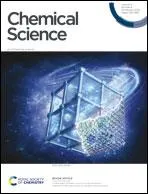
CiteScore:
14.4
自己引用率:
3.9%
年間論文数:
1413
Our journal has a wide-ranging scope which covers the full breadth of the chemical sciences. The research we publish contains the sorts of novel ideas, challenging questions and progressive thinking that bring undiscovered breakthroughs within reach. Your paper could focus on a single area, or cross many. It could be beyond the accepted bounds of the chemical sciences. It might address an immediate challenge, contribute to a future breakthrough or be wholly conceptual. We’re a team from every field of the chemical sciences, and know from experience that breakthroughs that drive the solutions to global challenges can come from anywhere, at any time. You could even start an entirely new area of research. Too bold? Too progressive? No such thing
おすすめ化合物
![tert-Butyl N-[(2-chloropyridin-4-yl)methyl]carbamate structure](https://static.chemtradehub.com/structs/916/916210-27-0-9f95.webp "tert-Butyl N-[(2-chloropyridin-4-yl)methyl]carbamate structure")
おすすめサプライヤー






免責事項
このページに表示される学術雑誌情報は、参考および研究目的のみを目的としています。当社は雑誌出版社とは提携しておらず、投稿の取り扱いも行っておりません。出版に関するお問い合わせは、各雑誌出版社に直接ご連絡ください。
表示されている情報に誤りがある場合は、support@chemtradehub.com までご連絡ください。迅速に確認し、対応いたします。