












![N-[(Benzyloxy)carbonyl]serine structure](https://static.chemtradehub.com/structs/276/2768-56-1-77f7.webp "N-[(Benzyloxy)carbonyl]serine structure")
Theoretical study of the electronic structure of the complexes of gold, silver, and copper mono- and bimetallic nanoclusters decorated on graphitic carbon nitride (g-C3N4): DFT and TD-DFT studies of photocatalytic activity
文献情報
出版日
2023-11-29
DOI
10.1039/D3NJ04497A
インパクトファクター
3.591
著者
Hanieh Moradi, Hossein Farrokhpour, Sayyed Mahdi Hosseini, Mehran Ghiaci
原文を見る
要旨
In this study, the structure and electronic properties of tetratomic metal clusters of Au, Ag, and Cu decorated on graphitized carbon nitride (g-C3N4) were investigated using the density functional theory (DFT) method. The most stable structures of the complexes of Au4, Ag4, Cu4, Au2–Ag2, Au2–Cu2, and Ag2–Cu2 clusters with g-C3N4 were calculated. The molecular orbitals, partial atomic charges, and density of states of the complexes were calculated. It was noted that the HOMO–LUMO energy gap of the complexes varied depending on the type of metal cluster on the g-C3N4. The absorption spectra of the complexes were calculated and compared with the absorption spectrum of the bare g-C3N4. The electronic configurations of the calculated absorption lines in the visible region of the absorption spectrum of each complex were investigated. The absorption lines that were related to the electron excitation from an occupied molecular orbital of the complex, localized on the metal cluster, to an unoccupied orbital of the complex, localized on g-C3N4, were selected for further comparison. The electron–hole recombination rate for this type of absorption line is lower than that of the absorption lines in which the initial and final molecular orbitals are related to the g-C3N4. The prolonged electron–hole lifetime can lead to higher photocatalytic activity.
関連文献
Rapid detection of synthetic cannabinoids in herbal highs using surface-enhanced Raman scattering produced by gold nanoparticle co-aggregation in a wet system
Hiroki Segawa, Takao Fukuoka, Tamitake Itoh, Yuichi Imai, Yuko T. Iwata, Tadashi Yamamuro, Kenji Kuwayama, Kenji Tsujikawa, Tatsuyuki Kanamori, Hiroyuki Inoue
2019-10-07
Paper
DOI: 10.1039/C9AN01512D
Expression pattern of androgen receptors, AR-V7 and AR-567es, in circulating tumor cells and paired plasma-derived extracellular vesicles in metastatic castration resistant prostate cancer
Areti Strati, Martha Zavridou, Evangelos Bournakis, Sophia Mastoraki, Evi Lianidou
2019-10-09
Paper
DOI: 10.1039/C9AN00999J
A fluorescent turn-on probe for visualizing lysosomes in hypoxic tumor cells
Yingchao Liu, Feiyi Wang, Qiang Fei, Ben Shi, Jiancai An, Chunchang Zhao, Chen-Ho Tung
2016-04-15
Communication
DOI: 10.1039/C6AN00369A
Approaches towards molecular amplification for sensing
Sean Goggins, Christopher G. Frost
2016-04-14
Critical Review
DOI: 10.1039/C6AN00348F
Styrylpyridine salts-based red emissive two-photon turn-on probe for imaging the plasma membrane in living cells and tissues
Lifang Guo, Ruoyao Zhang, Yuming Sun, Minggang Tian, Ge Zhang, Ruiqing Feng, Xuechen Li, Xiaoqiang Yu, Xiuquan He
2016-04-26
Communication
DOI: 10.1039/C6AN00147E
Correction: Micropatterning neuronal networks
Heike Hardelauf‡, Sarah Waide‡, Julia Sisnaiske, Peter Jacob, Vanessa Hausherr, Nicole Schöbel, Dirk Janasek, Christoph van Thriel
2016-05-04
Correction
DOI: 10.1039/C6AN90037B
A lysosome specific theranostic NO donor inhibits cancer cells by stimuli responsive molecular self-decomposition with an on-demand fluorescence pattern
Wuyang Hua, Xinyi Wang, Sinan Pei
2019-09-30
Paper
DOI: 10.1039/C9AN01746A
A fluorescent probe based on aggregation-induced emission for hydrogen sulfide-specific assaying in food and biological systems
Lingfeng Xu, Ling Ni, Lihe Sun, Fang Zeng, Shuizhu Wu
2019-09-27
Paper
DOI: 10.1039/C9AN01582E
An intramolecular charge transfer and excited state intramolecular proton transfer based fluorescent probe for highly selective detection and imaging of formaldehyde in living cells
Wen Chen, Mei Yang, Na Luo, Fenglin Wang, Ru-Qin Yu, Jian-Hui Jiang
2019-10-03
Paper
DOI: 10.1039/C9AN01778J
Paper-based biodetection using luminescent nanoparticles
M. Omair Noor, Ulrich J. Krull
2016-04-13
Critical Review
DOI: 10.1039/C6AN00129G
こちらもおすすめ
化合物よくある質問
2-ブロモ-9,9-ジフェニル-9H-フルオレンの主な用途は何ですか?
2-溴-9,9-二苯基芴は、医薬品、工業材料、有機合成の研究分野で応用されます。特に、レーザー材料や機能性ポリマーの合成に使用されることがあります。また、蛍光色...
474918-32-62-Bromo-9,9-diphenyl...
化合物よくある質問
四氯化铱の市場動向や研究トレンドはどうですか?
四氯化铱の市場は研究開発分野で注目されており、特にナノ技術や金属有機框架(MOFs)の分野での需要が増加傾向にあります。価格は安定しており、中国や韓国での生産が...
207399-11-9Tetrachloroiridium h...
882-06-44-Nitrocinnamic acid
化合物よくある質問
1-(4-溴-3-氟苯基)-2-氯乙酮を含む廃棄物はどのように処理すべきですか?
1-(4-溴-3-氟苯基)-2-氯乙酮 (CAS番号: 1260857-14-4) の廃棄物は専門的な廃棄処理が必要です。まず、廃棄物は密閉された容器に収集し、...
1260857-14-41-(4-Bromo-3-fluorop...
化合物よくある質問
苦参酚Kとは何ですか?
苦参酚Kは、CAS番号101236-49-1を持つ化合物で、主に天然由来の生薬から抽出されます。この化合物は、抗炎症作用や抗癌作用を持つことが報告されています。
101236-49-1Kushenol K
化合物よくある質問
POTASSIUM (1-(TERTBUTOXYCARBONYL)AZETIDIN-3-YL)TRIFLUOROBORATE を含む廃棄物はどのように処理すべきですか?
POTASSIUM (1-(TERTBUTOXYCARBONYL)AZETIDIN-3-YL)TRIFLUOROBORATE を含む廃棄物は、まず安全なエント...
1430219-73-0Potassium (1-(tert-b...
化合物よくある質問
4-庚基-4’-联苯羧酸の市場動向や研究トレンドはどうですか?
4-庚基-4’-聯苯羧酸は、特殊化学品や合成化学の分野で用いられる化学物質ですが、市場動向としては、研究開発の進展とともに需要が増加しています。また、環境配慮型...
58573-94-74'-Heptyl-4-biphenyl...
化合物よくある質問
6-ブロモ-3-メトキシ-1-フェニル-1H-インドゾールを含む廃棄物はどのように処理すべきですか?
6-ブロモ-3-メトキシ-1-フェニル-1H-インドゾールを含む廃棄物は、適切な化学廃棄処理が必要です。通常、廃棄物は密閉容器に収集され、専門の廃棄処理業者に引...
1332527-03-36-Bromo-3-methoxy-1-...
化合物よくある質問
4,4-二甲基-2-吡咯烷酮はどの業界で使用されていますか?
4,4-二甲基-2-吡咯烷酮は医薬、ポリマー、センサー、半導体などの業界で広く使用されています。特に溶媒としての性能が高く評価されています。
66899-02-34,4-dimethylpyrrolid...
51312-42-6Sodium Phosphotungst...
掲載誌
New Journal of Chemistry

CiteScore:
5.3
自己引用率:
3.7%
年間論文数:
2153
NJC (New Journal of Chemistry) is a broad-based primary journal encompassing all branches of chemistry and its sub-disciplines. It contains full research articles, communications, perspectives and focus articles. This well-established journal, owned by the Centre National de la Recherche Scientifique (CNRS) of France, has been co-published with the Royal Society of Chemistry since January 1998. NJC is the forum for the publication of high-quality, original and significant work that opens new directions in chemistry or other scientific disciplines. In addition to having a significant chemical component, work published in NJC must demonstrate that it will have an impact on areas of research other than that of the reported work.
おすすめ化合物
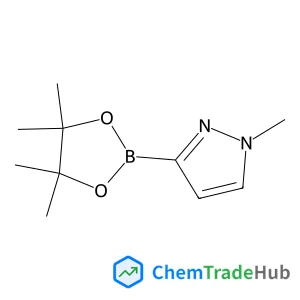
1-Methyl-3-(4,4,5,5-tetramethyl-1,3,2-dioxaborolan-2-yl)-1H-pyrazole
CAS番号:
1020174-04-2
分子式:
C10H17BN2O2
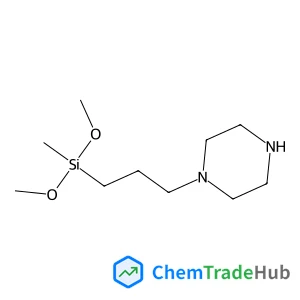
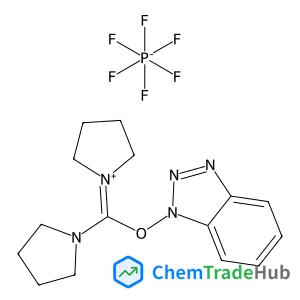
(1H-Benzotriazol-1-yloxy)(di-1-pyrrolidinyl)methylium hexafluorophosphate
CAS番号:
105379-24-6
分子式:
C15H21F6N5OP
おすすめサプライヤー



免責事項
このページに表示される学術雑誌情報は、参考および研究目的のみを目的としています。当社は雑誌出版社とは提携しておらず、投稿の取り扱いも行っておりません。出版に関するお問い合わせは、各雑誌出版社に直接ご連絡ください。
表示されている情報に誤りがある場合は、support@chemtradehub.com までご連絡ください。迅速に確認し、対応いたします。