













Exploitation of active site flexibility-low temperature activity relation for engineering broad range temperature active enzymes
文献情報
出版日
2023-06-21
DOI
10.1039/D3ME00013C
インパクトファクター
4.935
著者
Siva Dasetty, Jonathan W. P. Zajac
原文を見る
要旨
Differences in the structural and thermodynamic properties of enzymes adapted to different temperatures indicate that broad range temperature active enzymes can be designed by incorporating cold activity in thermophilic enzymes. This is based on a concept that the cold activity and thermostability are not mutually exclusive and that cold activity in psychrophilic enzymes is associated with active site flexibility. In Wang et al. Biochem. Eng. J. 2021, 174, 10803, we identified two point mutants of Geobacillus thermocatenulatus lipase (GTL) which were screened to improve active site flexibility. Even though the identified thermophilic mutants had psychrophilic traits, we observed complex trends such as higher kinetic stability and substrate-dependent activity–temperature relation on further analysis. In this work, we apply molecular dynamics simulations and network theory to show that the changes in GTL properties with the selected mutations cannot be directly associated with active site flexibility. Our computational results indicate the mutations resulted in residues with both higher and lower flexibility, which are both proximal and away (>1.5 nm) from the active site. We show that the intricate changes in the flexibility of residues distal from the mutation site can be rationalized by the altered dependency between residue–residue fluctuations with mutation. These alterations in residue–residue flexibility dependency are a consequence of the redistribution of the inter-residue interactions from the mutation site to other residues, which are driven by several tightly connected charged residues. This indicates design rules associated with residue–residue flexibility correlations are critical in applying site-directed mutagenesis to successfully exploit active site flexibility–activity relation for incorporating low temperature activity in thermophilic enzymes. Similarly, such correlations can be valuable in minimizing false positives in high-throughput screening methods based on directed evolution and/or machine learning-based engineering of enzyme activity–temperature relation.
関連文献
Effects of the interplay between electron–electron interaction and intrinsic spin–orbit interaction on the indirect RKKY coupling in graphene nanoflakes
Akram Mirehi, Ebrahim Heidari-Semiromi
2018-12-21
Paper
DOI: 10.1039/C8CP05041D
Orientation of nitro-group governs the fluorescence lifetime of nitrobenzoxadiazole (NBD)-labeled lipids in lipid bilayers
Šárka Pokorná, Martin Hof, Mariana Amaro
2018-11-05
Paper
DOI: 10.1039/C8CP06064A
Origin of high thermoelectric performance with a wide range of compositions for BixSb2−xTe3 single quintuple layers
Zhen Li, Siyu Han, Yuanchun Pan, Jian Zhou, Huibin Xu
2018-12-10
Paper
DOI: 10.1039/C8CP06534A
Molecular dynamics study on the role of solvation water in the adsorption of hyperactive AFP to the ice surface
2018-09-27
Paper
DOI: 10.1039/C8CP05027A
Modeling of aromatics formation in fuel-rich methane oxy-combustion with an automatically generated pressure-dependent mechanism
Te-Chun Chu, Zachary J. Buras, Patrick Oßwald, Mengjie Liu, Mark Jacob Goldman, William H. Green
2018-12-07
Paper
DOI: 10.1039/C8CP06097E
Catalytic polymerization of naphthalene by HF/BF3 super acid: an ab initio density functional theory study
Po-Yu Yang, Hsing-Yin Chen, Chia-Lin Chang, Gao-Shee Leu, Che-Hsin Lin
2018-08-18
Paper
DOI: 10.1039/C8CP02777C
In proteins, the structural responses of a position to mutation rely on the Goldilocks principle: not too many links, not too few
Laëtitia Bourgeat, Laurent Vuillon
2018-09-27
Paper
DOI: 10.1039/C8CP04530E
Optimizing oxygen functional groups in graphene quantum dots for improved antioxidant mechanism
Yingmin Wang, Wenhui Kong, Lifeng Wang, Jin Zhong Zhang, Yan Li, Xiaoguang Liu, Yong Li
2018-12-07
Paper
DOI: 10.1039/C8CP06768F
In situ XPS analysis of the atomic layer deposition of aluminium oxide on titanium dioxide
Robert H. Temperton, Andrew Gibson, James N. O'Shea
2018-12-19
Paper
DOI: 10.1039/C8CP06912C
Non-covalent complexes of the peptide fragment Gly-Asn-Asn-Gln-Gln-Asn-Tyr in the gas-phase. Photodissociative cross-linking, Born–Oppenheimer molecular dynamics, and ab initio computational binding study
Shu R. Huang, Yang Liu, František Tureček
2019-01-08
Paper
DOI: 10.1039/C8CP06893C
こちらもおすすめ
化合物よくある質問
6- bromo-1-cyclopropyl-1H-benzimidazoleの市場動向や研究トレンドはどうですか?
6- bromo-1-cyclopropyl-1H-benzimidazoleは、抗炎症、抗ウイルス作用を持つことが報告されており、新薬開発の研究対象として注目...
1416713-53-56-Bromo-1-cyclopropy...
化合物よくある質問
環氧プロpanol-d5を取り扱う際の実験室安全事項は何ですか?
取り扱う際には、防護眼鏡と手袋を使用し、ドラフトチャンバー内で操作することを推奨します。漏洩時には適切な手順で処理し、安全データシートを常に参照してください。
1246819-20-4Glycidol-d5
化合物よくある質問
2,2’-ジメチル-3,3’-ビピリジンはどのように合成されますか?
2,2’-ジメチル-3,3’-ビピリジンは、ピリジンと2-メチルアクリルアミドを有機合成反応で合成します。この反応では、ピリジンと2-メチルアクリルアミドを含有...
86156-55-02,2’-Dimethyl-3,3’-b...
化合物よくある質問
6-甲基ピリジン-2-ボリック酸の主な用途は何ですか?
6-甲基ピリジン-2-ボリック酸は、合成化学、医薬品合成、以及研究用途などに広く使用され、特に組換えDNA技術や分子生物学の研究において重要な役割を果たします。
372963-50-3(6-Methyl-2-pyridiny...
化合物よくある質問
(R)-3-(1-甲基-2-氧環己基)プロpano酸メチルは安全ですか?
(R)-3-(1-甲基-2-氧環己基)プロpano酸メチルは一定の安全性がありますが、直接的な皮膚接触や吸入は避けるべきです。使用する際は適切な個々の安全データ...
94089-47-1methyl 3-[(1R)-1-met...
化合物よくある質問
ketorolacはどのように保存すればよいですか?
ketorolacは、密封して遮光容器に保管し、直射日光や高温を避けて保存してください。温度は常温で保存し、湿度をなるべく低く保つことが推奨されます。
74103-06-3rac Ketorolac
化合物よくある質問
L-2,3-二氨基丙酸二盐酸盐を取り扱う際の実験室安全事項は何ですか?
L-2,3-二氨基丙酸二盐酸盐は腐食性が強く、皮膚や粘膜に刺激を与える可能性があります。取り扱う際は、防塵マスク、ゴーグル、手袋を使用し、適切な排気設備を使用し...
19777-68-5(S)-2,3-Diaminopropa...
化合物よくある質問
2-(4-溴ピリジン-2-基)乙腈の物理化学的性質は何ですか?
2-(4-溴ピリジン-2-基)乙腈のCAS番号は312325-73-8です。主に結晶形態で存在し、分子量は159.01 g/molです。この化合物は水に溶けやす...
312325-73-8(4-Bromo-2-pyridinyl...
化合物よくある質問
3-フローロ-[1,1-ベンジレン]-3,4-ジカルボン酸を取り扱う際の実験室安全事項は何ですか?
この化合物は毒性は低いですが、直接的な接触や吸入に注意が必要です。PPE(個人防護具)を着用し、ドラフトチャンバーを使用して操作することを推奨します。また、漏洩...
1261915-32-53'-Fluoro-[1,1'-biph...
化合物よくある質問
3-(1-氧代-1,3-二氢-2H-2-异吲哚)丙酸の主な用途は何ですか?
3-(1-氧代-1,3-二氢-2H-2-异吲哚)丙酸は、薬理学研究や医薬品製造において広く用いられる化合物です。また、工業的な用途でも一部の化学反応の触媒や助剤...
83747-30-23-(1-Oxo-1,3-dihydro...
掲載誌
おすすめ化合物
![2-{[(1R,2S)-2-Aminocyclohexyl]amino}-4-{[3-(2H-1,2,3-triazol-2-yl)phenyl]amino}-5-pyrimidinecarboxamide structure](https://static.chemtradehub.com/structs/137/1370261-96-3-40df.webp "2-{[(1R,2S)-2-Aminocyclohexyl]amino}-4-{[3-(2H-1,2,3-triazol-2-yl)phenyl]amino}-5-pyrimidinecarboxamide structure")
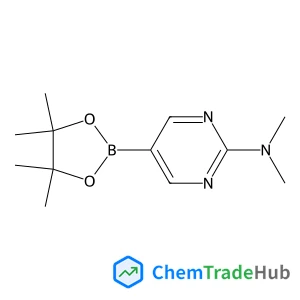
N,N-Dimethyl-5-(4,4,5,5-tetramethyl-1,3,2-dioxaborolan-2-yl)-2-pyrimidinamine
CAS番号:
1032759-30-0
分子式:
C12H20BN3O2
おすすめサプライヤー





免責事項
このページに表示される学術雑誌情報は、参考および研究目的のみを目的としています。当社は雑誌出版社とは提携しておらず、投稿の取り扱いも行っておりません。出版に関するお問い合わせは、各雑誌出版社に直接ご連絡ください。
表示されている情報に誤りがある場合は、support@chemtradehub.com までご連絡ください。迅速に確認し、対応いたします。