


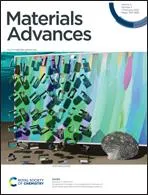
Carbohydrate polymer-supported metal and metal oxide nanoparticles for constructing electrochemical sensors
文献情報
出版日
2023-11-30
DOI
10.1039/D3MA00706E
インパクトファクター
0
著者
原文を見る
要旨
Carbohydrate polymers have attracted significant attention due to their favorable characteristics, such as availability, non-toxicity, biocompatibility, and biodegradability, making them promising materials for many medical and industrial applications. Additionally, they can be reinforced with metal and metal oxide nanoparticles (NPs), resulting in the formation of nanocomposites (NCs), which can be incorporated in electrochemical sensors for enhancing their conductivity and catalytic activity. These NPs increase the catalytic activity of electrochemical sensors via redox cycling, while carbohydrate polymers are used to stabilize NPs against self-aggregation and act as matrix for them. The redox cycling process, which depends on NPs as redox mediators, facilitates the oxidation or reduction of the target analytes, leading to an optimized current signal. Carbohydrate polymers are more favorable than synthetic polymers given that they are readily available, cheap, and non-toxic materials. To date, various carbohydrate polymers, such as alginate, cellulose, chitosan, dextran, gums, locust bean gum, latex, mucilage, pectin, and starch, have been used for the preparation of electroactive metal/metal oxide–carbohydrate polymer NCs. Subsequently, these NCs have been employed for the detection of biological analytes, such as drugs, enzymes, hormones, aflatoxins, biomarkers, carbohydrates, and natural oxidants, and water pollutants, such as pesticides, dyes, metal ions, and phenolics. However, there are fewer studies regarding the use of carbohydrate polymers in electrochemical sensors compared with other applications. Overall, metal/metal oxide–carbohydrate polymers are considered promising materials for the detection of many target analytes with enhanced sensitivity, low detection limits, and optimized selectivity.
おすすめジャーナル

Journal of Peptide Science

Russian Journal of Coordination Chemistry

Journal of Natural Medicines

New Journal of Chemistry

Drug Discovery Today

Journal of Saudi Chemical Society

Russian Journal of Applied Chemistry

Russian Journal of Bioorganic Chemistry

Russian Journal of General Chemistry

Russian Journal of Organic Chemistry
関連文献
Tetrabenzo-Chichibabin's hydrocarbons: substituent effects and unusual thermochromic and thermomagnetic behaviours
Chuanling Jiang, Yawen Bang, Xinhao Wang, Xuefeng Lu, Zhenglong Lim, Haipeng Wei, Samir El-Hankari, Jishan Wu, Zebing Zeng
2018-02-12
Communication
DOI: 10.1039/C8CC00378E
A functionalized ruthenium-graphene nanosheet photocatalyst for highly regioselective visible light driven C–H arylation of imidazo-pyrimidines
Rajesh K. Yadav, Abhishek Kumar, No-Joong Park, Dolly Yadav, Jae Young Kim, Jin-Ook Baeg
2019-10-16
Communication
DOI: 10.1039/C9SE00823C
Candle soot nanoparticle-decorated wood for efficient solar vapor generation
Zhe Wang, Yutao Yan, Xiaoping Shen, Qingfeng Sun, Chunde Jin
2019-10-21
Paper
DOI: 10.1039/C9SE00617F
A cost-effective pH-sensitive release system for water source pH detection
Zhaoliang Zheng, Xing Huang, Dmitry Shchukin
2014-09-10
Communication
DOI: 10.1039/C4CC05597G
Micellar and vesicular nanoassemblies of triazole-based amphiphilic probes triggered by mercury(ii) ions in a 100% aqueous medium
Inhye Kim, Na-Eun Lee, Yoo-Jeong Jeong, Young-Ho Chung, Byoung-Ki Cho
2014-09-23
Communication
DOI: 10.1039/C4CC06742H
Rational synthesis of Pt-based dandelion-like yolk–shell nanoparticles with enhanced oxygen reduction properties
Chunjie Li, Shuli Yin, Hongjie Yu, Ziqiang Wang, You Xu, Xiaonian Li, Liang Wang, Hongjing Wang
2019-09-09
Paper
DOI: 10.1039/C9SE00618D
A perspective on practical solar to carbon monoxide production devices with economic evaluation
Sung Gyu Han, Honggon Kim, Jongwon Ko, Sejin Park, Oh-Shim Joo, Yoonmook Kang
2019-10-14
Paper
DOI: 10.1039/C9SE00647H
NiCoFe alloy multishell hollow spheres with lattice distortion to trigger efficient hydrogen evolution in acidic medium
Shiyu Liu, Jizhao Zou, Qi Luo, Awais Siddique Saleemi, Yuechao Yao, Xierong Zeng
2019-10-01
Communication
DOI: 10.1039/C9SE00504H
Tuning the surface segregation composition of a PdCo alloy by the atmosphere for increasing electrocatalytic activity
Tongtong Li, Rong Wang, Minghe Yang, Shuaishuai Zhao, Zhijie Li, Junjian Miao, Zhi-Da Gao, Yan-Yan Song
2019-10-16
Paper
DOI: 10.1039/C9SE00620F
An iron foam acts as a substrate and iron source for the in situ construction of a robust transition metal phytate electrocatalyst for overall water splitting
Xiaojuan Chen, Yan Meng, Taotao Gao, Jinmei Zhang, Xiaoqin Li, Hongyan Yuan
2019-10-18
Paper
DOI: 10.1039/C9SE00348G
こちらもおすすめ
化合物よくある質問
オステニ二甲磺酸塩に適用される法規ガイドラインは何ですか?
オステニ二甲磺酸塩は、GHS分類に基づき corrosive 物質として分類されます。REACH規則では、該当物質の登録が要求される可能性があります。また、FD...
2070014-82-1N-(2-{[2-(Dimethylam...
化合物よくある質問
環丁基肼盐酸盐は安全ですか?
環丁基肼盐酸盐は毒性があり、吸入や皮膚接触は有害です。使用時の安全対策として、密閉システムを使用し、適切な排気設備を備えた場所で作業することが推奨されます。
1156980-49-2Cyclobutylhydrazine ...
化合物よくある質問
N-(4-パリドン基ソニルフェニル)硫代イソシアネートを取り扱う際の実験室安全事項は何ですか?
N-(4-パリドン基ソニルフェニル)硫代イソシアネートは高毒性で、皮膚や吸入による毒性があります。取り扱う際は防毒マスク、保護用手袋、保護眼鏡などのPPEを着用...
7356-55-01-[(4-Isothiocyanato...
化合物よくある質問
5-ヒドロキシ-1,3-ジヒドロ-2H-インドン-2-酮の物理化学的性質は何ですか?
CAS番号3416-18-0の5-ヒドロキシ-1,3-ジヒドロ-2H-インドン-2-酮は、結晶性の白色粉末です。分子量は228.25であり、 aqueous m...
3416-18-05-Hydroxy-1,3-dihydr...
化合物よくある質問
O-苄基-D-丝氨醇はどのように合成されますか?
O-苄基-D-丝氨醇は、D-アミノ酸とベンゼン環の経由で合成されます。触媒としてジメチルアミノピリジンが使用され、選択性は高いです。一般的な収率は約90%です。
58577-88-1(s)-2-Amino-3-benzyl...
化合物よくある質問
ナトリウム3-ヒドロキシbutano酸とは何ですか?
ナトリウム3-ヒドロキシbutano酸は、CAS番号13613-65-5で登録されている化合物です。この化合物は、(3R)-3-ヒドロキシbutano酸とナトリ...
13613-65-5sodium;(3R)-3-hydrox...
化合物よくある質問
1-(二苯甲基)-4-甲基ベンゼンの物理化学的性質は何ですか?
CAS番号603-37-2の1-(二苯甲基)-4-甲基ベンゼンは、結晶性の固体で、分子量は244.28であり、水中的には微溶です。この化合物は有機反応において中...
603-37-21-(Diphenylmethyl)-4...
化合物よくある質問
ネアミン塩酸塩の物理化学的性質は何ですか?
ネアミン塩酸塩の分子量は321.19であり、結晶性の白色粉末です。この化合物は水に溶けやすく、pHが低くなると不溶性になります。反応活性は高く、水溶液中の酸化還...
15446-43-2NEAMINE HYDROCHLORID...
化合物よくある質問
偶氮二甲酰二哌啶の主な用途は何ですか?
偶氮二甲酰二哌啶は、医薬品、染料、高 Então 剤、触媒、溶媒、量論試薬など、様々な分野で使用されています。特に、高 Enough 反応において、グリコール酸...
10465-81-3(E)-1,2-Diazenediylb...
664969-54-44-[(2E)-3-Phenyl-2-p...
掲載誌
おすすめ化合物
![2-Azaspiro[4.5]decane-3,8-dione structure](https://static.chemtradehub.com/structs/914/914780-96-4-e94b.webp "2-Azaspiro[4.5]decane-3,8-dione structure")
![2-Methyl-2-propanyl 4-oxo-3,9-diazabicyclo[4.2.1]nonane-9-carboxylate structure](https://static.chemtradehub.com/structs/131/1312456-05-5-9a15.webp "2-Methyl-2-propanyl 4-oxo-3,9-diazabicyclo[4.2.1]nonane-9-carboxylate structure")
2-Methyl-2-propanyl 4-oxo-3,9-diazabicyclo[4.2.1]nonane-9-carboxylate
CAS番号:
1312456-05-5
分子式:
C12H20N2O3
![5-Chloropyrrolo[2,1-f][1,2,4]triazin-4(3H)-one structure](https://static.chemtradehub.com/structs/888/888720-60-3-4f7c.webp "5-Chloropyrrolo[2,1-f][1,2,4]triazin-4(3H)-one structure")
おすすめサプライヤー





免責事項
このページに表示される学術雑誌情報は、参考および研究目的のみを目的としています。当社は雑誌出版社とは提携しておらず、投稿の取り扱いも行っておりません。出版に関するお問い合わせは、各雑誌出版社に直接ご連絡ください。
表示されている情報に誤りがある場合は、support@chemtradehub.com までご連絡ください。迅速に確認し、対応いたします。