













Tuning the surface segregation composition of a PdCo alloy by the atmosphere for increasing electrocatalytic activity
文献情報
出版日
2019-10-16
DOI
10.1039/C9SE00620F
インパクトファクター
6.367
著者
Tongtong Li, Rong Wang, Minghe Yang, Shuaishuai Zhao, Zhijie Li, Junjian Miao, Zhi-Da Gao, Yan-Yan Song
原文を見る
要旨
The rational design of active sites for electrocatalysts is crucial for achieving high efficiency of electrochemical reactions. Contrary to the shape-controlled method, herein, we reported a selective segregation-etching strategy to highly increase the active sites of a bimetallic alloy as a high-performance electrocatalyst. The surface composition of the PdCo alloy was manipulated by its preferential segregation in the atmosphere according to the predictions of the density functional theory (DFT). By leaching Co atoms from the surface having a balanced composition with consecutive potential cycling in an acid solution, the surface reconstructed to show a high density of high-index Pd facets identified by Cs-corrected transmission electron microscopy. Using hydrogen evolution as a model reaction, the resulting catalyst exhibited enhanced electrocatalytic activity and outstanding long-term stability. This study provides a general principle to design a transition metal alloy with highly active sites, which has a great potential in broad areas such as batteries, fuel cells, and beyond.
関連文献
A sensitive strategy for the fluorescence detection of DNA methyltransferase activity based on the graphene oxide platform and T7 exonuclease-assisted cyclic signal amplification
Yefei Ma, Lini Chen, Liangliang Zhang, Suqi Liao
2015-04-07
Paper
DOI: 10.1039/C5AN00417A
Fabrication of a CuCo2O4/PANI nanocomposite as an advanced electrode for high performance supercapacitors
S. Rajkumar, E. Elanthamilan, J. Princy Merlin, I. Jenisha Daisy Priscillal, I. Sharmila Lydia
2020-08-20
Paper
DOI: 10.1039/D0SE00913J
Parameter optimisation for electrochemically activated MoTe2
Jessica C. McGlynn, Matthew Friskey, Alexey Y. Ganin
2020-07-14
Communication
DOI: 10.1039/D0SE00684J
Analysis of interaction between the apicomplexan protozoan Toxoplasma gondii and host cells using label-free Raman spectroscopy
Abida Naemat, Hany M. Elsheikha, Alaa Al-sandaqchi, Kenny Kong, Adrian Ghita, Ioan Notingher
2014-11-19
Paper
DOI: 10.1039/C4AN01810A
Chemical analysis of multicellular tumour spheroids
L. E. Jamieson, D. J. Harrison, C. J. Campbell
2015-04-23
Tutorial Review
DOI: 10.1039/C5AN00524H
Efficient and stable cycling of lithium metal enabled by a conductive carbon primer layer
Sheng S. Zhang, Xiulin Fan, Chunsheng Wang
2017-09-18
Paper
DOI: 10.1039/C7SE00391A
Nanoparticle enhanced paraffin and tailing ceramic composite phase change material for thermal energy storage
Yang Zhou, Xili Duan
2020-06-24
Paper
DOI: 10.1039/D0SE00753F
Recent advances in vanadium-based nanomaterials and their composites for supercapacitors
Huizhen Qin, Shunfei Liang, Lingyun Chen, Yang Li, Ziyang Luo, Shaowei Chen
2020-07-21
Review Article
DOI: 10.1039/D0SE00897D
Cu3P/PAN derived N-doped carbon catalyst with non-toxic synthesis for alkaline hydrogen evolution reaction
HyoWon Kim, Yongju Lee, DongHoon Song, YongKeun Kwon, Eom-Ji Kim, EunAe Cho
2020-08-26
Paper
DOI: 10.1039/D0SE00923G
こちらもおすすめ
化合物よくある質問
4'-ブロモビフェニル-3-メトークシーディ.ActionBarはどのように保存すればよいですか?
4'-ブロモビフェニル-3-メトークシーディ.ActionBarは、冷暗所で、直射日光を避け、密栓の容器に保存し、遠隔場所に保管してください。温度は常温(0〜2...
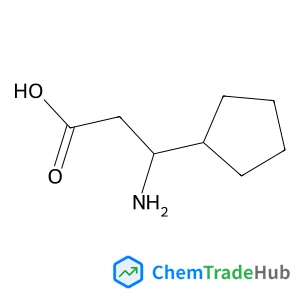
149506-25-24'-Bromo-biphenyl-3-...
2947-60-6(3-Methylphenyl)acet...
化合物よくある質問
2-異丙基フェニルヒドラジン塩酸塩とは何ですか?
2-異丙基フェニルヒドラジン塩酸塩は、CAS番号58928-82-8を有する化合物で、構造式はC11H14N2HClです。これは塩基性化合物であり、水に溶けやす...
58928-82-8(2-Isopropylphenyl)h...
化合物よくある質問
5-(4-クロロフェニル)-4H-1,2,4-三氮唑-3-アミンを取り扱う際の実験室安全事項は何ですか?
5-(4-クロロフェニル)-4H-1,2,4-三氮唑-3-アミンは取り扱いに注意が必要です。PPEとして防塵マスク、ゴーグル、手袋を使用し、ドラフトチャンバーを...
98554-00-85-(4-Chlorophenyl)-1...
化合物よくある質問
去甲基雷贝拉唑硫醚はどのように合成されますか?
去甲基雷贝拉唑硫醚は、ベンジミダゾール硫化物と3-メチル-4-ピリジノールの反応によって合成されます。具体的には、2-チオキシドベンジミダゾールと3-メチル-4...
117976-91-73-({2-[(1H-Benzimida...
化合物よくある質問
2-ブロモ-5-フロロ-N-(2-フェノールメチル)ベンゼンウレアは安全ですか?
2-ブロモ-5-フロロ-N-(2-フェノールメチル)ベンゼンウレアは、毒性や刺激性の実験データに基づき、適切な取扱いと防護措置を講じることで安全に使用できます。...
923722-86-52-Bromo-5-fluoro-N-(...
化合物よくある質問
対甲苯磺酸酯-四聚乙二醇-四氢吡喃醚の物理化学的性質は何ですか?
対甲苯磺酸酯-四聚乙二醇-四氢吡喃醚のCAS番号は86259-89-4です。この化合物は無色の液体で、分子量は約724.8です。高濃度では溶血性が報告されており...
86259-89-42-(2-{2-[2-(Tetrahyd...
化合物よくある質問
2-(3-(二氟甲基)-4-氟苯基)-4,4,5,5-四甲基-1,3,2-二噁硼戊環はどのように保存すればよいですか?
2-(3-(二氟甲基)-4-氟苯基)-4,4,5,5-四甲基-1,3,2-二噁硼戊環は、室温で暗い場所に保管し、直射日光から遠ざけ、容器は密閉状態で保存してくだ...
445303-65-12-[3-(difluoromethyl...
化合物よくある質問
6-アミノ-5-クロロ-2-シクロプロピルピリミジンカルボン酸の代替品はありますか?
この化合物の代替品には、ピロリミジン酸やその類似物、またピロリミジンカルボン酸の他の異性体があります。これらの代替品は、特定の化学反応や目的に応じて選択すること...
858956-08-86-Amino-5-chloro-2-c...
化合物よくある質問
5-クロロベンゾ[1,3]二オキセイン-4-アミンに適用される法規ガイドラインは何ですか?
5-クロロベンゾ[1,3]二オキセイン-4-アミンはCAS番号379228-45-2に該当します。この化合物はGHS分類でH314(接触により急性毒性がある)と...
379228-45-25-Chloro-1,3-benzodi...
掲載誌
おすすめ化合物
おすすめサプライヤー



免責事項
このページに表示される学術雑誌情報は、参考および研究目的のみを目的としています。当社は雑誌出版社とは提携しておらず、投稿の取り扱いも行っておりません。出版に関するお問い合わせは、各雑誌出版社に直接ご連絡ください。
表示されている情報に誤りがある場合は、support@chemtradehub.com までご連絡ください。迅速に確認し、対応いたします。