












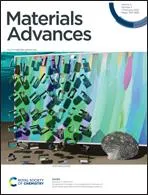

Computing of neuromorphic materials: an emerging approach for bioengineering solutions
文献情報
出版日
2023-10-18
DOI
10.1039/D3MA00449J
インパクトファクター
0
著者
Amrinder Mehta
原文を見る
要旨
The potential of neuromorphic computing to bring about revolutionary advancements in multiple disciplines, such as artificial intelligence (AI), robotics, neurology, and cognitive science, is well recognised. This paper presents a comprehensive survey of current advancements in the use of machine learning techniques for the logical development of neuromorphic materials for engineering solutions. The amalgamation of neuromorphic technology and material design possesses the potential to fundamentally revolutionise the procedure of material exploration, optimise material architectures at the atomic or molecular level, foster self-adaptive materials, augment energy efficiency, and enhance the efficacy of brain–machine interfaces (BMIs). Consequently, it has the potential to bring about a paradigm shift in various sectors and generate innovative prospects within the fields of material science and engineering. The objective of this study is to advance the field of artificial intelligence (AI) by creating hardware for neural networks that is energy-efficient. Additionally, the research attempts to improve neuron models, learning algorithms, and learning rules. The ultimate goal is to bring about a transformative impact on AI and better the overall efficiency of computer systems.
関連文献
PhNCO-enabled synthesis of secondary amides from N-(2-aminophenyl)benzamides
Karthick Govindan, Nian-Qi Chen, Alageswaran Jayaram
2023-12-06
Paper
DOI: 10.1039/D3NJ04995G
Efficient perovskite oxide@CdS composite catalysts for hydrogen production from oilfield wastewater electrolysis
Jianzhao Cao, Ying Qi, Zhaoxiang Qi, Junzi Huang, Yahong Xie
2023-11-07
Paper
DOI: 10.1039/D3NJ04507B
(Co,Mn)3O4-doped carbon nanotube composite as a bifunctional electrocatalyst for aluminum–air batteries
Xi Wang, Zhao Li, Lei Liu, Jiuqing Hu, Haobo Shen, Rongrong Li, Zhiqiang Geng, Zunlong Jin, Changliang Wang
2023-12-20
Paper
DOI: 10.1039/D3NJ05117J
Gd doped LaFeCuO3 perovskites for enhanced olefin selectivity in CO2 hydrogenation
Lihai Ma, Wenlong Song, Yaqin Xing, Kangzhou Wang, Xinhua Gao, Qingxiang Ma, Jianli Zhang, Jingjing Ma, Qingjie Guo
2023-12-05
Paper
DOI: 10.1039/D3NJ04905A
Constructing carbon nanotube-optimized hollow Ti3C2 MXene hierarchical conductive networks for robust lithium–sulfur batteries
Ran Liu, Shengjun Zhai, Zimujun Ye, Mengzhu Liu, Yang Xu, Changwen Li, Xianbao Wang, Tao Mei
2023-10-23
Paper
DOI: 10.1039/D3TA04677J
α-Ag2S nanoparticles: low-temperature syntheses, crystallisation pathway, and first operando luminescence measurements for sodium-ion battery applications
J. Ströh, L. Ohrt, A. Harder, Y. Collette, L. Liers, D. Novikov, A. Khadiev, C. L. Teske
2023-11-20
Paper
DOI: 10.1039/D3NJ04282K
In situ forming, mechanically resilient hydrogels prepared from 4a-[PEG-b-PTMC-Ac] and thiolated chondroitin sulfate for nucleus pulposus cell delivery
Hossein Riahinezhad, Brian G. Amsden
2023-12-21
Paper
DOI: 10.1039/D3TB02574H
A terbium-functionalized ZIF-8 nanosensor for rapid and sensitive detection of an anthrax spore biomarker
Xurong Zuo, Pengfei Liu, Qinhao Sun, Jiahui Huang, Yuwei Zhang, Xuecheng Zhu, Runqi Chen
2023-12-18
Paper
DOI: 10.1039/D3NJ04760A
Effect of multi arm-PEG-NHS (polyethylene glycol n-hydroxysuccinimide) branching on cell adhesion to modified decellularized bovine and porcine pericardium
Sreypich Say, Mika Suzuki, Yoshihide Hashimoto, Tsuyoshi Kimura, Akio Kishida
2023-12-21
Paper
DOI: 10.1039/D3TB01661G
Enhancing energy extraction from water microdroplets through synergistic electrokinetic and galvanic effects
Haitao Li, Wenxing Wang, Xiangming Li, Tharishinny Raja Mogan, Linan Xu, Jie Han
2023-11-02
Paper
DOI: 10.1039/D3TA04394K
こちらもおすすめ
化合物よくある質問
N-乙酰基-L-精氨酸はどのように合成されますか?
N-乙酰基-L-精氨酸は、L-精氨酸をエタノールと酸化アクリル酸で反応させて得られます。この合成過程では、酸化アクリル酸がL-精氨酸のN-アミノグループに結合す...
155-84-0N~2~-Acetyl-L-argini...
化合物よくある質問
カウウェルパリミタートを含む廃棄物はどのように処理すべきですか?
カウウェルパリミタートの廃棄物は、化学廃棄物として適切に収集し、専門的な廃棄処理業者に委託します。処理には、有害物質の除去と環境への影響最小化が重要です。温度は...
81760-45-4Kahweol palmitate
化合物よくある質問
タテライル1,4,8,11-テトラエチルアセートの代替品はありますか?
タテライル1,4,8,11-テトラエチルアセートの代替品として、他のエチルエステル化合物や、有機窒素化合物が考えられます。ただし、代替品の選択は目的や使用条件に...
126320-57-8Tetraethyl 1,4,8,11-...
化合物よくある質問
異丁卡因を取り扱う際の実験室安全事項は何ですか?
異丁卡因は毒性があり、皮膚や目を刺激する可能性があります。作業中は保護目鏡、防護手袋、防護マスクを使用し、ドラフトチャンバーで扱うべきです。漏えいした場合、その...
94-14-4Isobutamben
化合物よくある質問
4-氯-2-丙基吡啶を取り扱う際の実験室安全事項は何ですか?
4-氯-2-丙基吡啶は有毒で、吸入や皮膚接触を避けることが重要です。PPEとしてゴーグル、マスク、長袖のガウン、手袋を使用し、ドラフトチャンバーを用いて操作しま...
93856-98-54-Chloro-2-propylpyr...
化合物よくある質問
9,10-脱水阿霉素について適用される法規ガイドラインは何ですか?
CAS番号80996-23-2の9,10-脱水阿霉素は、GHS分類においては第3類毒性物質に分類され、REACH規則においてはカテゴリー1の急性毒性物質とされて...
80996-23-29,10-Anhydroadriamyc...
化合物よくある質問
4-(3-溴苯基)噻唑-2-甲酸の物理化学的性質は何ですか?
4-(3-溴苯基)噻唑-2-甲酸の分子量は265.01です。この化合物は水に微溶です。反応性は中程度で、酸性やアルカリ性の条件下で分解する可能性があります。
808128-00-94-(3-Bromophenyl)-1,...
化合物よくある質問
3-(4-塩素フェニル)-3-オキセタニアミン塩酸塩はどの業界で使用されていますか?
3-(4-塩素フェニル)-3-オキセタニアミン塩酸塩は、医薬業界、ポリマー業界、センサー業界、半導体業界などで使用されています。この化合物は薬物開発の一部として...
1245782-61-93-(4-Chlorophenyl)-3...
化合物よくある質問
氮卓斯汀杂质Eを取り扱う際の実験室安全事項は何ですか?
氮卓斯汀杂质E(CAS番号: 20526-97-0)を扱う際は、ゴーグルとシールド付きの手袋を使用し、漏洩がある場合はドラフトチャンバーを使用して処理することを...
20526-97-03-(4-chlorobenzylide...
化合物よくある質問
デシシボチル-n-ブチルボルテゾミブはどのように保存すればよいですか?
デシシボチル-n-ブチルボルテゾミブは室温で保管し、直日光から遠ざけて密栓容器に保管することが推奨されます。
1104011-35-9Desisobutyl-n-butyl ...
掲載誌
おすすめ化合物

おすすめサプライヤー




免責事項
このページに表示される学術雑誌情報は、参考および研究目的のみを目的としています。当社は雑誌出版社とは提携しておらず、投稿の取り扱いも行っておりません。出版に関するお問い合わせは、各雑誌出版社に直接ご連絡ください。
表示されている情報に誤りがある場合は、support@chemtradehub.com までご連絡ください。迅速に確認し、対応いたします。