












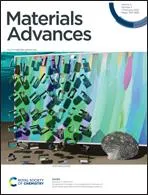
The modulation of tumor-associated macrophages via natural nanomodulators by neutralizing the acidic tumor microenvironment for tumor treatment
文献情報
出版日
2023-11-23
DOI
10.1039/D3MA00243H
インパクトファクター
0
著者
Lei Peng, Chenxu Zhang, Guanlun Zhou, Yongjian Wang
原文を見る
要旨
Tumor-associated macrophages (TAMs) account for nearly half the mass of solid tumors. A number of studies show that TAMs are similar to M2 macrophages, which have strong immunosuppressive activity. Manipulation of the phenotype of TAMs is a novel and potential therapeutic approach to enhance antitumor immunity. Based on this, this paper comprehensively reveals that immunomodulator β-glucan (Glu) could not fully exert its role in reversing macrophage polarization under acidic conditions, and calcium carbonate improved the role of Glu by neutralizing the acidic environment. To be specific, by constructing a Glu and calcium carbonate co-precipitation system (Glu-VCC), Glu-VCC could exhibit a stronger immune-activating effect through a cascade reaction with its ability to continuously regulate the tumor microenvironment. Glu-VCC nanoparticles can raise the pH of the tumor tissue from 6.7 to 7.0 and increase M1-like macrophages by 57% compared to the limited reversal ability of Glu toward TAMs. In addition, Glu-VCC showed excellent tumor clearance in in vivo experiments. These results not only expand the use of calcium carbonate in the delivery of drugs but also provide new ideas for tumor immunotherapy.
関連文献
Conjugates of titanocene with non-steroidal anti-inflammatory drugs: synthesis, unusual NMR characteristics, stability and cytotoxicity
Dmitry A. Guk, Karina R. Gibadullina, Anna A. Moiseeva, Yuri K. Grishin, Vitaly A. Roznyatovsky, Daria S. Prosuntsova, Irina A. Ananieva, Erik R. Gandalipov, Elena K. Beloglazkina
2023-12-15
Paper
DOI: 10.1039/D3NJ04845D
A light-sensitive protein-based wearable pH biometer
Siyuan Chen, Shiwang Xie, Zhou Li, Yujia Lv, Dan Luo
2024-01-15
Paper
DOI: 10.1039/D3TB02466K
A terbium-functionalized ZIF-8 nanosensor for rapid and sensitive detection of an anthrax spore biomarker
Xurong Zuo, Pengfei Liu, Qinhao Sun, Jiahui Huang, Yuwei Zhang, Xuecheng Zhu, Runqi Chen
2023-12-18
Paper
DOI: 10.1039/D3NJ04760A
Supramolecular assembly-induced electrochemiluminescence enhancement of gold nanoclusters for hemoglobin detection
Xue Ge, Mingming Zhang, Fei Yin, Qian Sun, Fan Mo, Xinzhou Huang, Ying Zheng, Yuanjian Zhang
2024-01-11
Paper
DOI: 10.1039/D3TB02892E
Chemical fuel energy driving polymerization towards porous carbon nitride for energy storage application
Tatyana Jackson, Schindra Kumar Ray, Kiran Subedi, Tansir Ahamad, Bishnu Prasad Bastakoti
2023-12-19
Paper
DOI: 10.1039/D3NJ02100A
Monophenylboryl aza-BODIPY with free rotation of the B-phenyl group for enhanced photothermal conversion
Yiming Zhang, Sicheng Li, Jie Wang, Dongxiang Zhang, Meiheng Lv, Yue Shen, Zhangrun Xu, Jianjun Du, Xin-Dong Jiang
2024-01-05
Paper
DOI: 10.1039/D3TB02623J
Enhancing energy extraction from water microdroplets through synergistic electrokinetic and galvanic effects
Haitao Li, Wenxing Wang, Xiangming Li, Tharishinny Raja Mogan, Linan Xu, Jie Han
2023-11-02
Paper
DOI: 10.1039/D3TA04394K
Aryl group transfer and C–P bond formation in the reaction of organonickel complexes with sodium 3,4,5-triphenyl-1,2-diphospholide
I. F. Sakhapov, Z. N. Gafurov, M. M. Petrova, I. A. Litvinov, V. A. Miluykov, A. G. Shmelev, O. G. Sinyashin
2023-12-13
Paper
DOI: 10.1039/D3NJ04924H
Near-infrared light-actuated on-demand botanicals release and hyperthermia by an antibiotic-free polysaccharide-based hydrogel dressing for the synergistic treatment of wound infections
Shuwen Sun, Wenbo Lin, Lu Yang, Chenhao Zhang
2024-01-03
Paper
DOI: 10.1039/D3TB02714G
Molecular dynamics studies of disulfide bonds for enhancing the stability of serine protease PB92
2023-12-22
Paper
DOI: 10.1039/D3NJ04676A
こちらもおすすめ
化合物よくある質問
N-乙酰基-L-精氨酸はどのように合成されますか?
N-乙酰基-L-精氨酸は、L-精氨酸をエタノールと酸化アクリル酸で反応させて得られます。この合成過程では、酸化アクリル酸がL-精氨酸のN-アミノグループに結合す...
155-84-0N~2~-Acetyl-L-argini...
化合物よくある質問
カウウェルパリミタートを含む廃棄物はどのように処理すべきですか?
カウウェルパリミタートの廃棄物は、化学廃棄物として適切に収集し、専門的な廃棄処理業者に委託します。処理には、有害物質の除去と環境への影響最小化が重要です。温度は...
81760-45-4Kahweol palmitate
化合物よくある質問
タテライル1,4,8,11-テトラエチルアセートの代替品はありますか?
タテライル1,4,8,11-テトラエチルアセートの代替品として、他のエチルエステル化合物や、有機窒素化合物が考えられます。ただし、代替品の選択は目的や使用条件に...
126320-57-8Tetraethyl 1,4,8,11-...
化合物よくある質問
異丁卡因を取り扱う際の実験室安全事項は何ですか?
異丁卡因は毒性があり、皮膚や目を刺激する可能性があります。作業中は保護目鏡、防護手袋、防護マスクを使用し、ドラフトチャンバーで扱うべきです。漏えいした場合、その...
94-14-4Isobutamben
化合物よくある質問
4-氯-2-丙基吡啶を取り扱う際の実験室安全事項は何ですか?
4-氯-2-丙基吡啶は有毒で、吸入や皮膚接触を避けることが重要です。PPEとしてゴーグル、マスク、長袖のガウン、手袋を使用し、ドラフトチャンバーを用いて操作しま...
93856-98-54-Chloro-2-propylpyr...
化合物よくある質問
9,10-脱水阿霉素について適用される法規ガイドラインは何ですか?
CAS番号80996-23-2の9,10-脱水阿霉素は、GHS分類においては第3類毒性物質に分類され、REACH規則においてはカテゴリー1の急性毒性物質とされて...
80996-23-29,10-Anhydroadriamyc...
化合物よくある質問
4-(3-溴苯基)噻唑-2-甲酸の物理化学的性質は何ですか?
4-(3-溴苯基)噻唑-2-甲酸の分子量は265.01です。この化合物は水に微溶です。反応性は中程度で、酸性やアルカリ性の条件下で分解する可能性があります。
808128-00-94-(3-Bromophenyl)-1,...
化合物よくある質問
3-(4-塩素フェニル)-3-オキセタニアミン塩酸塩はどの業界で使用されていますか?
3-(4-塩素フェニル)-3-オキセタニアミン塩酸塩は、医薬業界、ポリマー業界、センサー業界、半導体業界などで使用されています。この化合物は薬物開発の一部として...
1245782-61-93-(4-Chlorophenyl)-3...
化合物よくある質問
氮卓斯汀杂质Eを取り扱う際の実験室安全事項は何ですか?
氮卓斯汀杂质E(CAS番号: 20526-97-0)を扱う際は、ゴーグルとシールド付きの手袋を使用し、漏洩がある場合はドラフトチャンバーを使用して処理することを...
20526-97-03-(4-chlorobenzylide...
化合物よくある質問
デシシボチル-n-ブチルボルテゾミブはどのように保存すればよいですか?
デシシボチル-n-ブチルボルテゾミブは室温で保管し、直日光から遠ざけて密栓容器に保管することが推奨されます。
1104011-35-9Desisobutyl-n-butyl ...
掲載誌
おすすめ化合物
![7-Amino-5-methyl-5,7-dihydro-6H-dibenzo[b,d]azepin-6-one hydrochloride (1:1) structure](https://static.chemtradehub.com/structs/209/209984-32-7-9912.webp "7-Amino-5-methyl-5,7-dihydro-6H-dibenzo[b,d]azepin-6-one hydrochloride (1:1) structure")
7-Amino-5-methyl-5,7-dihydro-6H-dibenzo[b,d]azepin-6-one hydrochloride (1:1)
CAS番号:
209984-32-7
分子式:
C15H15ClN2O
おすすめサプライヤー




免責事項
このページに表示される学術雑誌情報は、参考および研究目的のみを目的としています。当社は雑誌出版社とは提携しておらず、投稿の取り扱いも行っておりません。出版に関するお問い合わせは、各雑誌出版社に直接ご連絡ください。
表示されている情報に誤りがある場合は、support@chemtradehub.com までご連絡ください。迅速に確認し、対応いたします。