












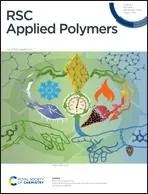
Pristine coconut husk biowaste and 2-ethylhexyl acrylate/methyl acrylate-based novel oleophilic gels for oil spill cleanup
文献情報
出版日
2023-10-13
DOI
10.1039/D3LP00118K
インパクトファクター
0
著者
Kavita Devi, Ghanshyam S. Chauhan, Sunita Ranote, Sandeep Chauhan, Kiran Kumar
原文を見る
要旨
Oil pollution due to accidental oil spills and unethical industrial discharge into the aquatic system has been a major problem for decades. Industrialization and urbanization have made us dependent on petroleum products for survival. Hence, with the augmented transportation of these oil products, incidents of oil spill accidents have now become common. Water pollution due to these spills drastically affects aquatic and terrestrial life. Thus, it necessitates the use of economical and eco-friendly biosorbents for oil spill remediation. Herein, we report the synthesis of efficient oleophilic gels based on pristine coconut husk (Ch) and acrylate monomers [2-ethylhexyl acrylate and methyl acrylate] using the free radical polymerization technique with potassium persulfate (KPS)-N,N′-methylenebisacrylamide (MBA) as an initiator–crosslinker system. The synthesized oleophilic gels were characterized further using different techniques. The adsorption of various petroleum products such as toluene, petroleum ether, petrol, and diesel from their respective oil–water emulsions has been studied. The polymers poly(EHA)-cl-Ch and poly(MA)-cl-Ch synthesized with 2% [MBA] showed maximum adsorption capacities of 15.2 g g−1 and 13.0 g g−1, respectively, within 60 min at 35 °C, which is far better than pristine coconut husk which showed an adsorption capacity of only 2.1 g g−1 under the same conditions. The kinetics data best fitted in the pseudo-second-order kinetics model. The oleophilic gels were found to be reusable with appreciable adsorption of up to six cycles of regeneration. The cumulative adsorption capacities of poly(EHA)-cl-Ch and poly(MA)-cl-Ch were found to be 50.0 g g−1 and 35.2 g g−1, respectively. The effect of salinity on the adsorption capacity was also investigated using varied brine water emulsions. The oleophilic gels showed comparable adsorption capacities of 15.0 g g−1 and 12.2 g g−1 for poly(EHA)-cl-Ch and poly(MA)-cl-Ch, respectively, at a lower brine water concentration (1%). At a higher concentration of brine solution (5%), appreciable adsorption capacities of 12.8 g g−1 and 10.4 g g−1 were reported. A comparison between the two monomers clearly depicted the increase in the oleophilic capacity with the increase in the hydrocarbon chain. The synthesized oleophilic gels are, therefore, suitable candidates for dealing with oil spill cleanup.
関連文献
Ion-chelation based digital barcodes for multiplexing of a suspension array
Bangrong Lu, Bei Wang, Xuesi Zhou, Jiangfeng Ding
2019-05-14
Paper
DOI: 10.1039/C9AN00343F
Identification of neural stem and progenitor cell subpopulations using DC insulator-based dielectrophoresis
Yameng Liu, Estelle Kim, Clarissa Ro, Thomas J. Taylor, Mark A. Hayes
2019-06-03
Paper
DOI: 10.1039/C9AN00456D
In vitro antibacterial activity of oxide and non-oxide bioceramics for arthroplastic devices: I. In situ time-lapse Raman spectroscopy
Ryan M. Bock, Bryan J. McEntire, Tetsuya Adachi, Wenliang Zhu, Osam Mazda
2018-06-15
Paper
DOI: 10.1039/C8AN00233A
Hot off the press
Robert A. Hill, Marie Claire Parker
2002-01-09
Hot off the Press Article
DOI: 10.1039/B111219H
Electrochemiluminescence biosensing based on different modes of switching signals
Ying Zhuo, Hai-Jun Wang, Yan-Mei Lei, Pu Zhang, Jia-Li Liu, Ya-Qin Chai, Ruo Yuan
2018-05-23
Critical Review
DOI: 10.1039/C8AN00276B
こちらもおすすめ
化合物よくある質問
環戊烷-1,3-二甲酸甲酯はどのように合成されますか?
環戊烷-1,3-二甲酸甲酯は、環戊烷と塩酸によるヒンデンブルク反応を経由して合成されます。この反応では、環戊烷が塩酸と作用し、1,3-ジカルボキシ基が導入されま...
2435-36-1Dimethyl 1,3-cyclope...
化合物よくある質問
4-メトキシ-1,2,3-スチアゼ-3,5-ジオンとは何ですか?
4-メトキシ-1,2,3-スチアゼ-3,5-ジオンは、CAS番号107843-77-6の化合物で、(E)-ベンジル3-(3,4-ジヒドロキシフェニル) acry...
107843-77-6(E)-Benzyl 3-(3,4-di...
化合物よくある質問
プロスタグランジンA2について「に適用される法規ガイドラインは何ですか?'
プロスタグランジンA2 (CAS番号: 41691-92-3) は、化学物質の安全管理に関する規制として、GHS (危険物質の国際的ハザード分類・ラベル付けシス...
41691-92-316,16-DIMETHYL PROST...
化合物よくある質問
4-アミノ-1-ナフタレン sulfonic 酸についての物理化学的性質は何ですか?
4-アミノ-1-ナフタレン sulfonic 酸のCAS番号は84-86-6です。この化合物は結晶性で、分子量は212.15 g/molです。アルコールや水など...
84-86-64-Amino-1-naphthalen...
化合物よくある質問
N-GlcNAc-生物素を取り扱う際の実験室安全事項は何ですか?
N-GlcNAc-生物素は吸収性があり、皮膚や目への接触を避けることが重要です。PPE(個体保護具)は使用し、ドラフトチャンバーは必要に応じて使用します。漏洩時...
1272755-69-72-Acetamido-2-deoxy-...
化合物よくある質問
3-アミノメチルフローラノピペリジン-1-カルボニル酸テルブチルエステルとは何ですか?
CAS番号1209781-11-2の3-アミノメチルフローラノピペリジン-1-カルボニル酸テルブチルエステルは、有機化合物の一種で、化学式はC10H17FNO3...
1209781-11-22-Methyl-2-propanyl ...
化合物よくある質問
6-溴-1-甲基-1H-ベンゾ[d][1,2,3]三氮唑はどのように合成されますか?
6- bromo-1-methyl-1H-benzotriazoleは、ブロモフリオリンと1-メチル-1H-ベンゾ[d][1,2,3]三氮唑の反応により合成され...
944718-32-56-Bromo-1-methyl-1H-...
化合物よくある質問
4-硫代尿苷はどのように合成されますか?
4-硫代尿苷は、尿素とD-リボシルヒドロキシアルデヒドを用いてスルホン化反応を経て合成されます。通常は塩酸ヒドロキシチオニルスルホン酸などの触媒を使用し、選択性...
6741-73-71-(4-thio-beta-D-rib...
化合物よくある質問
ブレインナトリユリックペプチド32ラットとは何ですか?
ブレインナトリユリックペプチド32ラット(CAS番号: 133448-20-1)は、心臓で作られるホルモンの一つで、心不全の診断や予後評価に使用されます。
133448-20-1Brain Natriuretic Pe...
化合物よくある質問
1-(3-氮杂啶)-4-羟基哌啶双盐酸盐の物理化学的性質は何ですか?
CAS番号810680-60-5の1-(3-氮杂啶)-4-羟基哌啶双盐酸盐は、白色の結晶性粉末である。分子量は360.84 g/molで、水に溶けやすい。反応活...
810680-60-51-(3-Azetidinyl)-4-p...
掲載誌
おすすめ化合物
![Ethyl 3-((6-(4,5-dihydro-1H-benzo[d]azepin-3(2H)-yl)-2-(pyridin-2-yl)pyrimidin-4-yl)amino)propanoate structure](https://static.chemtradehub.com/structs/137/1373423-53-0-496a.webp "Ethyl 3-((6-(4,5-dihydro-1H-benzo[d]azepin-3(2H)-yl)-2-(pyridin-2-yl)pyrimidin-4-yl)amino)propanoate structure")
おすすめサプライヤー






免責事項
このページに表示される学術雑誌情報は、参考および研究目的のみを目的としています。当社は雑誌出版社とは提携しておらず、投稿の取り扱いも行っておりません。出版に関するお問い合わせは、各雑誌出版社に直接ご連絡ください。
表示されている情報に誤りがある場合は、support@chemtradehub.com までご連絡ください。迅速に確認し、対応いたします。