












Rational design from materials to devices enables an efficiency of 10.5% based on thermoelectric (Bi, Sb)2Te3 and Mg3(Bi, Sb)2 for power generation
文献情報
出版日
2023-12-07
DOI
10.1039/D3EE03411A
インパクトファクター
38.532
著者
Yuxin Sun, Yuke Zhu, Hao Wu, Nuo Qu, Liangjun Xie, Jianbo Zhu, Zihang Liu, Qian Zhang, Wei Cai, Fengkai Guo, Jiehe Sui
原文を見る
要旨
p-Type (Bi, Sb)2Te3 is the most excellent thermoelectric material near room temperature; however, the drastically declined performance makes it incapable of coping with low-grade waste heat recovery scenarios above 500 K. Herein, firstly, a great advance in thermoelectric performance is realized through reasonable composition control and microstructure design, including lithium acceptor doping to improve the electrical transport performance and subsequent Te addition to suppress the donor-like effect to further fine-tune the power factor, as well as the construction of dispersed nanopores, which leads to very low thermal conductivity. As a result, a highly competitive ZT of 1.42 at 373 K and a ZTave of 1.23 from 303 K to 523 K are achieved concurrently. Secondly, (Bi, Sb)2Te3 and its higher-temperature analogue Sb2Te3 are organized in a segmented structure by one-step sintering to broaden the temperature range. Similarly, optimized Mg3(Sb, Bi)2 materials with different high-performance temperature ranges are used to prepare the n-type segmented leg. Finally, a 2-pair module is fabricated, showing an efficiency of up to 10.5% and a power density of 0.53 W cm−2 with a temperature difference of 380 K. This work provides robust evidence for the high potential of (Bi, Sb)2Te3/Mg3(Bi, Sb)2 segmented modules for waste heat recovery.
関連文献
PAMAM dendrimers for efficient siRNA delivery and potent gene silencing
Jiehua Zhou, Nadia Hafdi, Jean-Paul Behr, Patrick Erbacher
2006-05-10
Communication
DOI: 10.1039/B601381C
A missing allene of heavy Group 14 elements: 2-germadisilaallene
Takeaki Iwamoto, Takashi Abe, Chizuko Kabuto, Mitsuo Kira
2005-09-12
Communication
DOI: 10.1039/B509878E
Fabrication of bismuth subcarbonate nanotube arrays from bismuth citrate
Rong Chen, Man Ho So, Jun Yang, Feng Deng, Chi-Ming Che, Hongzhe Sun
2006-04-25
Communication
DOI: 10.1039/B601764A
Smart amphiphiles: hydro/organogelators for in situreduction of gold
Praveen Kumar Vemula, George John
2006-02-23
Communication
DOI: 10.1039/B518289A
On the influence of porphyrin π–π stacking on supramolecular chirality created in the porphyrin-based twisted tape structure
Masayuki Takeuchi, Satoshi Tanaka, Seiji Shinkai
2005-10-04
Communication
DOI: 10.1039/B512128K
Evidence for C–C bond cleavage by H2O2 in a mesoporous CMK-5 type carbon at room temperature
An-Hui Lu, Wen-Cui Li, Nelli Muratova, Bernd Spliethoff, Ferdi Schüth
2005-09-20
Communication
DOI: 10.1039/B509300G
Quinoidal oligoquinoline: a novel quinodimethane exhibiting high electroluminescence efficiency and p-channel field effect charge transport
Christopher J. Tonzola, Jessica M. Hancock, Amit Babel, Samson A. Jenekhe
2005-09-21
Communication
DOI: 10.1039/B509322H
Easy access to the family of thiazole N-oxides using HOF·CH3CN
Elizabeta Amir, Shlomo Rozen
2006-04-25
Communication
DOI: 10.1039/B602594C
Switching a molecular shuttle on and off: simple, pH-controlled pseudorotaxanes based on cucurbit[7]uril
Vladimir Sindelar, Serena Silvi, Angel E. Kaifer
2006-03-31
Communication
DOI: 10.1039/B601959E
Recent progress in cobalt-mediated [2 + 2 + 2] cycloaddition reactions
Vincent Gandon, Corinne Aubert, Max Malacria
2006-03-16
Feature Article
DOI: 10.1039/B517696B
こちらもおすすめ
化合物よくある質問
S-(甲硅烷基丙基)異硫酰氯を取り扱う際の実験室安全事項は何ですか?
取り扱う際にはPPE(防護具)が必要です。特に手袋と面マスクは必須です。ドラフトチャンバーを使用して漏洩処理を行い、温度は常温、湿度は乾燥状態、容器はガラス容器...
84682-36-02-Amino-7,7-dimethox...
化合物よくある質問
8-硝基-咪唑并[1,2-a]吡啶とは何ですか?
8-硝基-咪唑并[1,2-a]吡啶は、CAS番号52310-46-0の化合物で、8-位に硝基を有する咪唑並みの结构をもつ吡啶の化合物です。この化合物は、酸化還元...
52310-46-08-Nitroimidazo[1,2-a...
化合物よくある質問
4-ブロモ-5-メトキシピリジン-2-甲醇の代替品はありますか?
4-ブロモ-5-メトキシピリジン-2-甲醇の代替品には、類似構造を持つ化合物や機能性に等しい代替試薬があります。例えば、4-クロロ-5-メトキシピリジン-2-甲...
1454849-84-3(4-Bromo-5-methoxy-2...
化合物よくある質問
全氟-1,2-二甲基環己烷を含む廃棄物はどのように処理すべきですか?
全氟-1,2-二甲基環己烷(CAS番号:306-98-9)の廃棄物は、特別な処理が必要です。まず、廃棄物を密閉容器に収集し、適切な防漏容器に保管します。次に、専...
306-98-91,1,2,2,3,3,4,4,5,6-...
化合物よくある質問
3-(溴甲基)苯乙酸の主な用途は何ですか?
3-(溴甲基)苯乙酸は主に研究用化学薬品として利用され、有機合成や医薬品の開発に用いられます。また、特定の化合物の合成中間体としても使用されることがあります。
118647-53-32-(3-(Bromomethyl)ph...
化合物よくある質問
5-イドキド-4-メチオキシ-6-メチルピリミジニン-2-アミンはどのように保存すればよいですか?
5-イドキド-4-メチオキシ-6-メチルピリミジニン-2-アミンは冷暗所で密栓の容器に保存し、直射日光を避けて保管することをお勧めします。温度は常温とし、湿気を...
23368-84-55-Iodo-4-methoxy-6-m...
化合物よくある質問
1-(2-溴-6-甲氧基苯基)乙酮を取り扱う際の実験室安全事項は何ですか?
実験室では、1-(2- Bromo-6-methoxyphenyl)ethanoneを取り扱う際には、ゴーグルや面具、手袋などのPPEを使用することが推奨されま...
380225-68-31-(2-Bromo-6-methoxy...
化合物よくある質問
5-(4,4,5,5-テトラメチル-1,3,2-ダイオキサボラロール-2-イル)-1,3-ジヒドロ-2-ベンゾフランは安全ですか?
5-(4,4,5,5-テトラメチル-1,3,2-ダイオキサボラロール-2-イル)-1,3-ジヒドロ-2-ベンゾフランは一般に安全ですが、取扱いには注意が必要です...
1352037-60-55-(4,4,5,5-Tetrameth...
化合物よくある質問
4-溴萘-1-甲酸の代替品はありますか?
4-溴萘-1-甲酸は比較的稀な化合物ですが、類似物としては、4-クロロ-1-ナフホリック酸やその他のブロモ置換ナフホリック酸が挙げられます。ただし、これらの代替...
16650-55-84-Bromo-1-naphthoic ...
化合物よくある質問
ε-白藜芦醇脱氢二聚体の代替品はありますか?
ε-白藜芦醇脱氢二聚体の代替品としては、ε-白藜芦醇、ポリフェノール類、フラボノイド類が挙げられます。これらは類似の化学構造と生物学的活性を持っています。ただし...
62218-08-05-{(2R,3R)-6-Hydroxy...
掲載誌
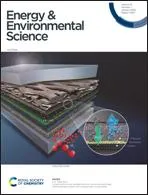
Energy & Environmental Science
CiteScore:
32.34
自己引用率:
3.4%
年間論文数:
481
Energy & Environmental Science is an international journal dedicated to publishing exceptionally important and high quality, agenda-setting research tackling the key global and societal challenges of ensuring the provision of energy and protecting our environment for the future. The scope is intentionally broad and the journal recognises the complexity of issues and challenges relating to energy conversion and storage, alternative fuel technologies and environmental science. For work to be published it must be linked to the energy-environment nexus and be of significant general interest to our community-spanning readership. All scales of studies and analysis, from impactful fundamental advances, to interdisciplinary research across the (bio)chemical, (bio/geo)physical sciences and chemical engineering disciplines are welcomed. Topics include, but are not limited to, the following: Solar energy conversion and photovoltaics Solar fuels and artificial photosynthesis Fuel cells Hydrogen storage and (bio) hydrogen production Materials for energy systems Capture, storage and fate of CO2, including chemicals and fuels from CO2 Catalysis for a variety of feedstocks (for example, oil, gas, coal, biomass and synthesis gas) Biofuels and biorefineries Materials in extreme environments Environmental impacts of energy technologies Global atmospheric chemistry and climate change as related to energy systems Water-energy nexus Energy systems and networks Globally applicable principles of energy policy and techno-economics
おすすめ化合物
![(1S)-1,5-Anhydro-1-[3-(1-benzothiophen-2-ylmethyl)-4-fluorophenyl]-D-glucitol structure](https://static.chemtradehub.com/structs/761/761423-87-4-dbeb.webp "(1S)-1,5-Anhydro-1-[3-(1-benzothiophen-2-ylmethyl)-4-fluorophenyl]-D-glucitol structure")
(1S)-1,5-Anhydro-1-[3-(1-benzothiophen-2-ylmethyl)-4-fluorophenyl]-D-glucitol
CAS番号:
761423-87-4
分子式:
C21H21FO5S
おすすめサプライヤー






免責事項
このページに表示される学術雑誌情報は、参考および研究目的のみを目的としています。当社は雑誌出版社とは提携しておらず、投稿の取り扱いも行っておりません。出版に関するお問い合わせは、各雑誌出版社に直接ご連絡ください。
表示されている情報に誤りがある場合は、support@chemtradehub.com までご連絡ください。迅速に確認し、対応いたします。