


![Bis[(1,2,3,4,5-eta)-1-(diphenylphosphino)cyclopentadienyl]iron structure](https://static.chemtradehub.com/structs/121/12150-46-8-ecd2.webp "Bis[(1,2,3,4,5-eta)-1-(diphenylphosphino)cyclopentadienyl]iron structure")
Multifaceted behavior of a doubly reduced arylborane in B–H-bond activation and hydroboration catalysis
文献情報
出版日
2022-12-05
DOI
10.1039/D2SC05518J
インパクトファクター
9.825
著者
Sven E. Prey, Christoph Herok, Michael Bolte, Hans-Wolfram Lerner, Bernd Engels, Matthias Wagner
原文を見る
要旨
Alkali-metal salts of 9,10-dimethyl-9,10-dihydro-9,10-diboraanthrancene (M2[DBA-Me2]; M+ = Li+, Na+, K+) activate the H–B bond of pinacolborane (HBpin) in THF already at room temperature. For M+ = Na+, K+, the addition products M2[4] are formed, which contain one new H–B and one new B–Bpin bond; for M+ = Li+, the H− ion is instantaneously transferred from the DBA-Me2 unit to another equivalent of HBpin to afford Li[5]. Although Li[5] might commonly be considered a [Bpin]− adduct of neutral DBA-Me2, it donates a [Bpin]+ cation to Li[SiPh3], generating the silyl borane Ph3Si–Bpin; Li2[DBA-Me2] with an aromatic central B2C4 ring acts as the leaving group. Furthermore, Li2[DBA-Me2] catalyzes the hydroboration of various unsaturated substrates with HBpin in THF. Quantum-chemical calculations complemented by in situ NMR spectroscopy revealed two different mechanistic scenarios that are governed by the steric demand of the substrate used: in the case of the bulky Ph(H)CNtBu, the reaction requires elevated temperatures of 100 °C, starts with H–Bpin activation which subsequently generates Li[BH4], so that the mechanism eventually turns into “hidden borohydride catalysis”. Ph(H)CNPh, Ph2CO, Ph2CCH2, and iPrNCNiPr undergo hydroboration already at room temperature. Here, the active hydroboration catalyst is the [4 + 2] cycloadduct between the respective substrate and Li2[DBA-Me2]: in the key step, attack of HBpin on the bridging unit opens the bicyclo[2.2.2]octadiene scaffold and gives the activated HBpin adduct of the Lewis-basic moiety that was previously coordinated to the DBA-B atom.
おすすめジャーナル

Journal of Chemical Sciences

Atomization and Sprays

Acta Metallurgica Sinica-English Letters

Bioorganic & Medicinal Chemistry Letters

Biocatalysis and Biotransformation

Medicinal Chemistry Research

Heteroatom Chemistry

Critical Reviews in Solid State and Materials Sciences

NDT & E International

Herald of the Russian Academy of Sciences
関連文献
Formation of a stannylstannylenevia intramolecular carbene addition of a transient stannaacetylene (RSnCR′)
Katsuyuki Hirai, Hideo Tomioka, Kenkichi Sakamoto, Mitsuo Kira
2008-11-11
Communication
DOI: 10.1039/B814801E
Mixed antimonate-phosphonate ligands as polydentate bridging oxygen donors
Shoaib Ali, Viswanathan Baskar, Christopher A. Muryn, Richard E. P. Winpenny
2008-11-04
Communication
DOI: 10.1039/B815270E
Aqueous dispersions of TCNQ-anion-stabilized graphene sheets
Rui Hao, Wen Qian, Luhui Zhang, Yanglong Hou
2008-11-12
Communication
DOI: 10.1039/B816971C
Evaluation of aspirinmetabolites as inhibitors of hypoxia-inducible factor hydroxylases
Benoit M. Lienard, Ana Conejo-García, Ineke Stolze, Christoph Loenarz, Neil J. Oldham, Peter J. Ratcliffe, Christopher J. Schofield
2008-11-05
Communication
DOI: 10.1039/B814440K
Fluorescent method for platinum detection in buffers and serums for cancer medicine and occupational hazards
Amanda L. Garner, Kazunori Koide
2008-11-17
Communication
DOI: 10.1039/B817220J
Reactions over catalysts confined in carbon nanotubes
Xiulian Pan, Xinhe Bao
2008-10-14
Feature Article
DOI: 10.1039/B810994J
Tin triflate-mediated total synthesis of circumdatin F, sclerotigenin, asperlicin C, and other quinazolino[3,2-a][1,4]benzodiazepines
Ming-Chung Tseng, Chi-Yu Lai, Yu-Wan Chu, Yen-Ho Chu
2008-11-19
Communication
DOI: 10.1039/B813880J
Amplified fluorescence determination of microRNAs in homogeneous solution with cationic conjugated polymers
Zhengping Li, Yongqiang Cheng
2008-11-13
Communication
DOI: 10.1039/B816614E
Dynamic kinetic resolution of β-keto sulfonesvia asymmetric transfer hydrogenation
Zhenhua Ding, Jin Yang, Ting Wang, Zongxuan Shen, Yawen Zhang
2008-12-19
Communication
DOI: 10.1039/B818257D
Ion jelly: a tailor-made conducting material for smart electrochemical devices
Pedro Vidinha, Carlos Pinheiro, Ana R. Brás, Tânia Carvalho, Teresa Santos-Silva, Abhik Mukhopadhyay, Maria J. Romão, Jorge Parola, Madalena Dionisio, Joaquim M. S. Cabral, Carlos A. M. Afonso, Susana Barreiros
2008-10-03
Communication
DOI: 10.1039/B811647D
こちらもおすすめ
化合物よくある質問
1-{3-[5-(エチルカルボンイル)-2,4-ジメチル-1H-ピロロール-3-基]プロパニル}ピペリジン-4-カルボン酸について、適用される法規ガイドラインは何ですか?
この化合物はCAS番号1142209-81-1であり、GHS分類では corrosive (腐食性物質) と classified (分類物質) として指定され...
1142209-81-11-{3-[5-(Ethoxycarbo...
化合物よくある質問
2,2-二氟-1,3-ベンゾジオキサン-5-カルボキシlic酸とは何ですか?
2,2-二氟-1,3-ベンゾジオキサン-5-カルボキシlic酸は、CAS番号656-46-2の化合物で、化学式はC8H4F2O4です。この化合物は白色の結晶性粉...
656-46-22,2-Difluoro-1,3-ben...
化合物よくある質問
8-氯-4-色原酮の代替品はありますか?
8-氯-4-色原酮(CAS番号: 49701-11-3)の代替品には、他の色原酮類似物や、構造が似ている化合物があります。例えば、8-メチル-4-色原酮や、他の...
49701-11-38-Chloro-2,3-dihydro...
化合物よくある質問
エチル6,6-ジメチル-4,5,6,7-テトラヒドロ-1H-インドアゼー-3-カルボキシレートとは何ですか?
エチル6,6-ジメチル-4,5,6,7-テトラヒドロ-1H-インドアゼー-3-カルボキシレートは、CAS番号1233243-56-5を有する化合物です。これは有...
1233243-56-5Ethyl 6,6-dimethyl-4...
化合物よくある質問
4-叔丁基-6-氯-嘧啶に適用される法規ガイドラインは何ですか?
4-叔丁基-6-氯-嘧啶はCAS番号3435-24-3で、GHS分類では毒性物質とみなし、GHSの危険性分類が適用されます。REACH規則では登録が必要で、Eu...
3435-24-34-Tert-butyl-6-chlor...
化合物よくある質問
維库溴铵杂质Bはどのように合成されますか?
維库溴铵杂质Bは、アンドロステンデンから始まり、一連の合成反応、包括的な選択性と高い収率で合成されます。具体的には、ブロミド化、酸化、ジマーゼ反応、アミド化など...
50587-95-6(2beta,3alpha,5alpha...
化合物よくある質問
2-(4-氟苄基)-吡咯烷の物理化学的性質は何ですか?
CAS番号350017-04-8の2-(4-氟苄基)-吡咯烷は、結晶性の白色粉末です。分子量は199.17 g/molで、水に溶けにくいです。化学反応では比較的...
350017-04-82-(4-Fluorobenzyl)py...
化合物よくある質問
3-喹啉甲醛(2-チロール-8-エチル)は安全ですか?
3-喹啉甲醛(2-チロール-8-エチル)は一定の毒性を持つため、取扱には注意が必要です。使用する際は適切な防護具を着用し、密閉容器で保管・搬送し、直接的な接触を...
335196-05-92-Chloro-8-ethyl-3-q...
化合物よくある質問
エチル3-(ヒドロキシメチル)-1H-ピロール-2-カルボキシレートはどのように保存すればよいですか?
エチル3-(ヒドロキシメチル)-1H-ピロール-2-カルボキシレートは、室温(25℃)以下で保存し、直射日光を避け、乾燥した環境で保管することが推奨されます。ま...
75448-69-0Ethyl 3-(hydroxymeth...
119410-05-88-Chloro-11-(4-piper...
掲載誌
Chemical Science
CiteScore:
14.4
自己引用率:
3.9%
年間論文数:
1413
Our journal has a wide-ranging scope which covers the full breadth of the chemical sciences. The research we publish contains the sorts of novel ideas, challenging questions and progressive thinking that bring undiscovered breakthroughs within reach. Your paper could focus on a single area, or cross many. It could be beyond the accepted bounds of the chemical sciences. It might address an immediate challenge, contribute to a future breakthrough or be wholly conceptual. We’re a team from every field of the chemical sciences, and know from experience that breakthroughs that drive the solutions to global challenges can come from anywhere, at any time. You could even start an entirely new area of research. Too bold? Too progressive? No such thing
おすすめ化合物


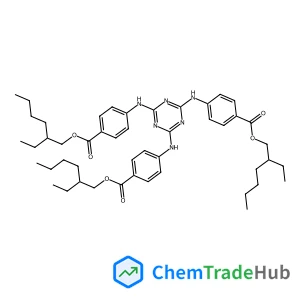
Tris(2-ethylhexyl) 4,4',4''-(1,3,5-triazine-2,4,6-triyltriimino)tribenzoate
CAS番号:
88122-99-0
分子式:
C48H66N6O6
おすすめサプライヤー





免責事項
このページに表示される学術雑誌情報は、参考および研究目的のみを目的としています。当社は雑誌出版社とは提携しておらず、投稿の取り扱いも行っておりません。出版に関するお問い合わせは、各雑誌出版社に直接ご連絡ください。
表示されている情報に誤りがある場合は、support@chemtradehub.com までご連絡ください。迅速に確認し、対応いたします。