












Direct synthesis of dimethyl ether from CO2 hydrogenation over a highly active, selective and stable catalyst containing Cu–ZnO–Al2O3/Al–Zr(1 : 1)-SBA-15
文献情報
出版日
2022-03-02
DOI
10.1039/D2RE00025C
インパクトファクター
4.239
著者
Ujjal Mondal, Ganapati D. Yadav
原文を見る
要旨
Aluminum and zirconium doped SBA-15 (Al–Zr(1 : 1)-SBA-15) mesoporous catalysts were prepared by an in situ hydrothermal method and physically mixed (1 : 1 ratio) with the Cu–ZnO–Al2O3 (CZA) catalyst for direct DME synthesis from CO2 hydrogenation. The high metal incorporation in the SBA-15 (Si/M = 10; where M = Al + Zr) framework enhances the surface area and porosity. The other physiochemical properties and catalytic activity of the Al–Zr(1 : 1)-SBA-15 catalyst were analyzed by SAXS, WAXD, N2 adsorption–desorption, TEM, SEM, EDX, XPS, CO2-TPD, NH3-TPD, FTIR, and ICP-OES. The optimum reaction conditions of DME synthesis from CO2 are as follows: 240 °C, 3 MPa pressure, H2/CO2 = 3 and GHSV of 1500 mL gcat−1 h−1. The catalyst was found to be stable during a 100 h TOS study and the CO2 conversion and DME selectivity were only reduced to 19.06 from 22.5% and 69.56 from 73.07%, respectively, and the space time yield of DME (STYDME) achieved was 160.25 gDME h−1 kgcat−1. It was found that methanol dehydration to DME synthesis followed both the Langmuir–Hinshelwood and Eley–Rideal mechanisms. The pathway is solely dependent on the availability of acidic and basic sites on the catalyst surface.
関連文献
Correlation of electrochemical and ab initio investigations of iron poly-bipyridine coordination complexes for battery applications: impact of the anionic environment and the local geometries of the redox complexes on the electrochemical response
Adama Sy, Asif Iqbal Bhatti, Fahim Hamidouche, Olivier Le Bacq, Lauréline Lecarme, Jean-Claude Leprêtre
2020-07-20
Paper
DOI: 10.1039/D0CP01576H
Luminescence and energy transfer mechanisms in photo-thermo-refractive glasses co-doped with silver molecular clusters and Eu3+
Dmitriy V. Marasanov, Leonid Yu. Mironov, Yevgeniy M. Sgibnev, Ilya E. Kolesnikov, Nikolay V. Nikonorov
2020-10-12
Paper
DOI: 10.1039/D0CP02786C
Site-specific dynamic nuclear polarization in a Gd(iii)-labeled protein
2020-10-13
Paper
DOI: 10.1039/D0CP05021K
Na2CO3-modified CaO-based CO2 sorbents: the effects of structure and morphology on CO2 uptake
Alexey Kurlov, Agnieszka M. Kierzkowska, Thomas Huthwelker, Paula M. Abdala, Christoph R. Müller
2020-10-15
Paper
DOI: 10.1039/D0CP04410E
Rotational spectra of van der Waals complexes: pyrrole–Ne and pyrrole–Ne2
Isabel Peña, Carlos Cabezas
2020-10-26
Paper
DOI: 10.1039/D0CP04580B
Optical spectra of organic dyes in condensed phases: the role of the medium polarizability
D. K. Andrea Phan Huu, Cristina Sissa, Francesca Terenziani, Anna Painelli
2020-10-21
Paper
DOI: 10.1039/D0CP04496B
Unraveling the regioselectivity of odd electron halogen bond formation using electrophilicity index and chemical hardness parameters
Prasanta Bandyopadhyay, Soumyadip Ray, Md. Motin Seikh
2019-11-15
Paper
DOI: 10.1039/C9CP05374C
Controlling the outcome of SN2 reactions in ionic liquids: from rational data set design to predictive linear regression models
Alexandra Schindl, Rebecca R. Hawker, Karin S. Schaffarczyk McHale, Kenny T.-C. Liu, Andrew Y. Hsieh, Alyssa Gilbert, Stuart W. Prescott, Ronald S. Haines, Anna K. Croft, Jason B. Harper, Christof M. Jäger
2020-10-01
Paper
DOI: 10.1039/D0CP04224B
こちらもおすすめ
化合物よくある質問
噻奈普汀乙酯の物理化学的性質は何ですか?
CAS番号66981-77-9の噻奈普汀乙酯は、結晶性白色粉末であり、分子量は476.9 g/molです。この化合物は水に溶けにくく、一般的には有機溶媒で溶解し...
66981-77-9Ethyl 7-[(3-chloro-6...
化合物よくある質問
アミピシリン不純物Fとは何ですか?
アミピシリン不純物Fは、CAS番号124774-48-7の化合物です。これは、抗生物質アミピシリンの生産過程で生成される不純物の一つであり、(4S)-2-({[...
124774-48-7Ampicillin impurity ...
化合物よくある質問
イリジウム(I)ヘキサフルオロフォスファートの代替品はありますか?
イリジウム(I)ヘキサフルオロフォスファートの代替品として、他の有機金属化合物や非有機金属化合物が使用されることがあります。具体的には、ダイゾニウム塩や他の金属...
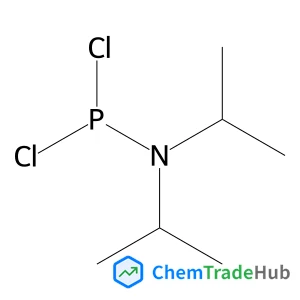
870077-94-43-Di-i-propylphosphi...
化合物よくある質問
含有3-(苯氧基甲基)苯硼酸频那醇酯の廃棄物はどのように処理すべきですか?
含有3-(苯氧基甲基)苯硼酸频那醇酯の廃棄物は、安全な方法で処理する必要があります。まず、廃棄物を適切な容器に収集し、避けて保管します。次に、専門の廃棄処理業者...
912569-68-74,4,5,5-Tetramethyl-...
化合物よくある質問
2-甲基辛-1-醇を取り扱う際の実験室安全事項は何ですか?
取り扱う際は、密閉のゴーグルと手袋を着用することが推奨されます。ドラフトチャンバーを使用し、漏洩時には速やかに取り扱いを中止し、適切な排気設備を使用してください...
818-81-52-Methyl-1-octanol
14066-05-8Scandium triperchlor...
化合物よくある質問
3α-アセトキノイドコレステロールエステルはどのように保存すればよいですか?
3α-アセトキノイドコレステロールエステルは、常温から低温(0-5℃)の暗所で保存し、密閉容器に入れることで安定性を保つことが推奨されます。また、湿気や酸素から...
30365-63-0Methyl (3alpha,5beta...
化合物よくある質問
2-ぶンジロキシ-4-(トリフルオロメチル)フェノルビノン酸の主な用途は何ですか?
2-ぶンジロキシ-4-(トリフルオロメチル)フェノルビノン酸は、化学合成の触媒としての使用や、医薬品の合成材料としての役割があります。また、特定の合成路線で使用...
1701435-39-3[2-(Benzyloxy)-4-(tr...
化合物よくある質問
(2S,3R)-2-氨基-3-甲基丁二酸はどのように合成されますか?
(2S,3R)-2-氨基-3-甲基丁二酸は、2-ヒドロキシ-3-メチル丁酸とアミノ化反応を行うことで合成されます。触媒としてジクロロメタンが使用され、選択性と収...
121570-10-3(2S,3R)-2-amino-3-me...
化合物よくある質問
1-Benzyl-2-phenyl-1H-imidazoleはどのように保存すればよいですか?
この化合物は常温で避けてください。直射日光を避け、密閉容器で保存し、湿気を防水の容器に入れて保管してください。
37734-89-71-Benzyl-2-phenyl-1H...
掲載誌
Reaction Chemistry & Engineering

CiteScore:
0
自己引用率:
8.8%
年間論文数:
284
Reaction Chemistry & Engineering is an interdisciplinary journal reporting cutting-edge research focused on enhancing the understanding and efficiency of reactions. Reaction engineering leverages the interface where fundamental molecular chemistry meets chemical engineering and technology. Challenges in chemistry can be overcome by the application of new technologies, while engineers may find improved solutions for process development from the latest developments in reaction chemistry. Reaction Chemistry & Engineering is a unique forum for researchers whose interests span the broad areas of chemical engineering and chemical sciences to come together in solving problems of importance to wider society. All papers should be written to be approachable by readers across the engineering and chemical sciences. Papers that consider multiple scales, from the laboratory up to and including plant scale, are particularly encouraged.
おすすめ化合物
![Ethyl 3-((6-(4,5-dihydro-1H-benzo[d]azepin-3(2H)-yl)-2-(pyridin-2-yl)pyrimidin-4-yl)amino)propanoate structure](https://static.chemtradehub.com/structs/137/1373423-53-0-496a.webp "Ethyl 3-((6-(4,5-dihydro-1H-benzo[d]azepin-3(2H)-yl)-2-(pyridin-2-yl)pyrimidin-4-yl)amino)propanoate structure")
おすすめサプライヤー



免責事項
このページに表示される学術雑誌情報は、参考および研究目的のみを目的としています。当社は雑誌出版社とは提携しておらず、投稿の取り扱いも行っておりません。出版に関するお問い合わせは、各雑誌出版社に直接ご連絡ください。
表示されている情報に誤りがある場合は、support@chemtradehub.com までご連絡ください。迅速に確認し、対応いたします。