


Design of millidevices to expedite apparent solubility measurements
文献情報
出版日
2022-06-17
DOI
10.1039/D2RE00022A
インパクトファクター
4.239
著者
Jean-Luc Beulay, Eric Valery, Peter Satzer
原文を見る
要旨
Protein solubility is a critical attribute in the development and production of monoclonal antibodies. Available solubility data refer to pure solutes which do not consider solvents and impurities which have a significant effect on solubility. Thus, solubility curves need to be determined experimentally. Previously established methods to determine the apparent solubility of proteins are based on manual assays which are time-consuming and labor-intensive. We present the design of simple and adaptable millidevices for fast solubility curve determination. Such a device in the form of a tubular reactor was manufactured from polymethylmethacrylate by laser cutting. The reactors had multiple injection points for the precipitant that allowed a controlled and precise addition of the precipitating agent at different concentrations. Hence, antibodies could be directly harvested at different concentrations of precipitating agents. The simple and flexible design allowed the number of pumps required to be reduced to only one for each solution and the distribution of the precipitating agent at different concentrations without valves. To demonstrate the wide applicability of the prototype in determining solubility curves, we used 2 industrially relevant precipitating agents, PEG6000 and ZnCl2, to measure the apparent solubilities of 4 antibodies and CaCl2 to measure the apparent solubility curves for dsDNA. In all cases, the data obtained were consistent between the device and manual assays with good reproducibility. This millidevice can be used for fast characterization of protein solutions such as solubility, degradation or stability of the antibodies under different conditions.
おすすめジャーナル

Topics in Catalysis

Journal of Asian Natural Products Research

Journal of the Indian Institute of Science

Critical Reviews in Solid State and Materials Sciences

Bioorganic & Medicinal Chemistry Letters

Biocatalysis and Biotransformation

Colloid Journal

Bioorganic & Medicinal Chemistry

Main Group Chemistry

Journal of Chemical Sciences
関連文献
An ab initio investigation of the adsorption properties of water on binary AlSi clusters
Alexandre C. R. Gomes, Tiago M. de Souza, Juarez L. F. Da Silva, Breno R. L. Galvão
2020-10-02
Paper
DOI: 10.1039/D0CP02974B
Correction: The influence of diameter of multiwalled carbon nanotubes on mechanical, optical and electrical properties of Langmuir–Schaefer films
Karol Rytel, Kamil Kędzierski, Bolesław Barszcz, Małgorzata Widelicka, Alicja Stachowiak, Andrzej Biadasz, Łukasz Majchrzycki, Emerson Coy, Danuta Wróbel
2020-10-15
Correction
DOI: 10.1039/D0CP90227F
Strikingly different molecular organization and molecular order of tetracatenar mesogens in columnar mesophases revealed by XRD and 13C NMR
M. Guruprasad Reddy, Nitin P. Lobo, Arun Roy, K. V. Ramanathan, T. Narasimhaswamy
2020-10-13
Paper
DOI: 10.1039/D0CP03933K
Brushes and lamellar mesophases of comb-shaped (co)polymers: a self-consistent field theory
Ivan V. Mikhailov, Ekaterina B. Zhulina
2020-10-13
Paper
DOI: 10.1039/D0CP02954H
Appearance of V-encapsulated tetragonal prism motifs in VSi10− and VSi11− clusters
Li-Juan Zhang, Bin Yang, Da-Zhi Li
2020-09-21
Paper
DOI: 10.1039/D0CP04101G
Masking specific effects of ionic liquid constituents at the solid–liquid interface by surface functionalization
Bojana Katana, Dóra Takács, Felix D. Bobbink, Paul J. Dyson, Nizar B. Alsharif, Matija Tomšič, Istvan Szilagyi
2020-10-19
Paper
DOI: 10.1039/D0CP02805C
Theoretical insights on acceptor–donor dyads for organic photovoltaics
Domenico Alberga, Ilaria Ciofini
2020-10-30
Paper
DOI: 10.1039/D0CP03038D
Modification of an ultrathin C60 interlayer on the electronic structure and molecular packing of C8-BTBT on HOPG
Yuan Zhao, Xiaoliang Liu, Lin Li, Shitan Wang, Youzhen Li, Haipeng Xie, Dongmei Niu, Han Huang, Yongli Gao
2020-10-12
Paper
DOI: 10.1039/D0CP04288A
Complex diffusion-based kinetics of photoluminescence in semiconductor nanoplatelets
A. A. Kurilovich, V. N. Mantsevich, K. J. Stevenson, V. V. Palyulin
2020-10-19
Paper
DOI: 10.1039/D0CP03744C
Synthesis and characterization of a strong ferromagnetic and high hardness intermetallic compound Fe2B
Xingbin Zhao, Li Li, Kuo Bao, Pinwen Zhu, Qiang Tao, Shuailing Ma, Bo Liu, Yufei Ge, Da Li
2020-10-22
Paper
DOI: 10.1039/D0CP03380D
こちらもおすすめ
化合物よくある質問
噻奈普汀乙酯の物理化学的性質は何ですか?
CAS番号66981-77-9の噻奈普汀乙酯は、結晶性白色粉末であり、分子量は476.9 g/molです。この化合物は水に溶けにくく、一般的には有機溶媒で溶解し...
66981-77-9Ethyl 7-[(3-chloro-6...
化合物よくある質問
アミピシリン不純物Fとは何ですか?
アミピシリン不純物Fは、CAS番号124774-48-7の化合物です。これは、抗生物質アミピシリンの生産過程で生成される不純物の一つであり、(4S)-2-({[...
124774-48-7Ampicillin impurity ...
化合物よくある質問
イリジウム(I)ヘキサフルオロフォスファートの代替品はありますか?
イリジウム(I)ヘキサフルオロフォスファートの代替品として、他の有機金属化合物や非有機金属化合物が使用されることがあります。具体的には、ダイゾニウム塩や他の金属...
870077-94-43-Di-i-propylphosphi...
化合物よくある質問
含有3-(苯氧基甲基)苯硼酸频那醇酯の廃棄物はどのように処理すべきですか?
含有3-(苯氧基甲基)苯硼酸频那醇酯の廃棄物は、安全な方法で処理する必要があります。まず、廃棄物を適切な容器に収集し、避けて保管します。次に、専門の廃棄処理業者...
912569-68-74,4,5,5-Tetramethyl-...
化合物よくある質問
2-甲基辛-1-醇を取り扱う際の実験室安全事項は何ですか?
取り扱う際は、密閉のゴーグルと手袋を着用することが推奨されます。ドラフトチャンバーを使用し、漏洩時には速やかに取り扱いを中止し、適切な排気設備を使用してください...
818-81-52-Methyl-1-octanol
14066-05-8Scandium triperchlor...
化合物よくある質問
3α-アセトキノイドコレステロールエステルはどのように保存すればよいですか?
3α-アセトキノイドコレステロールエステルは、常温から低温(0-5℃)の暗所で保存し、密閉容器に入れることで安定性を保つことが推奨されます。また、湿気や酸素から...
30365-63-0Methyl (3alpha,5beta...
化合物よくある質問
2-ぶンジロキシ-4-(トリフルオロメチル)フェノルビノン酸の主な用途は何ですか?
2-ぶンジロキシ-4-(トリフルオロメチル)フェノルビノン酸は、化学合成の触媒としての使用や、医薬品の合成材料としての役割があります。また、特定の合成路線で使用...
1701435-39-3[2-(Benzyloxy)-4-(tr...
化合物よくある質問
(2S,3R)-2-氨基-3-甲基丁二酸はどのように合成されますか?
(2S,3R)-2-氨基-3-甲基丁二酸は、2-ヒドロキシ-3-メチル丁酸とアミノ化反応を行うことで合成されます。触媒としてジクロロメタンが使用され、選択性と収...
121570-10-3(2S,3R)-2-amino-3-me...
化合物よくある質問
1-Benzyl-2-phenyl-1H-imidazoleはどのように保存すればよいですか?
この化合物は常温で避けてください。直射日光を避け、密閉容器で保存し、湿気を防水の容器に入れて保管してください。
37734-89-71-Benzyl-2-phenyl-1H...
掲載誌
Reaction Chemistry & Engineering

CiteScore:
0
自己引用率:
8.8%
年間論文数:
284
Reaction Chemistry & Engineering is an interdisciplinary journal reporting cutting-edge research focused on enhancing the understanding and efficiency of reactions. Reaction engineering leverages the interface where fundamental molecular chemistry meets chemical engineering and technology. Challenges in chemistry can be overcome by the application of new technologies, while engineers may find improved solutions for process development from the latest developments in reaction chemistry. Reaction Chemistry & Engineering is a unique forum for researchers whose interests span the broad areas of chemical engineering and chemical sciences to come together in solving problems of importance to wider society. All papers should be written to be approachable by readers across the engineering and chemical sciences. Papers that consider multiple scales, from the laboratory up to and including plant scale, are particularly encouraged.
おすすめ化合物
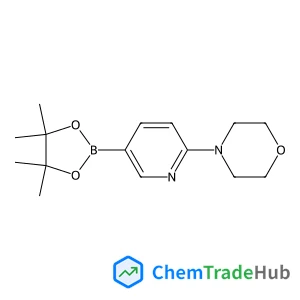
4-(5-(4,4,5,5-tetramethyl-1,3,2-dioxaborolan-2-yl)pyridin-2-yl)morpholine
CAS番号:
485799-04-0
分子式:
C15H23BN2O3
おすすめサプライヤー






免責事項
このページに表示される学術雑誌情報は、参考および研究目的のみを目的としています。当社は雑誌出版社とは提携しておらず、投稿の取り扱いも行っておりません。出版に関するお問い合わせは、各雑誌出版社に直接ご連絡ください。
表示されている情報に誤りがある場合は、support@chemtradehub.com までご連絡ください。迅速に確認し、対応いたします。