












The facile activation of graphite for the improved determination of dopamine, rutin and acetamidophenol
文献情報
出版日
2023-02-02
DOI
10.1039/D2AN02074B
インパクトファクター
4.616
著者
Yanxue Xu, Guihua Chen, Yunting Qin
原文を見る
要旨
A glassy carbon electrode (GCE) was modified with graphite powder (G/GCE), and then treated with a solution of sodium peroxide for several minutes to prepare an oxidized G/GCE (OG/GCE). The OG/GCE has prominently improved responses toward dopamine (DA), rutin (RT) and acetamidophenol (APAP), of which the anodic peak current was increased by 2.4, 4.0 and 2.6 fold compared with that obtained using the G/GCE. The redox peaks of DA, RT and APAP on the OG/GCE could be separated sufficiently. The corresponding redox processes were confirmed as diffusion-controlled and parameters such as the charge transfer coefficients (α), saturating adsorption capacity (Γ*) and catalytic rate constant (kcat) were estimated. In individual detection, the linear ranges for DA, RT and APAP were 10 nM–10 μM, 1.00 nM–150 nM and 20 nM–30 μM, respectively, and the LODs for DA, RT and APAP were estimated as 6.23 nM, 0.36 nM and 13.1 nM with 3σ/S, respectively. The contents of RT and APAP in drugs were determined and agreed with the labeled contents. The recoveries of DA in serum and sweat were in the range of 91–107%, indicating that the determination results achieved by the OG/GCE are reliable. The practical use of the method was verified with a graphite-modified screen-printed carbon electrode (G/SPCE), which was also activated by Na2O2 to prepare OG/SPCE. The recovery of DA in sweat achieved using the OG/SPCE was 91.26%.
関連文献
On-chip dilution in nanoliter droplets
Raviraj Thakur, Ahmed M. Amin, Steve Wereley
2015-07-14
Communication
DOI: 10.1039/C4AN01829J
Determination of ion pairing on capping structures of gold nanoparticles by phase extraction
Mark J. Schadt, Kaylie Young, Jin Luo, Chuan-Jian Zhong
2015-08-12
Communication
DOI: 10.1039/C5AN01165E
Colorimetric detection of biological hydrogen sulfide using fluorosurfactant functionalized gold nanorods
Xuan Zhang, Wenjuan Zhou, Zhiqin Yuan, Chao Lu
2015-09-17
Paper
DOI: 10.1039/C5AN01665G
Fluorescent polymer-based post-translational differentiation and subtyping of breast cancer cells
Michael D. Scott, Rinku Dutta, Manas K. Haldar, Anil Wagh, Thomas R. Gustad, Benedict Law, Daniel L. Friesner, Sanku Mallik
2012-10-04
Communication
DOI: 10.1039/C2AN35877H
A new electrochemical substrate for rapid and sensitive in vivo monitoring of β-galactosidase gene expressions
Kesavan Manibalan, Veerappan Mani
2015-07-10
Paper
DOI: 10.1039/C5AN01036E
Analysis of mass-limited mixtures using supercritical-fluid chromatography and microcoil NMR
Michael C. D. Tayler, S. (Bas) G. J. van Meerten, Arno P. M. Kentgens, P. Jan M. van Bentum
2015-07-27
Communication
DOI: 10.1039/C5AN00772K
Single molecular recognition force spectroscopy study of a DNA aptamer with the target epithelial cell adhesion molecule
Jilin Tang
2015-07-21
Communication
DOI: 10.1039/C5AN00945F
A peptide array-based serological protein kinase A activity assay and its application in cancer diagnosis
Deok-Hoon Kong, Se-Hui Jung, Hye-Yoon Jeon, Woo-Jin Kim, Young-Myeong Kim, Kwon-Soo Ha
2015-08-14
Paper
DOI: 10.1039/C5AN01151E
Mercury-induced fragmentation of n-decane and n-undecane in positive mode ion mobility spectrometry
2015-07-22
Paper
DOI: 10.1039/C5AN00876J
Insights into the consequences of co-polymerisation in the early stages of IAPP and Aβ peptide assembly from mass spectrometry
Lydia M. Young, Rachel A. Mahood, Janet C. Saunders, Ling-Hsien Tu, Sheena E. Radford, Alison E. Ashcroft
2015-07-14
Paper
DOI: 10.1039/C5AN00865D
こちらもおすすめ
28770-01-62-(2-Isopropyl-1,3-o...
化合物よくある質問
「邻羟基阿托伐他汀内酯标准品」に適用される法規ガイドelinesは何ですか?
CAS番号163217-74-1の「邻羟基阿托伐他汀内酯标准品」は、GHS分類では危険物に分類されず、主にREACH規則とFDA/EPAの管理対象となります。R...
163217-74-1ortho-Hydroxy Atorva...
化合物よくある質問
メチル(3R)-3-アミノ-2,3-ジヒドロ-1-ベンゾファンラニン-5-カルボイル酸塩塩酸塩の主な用途は何ですか?
メチル(3R)-3-アミノ-2,3-ジヒドロ-1-ベンゾファンラニン-5-カルボイル酸塩塩酸塩は、医薬品や合成化学の研究に広く用いられます。また、特定の薬物の前...
2241594-15-8Methyl (3R)-3-amino-...
化合物よくある質問
トランス-4-メチルピロリジン-3-オール塩酸塩はどのように合成されますか?
トランス-4-メチルピロリジン-3-オール塩酸塩は、4-メチルピロリジンの塩酸塩化によって合成されます。一般的な合成方法では、4-メチルピロリジンを塩酸に加えて...
265108-42-7trans-4-Methylpyrrol...
化合物よくある質問
硫雜環丁烷-1,1-二氧化物は安全ですか?
硫雜環丁烷-1,1-二氧化物は安全ではありません。毒性は報告されていませんが、高温下で分解し、可燃性があるため、高圧ガスは注意が必要です。密閉した容器で保管し、...
5687-92-3Thietane 1,1-dioxide
6054-10-02H, 8H-Benzo[1,2-b
化合物よくある質問
9-ヒドロキシエリプチシネ塩酸塩はどのように合成されますか?
9-ヒドロキシエリプチシネ塩酸塩は、エリプチシネから塩酸を添加することで合成されます。選択性は高いですが、収率は約70%です。
52238-35-49-Hydroxyellipticine...
化合物よくある質問
5-塩素-2-(メチルアミノ)フェニル-(2-塩素フェニル)メタン酮の物理化学的性質は何ですか?
5-塩素-2-(メチルアミノ)フェニル-(2-塩素フェニル)メタン酮のCAS番号は5621-86-3です。この化合物は白色の結晶性粉末で、分子量は415.03で...
5621-86-3[5-Chloro-2-(methyla...
化合物よくある質問
1-[2-(4-甲氧基-苯氧基)-乙基]-哌嗪はどのように保存すればよいですか?
1-[2-(4-甲氧基-苯氧基)-乙基]-哌嗪は、直射日光を避けて暗所に、室温(15-25℃)で保管し、密閉容器に入れることで安定性を保つことができます。
117132-44-21-[2-(4-Methoxy-phen...
化合物よくある質問
2-[3-(4-甲氧基フェニル)プロピル]-4,4,5,5-四メチル-1,3,2-ドイボロロールアンの主な用途は何ですか?
2-[3-(4-甲氧基フェニル)プロピル]-4,4,5,5-四メチル-1,3,2-ドイボロロールアンは、医薬品の合成、有機合成化学、および新材料の研究で使用され...
1073371-72-82-[3-(4-Methoxypheny...
掲載誌
Analyst

CiteScore:
7.8
自己引用率:
5.6%
年間論文数:
653
Analyst publishes analytical and bioanalytical research that reports premier fundamental discoveries and inventions, and the applications of those discoveries, unconfined by traditional discipline barriers.
おすすめ化合物
![(2E)-3-(3-Chlorophenyl)-N-{2-[4-(methylsulfonyl)-1-piperazinyl]-2-oxoethyl}acrylamide structure](https://static.chemtradehub.com/structs/250/2505001-54-5-c1e9.webp "(2E)-3-(3-Chlorophenyl)-N-{2-[4-(methylsulfonyl)-1-piperazinyl]-2-oxoethyl}acrylamide structure")
(2E)-3-(3-Chlorophenyl)-N-{2-[4-(methylsulfonyl)-1-piperazinyl]-2-oxoethyl}acrylamide
CAS番号:
2505001-54-5
分子式:
C16H20ClN3O4S
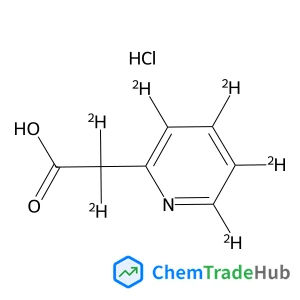
2,2-dideuterio-2-(3,4,5,6-tetradeuterio-2-pyridyl)acetic acid;hydrochloride
CAS番号:
1329799-67-8
分子式:
C7H2ClD6NO2
おすすめサプライヤー







免責事項
このページに表示される学術雑誌情報は、参考および研究目的のみを目的としています。当社は雑誌出版社とは提携しておらず、投稿の取り扱いも行っておりません。出版に関するお問い合わせは、各雑誌出版社に直接ご連絡ください。
表示されている情報に誤りがある場合は、support@chemtradehub.com までご連絡ください。迅速に確認し、対応いたします。