![(3R,5R)-1-[(Benzyloxy)carbonyl]-5-methyl-3-piperidinecarboxylic acid structure](https://static.chemtradehub.com/structs/126/1269757-29-0-c552.webp "(3R,5R)-1-[(Benzyloxy)carbonyl]-5-methyl-3-piperidinecarboxylic acid structure")
(3R,5R)-1-[(Benzyloxy)carbonyl]-5-methyl-3-piperidinecarboxylic acid
CAS番号:
1269757-29-0
分子式:
C15H19NO4
Soham Maity, Courtney Bingham, Wei Sheng, Nona Ehyaei, Debarshi Chakraborty, Setare Tahmasebi-Nick, Thomas E. Kimmel, Chrysoula Vasileiou, James H. Geiger, Babak Borhan
Cysteine-based Michael addition is a widely employed strategy for covalent conjugation of proteins, peptides, and drugs. The covalent reaction is irreversible in most cases, leading to a lack of control over the process. Utilizing spectroscopic analyses along with X-ray crystallographic studies, we demonstrate Michael addition of an engineered cysteine residue in human Cellular Retinol Binding Protein II (hCRBPII) with a coumarin analog that creates a non-fluorescent complex. UV-illumination reverses the conjugation, yielding a fluorescent species, presumably through a retro-Michael process. This series of events can be repeated between a bound and non-bound form of the cysteine reversibly, resulting in the ON–OFF control of fluorescence. The details of the mechanism of photoswitching was illuminated by recapitulation of the process in light irradiated single crystals, confirming the mechanism at atomic resolution.
Jilin Tang
DOI: 10.1039/C5AN00945F
Bailu Xu, Chuanqi Zhao, Weili Wei, Jinsong Ren, Daisuke Miyoshi, Naoki Sugimoto, Xiaogang Qu
DOI: 10.1039/C2AN36174D
Lu Zhang, Wenwen Liu, Xianhong Huang, Guanxin Zhang, Xuefei Wang, Zhuo Wang, Deqing Zhang, Xingyu Jiang
DOI: 10.1039/C5AN00918A
Xian-En Zhao, Jinmao You, Guobao Xu, Hua Wang
DOI: 10.1039/C5AN01104C
T. T. Nguyen, A. Wynckel, M. Fere, L. Van-Gulick, V. Untereiner, P. Birembaut
DOI: 10.1039/C5AN00821B
Raviraj Thakur, Ahmed M. Amin, Steve Wereley
DOI: 10.1039/C4AN01829J
Lin Zhang, Wentao Yang, Yuankui Yang, Hong Liu, Zhongze Gu
DOI: 10.1039/C5AN01664A
L. Wang, G. Arrabito
DOI: 10.1039/C5AN00861A
M. Groessl, S. Graf, R. Knochenmuss
DOI: 10.1039/C5AN00838G
CAS番号163217-74-1の「邻羟基阿托伐他汀内酯标准品」は、GHS分類では危険物に分類されず、主にREACH規則とFDA/EPAの管理対象となります。R...
メチル(3R)-3-アミノ-2,3-ジヒドロ-1-ベンゾファンラニン-5-カルボイル酸塩塩酸塩は、医薬品や合成化学の研究に広く用いられます。また、特定の薬物の前...
トランス-4-メチルピロリジン-3-オール塩酸塩は、4-メチルピロリジンの塩酸塩化によって合成されます。一般的な合成方法では、4-メチルピロリジンを塩酸に加えて...
硫雜環丁烷-1,1-二氧化物は安全ではありません。毒性は報告されていませんが、高温下で分解し、可燃性があるため、高圧ガスは注意が必要です。密閉した容器で保管し、...
9-ヒドロキシエリプチシネ塩酸塩は、エリプチシネから塩酸を添加することで合成されます。選択性は高いですが、収率は約70%です。
5-塩素-2-(メチルアミノ)フェニル-(2-塩素フェニル)メタン酮のCAS番号は5621-86-3です。この化合物は白色の結晶性粉末で、分子量は415.03で...
1-[2-(4-甲氧基-苯氧基)-乙基]-哌嗪は、直射日光を避けて暗所に、室温(15-25℃)で保管し、密閉容器に入れることで安定性を保つことができます。
2-[3-(4-甲氧基フェニル)プロピル]-4,4,5,5-四メチル-1,3,2-ドイボロロールアンは、医薬品の合成、有機合成化学、および新材料の研究で使用され...

Analyst publishes analytical and bioanalytical research that reports premier fundamental discoveries and inventions, and the applications of those discoveries, unconfined by traditional discipline barriers.
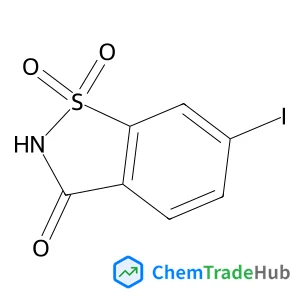
![1-[(4-Methylphenyl)sulfonyl]-3-(4,4,5,5-tetramethyl-1,3,2-dioxaborolan-2-yl)-1H-pyrrolo[2,3-b]pyridine-5-carbonitrile structure](https://static.chemtradehub.com/structs/143/1434747-57-5-fc0d.webp "1-[(4-Methylphenyl)sulfonyl]-3-(4,4,5,5-tetramethyl-1,3,2-dioxaborolan-2-yl)-1H-pyrrolo[2,3-b]pyridine-5-carbonitrile structure")