


![(1R,5R)-3-{[(2-Methyl-2-propanyl)oxy]carbonyl}-3-azabicyclo[3.1.0]hexane-1-carboxylic acid structure](https://static.chemtradehub.com/structs/116/1165450-63-4-bfe1.webp "(1R,5R)-3-{[(2-Methyl-2-propanyl)oxy]carbonyl}-3-azabicyclo[3.1.0]hexane-1-carboxylic acid structure")
Culture-independent susceptibility determination of E. coli isolated directly from patients’ urine using FTIR and machine-learning
文献情報
出版日
2022-09-22
DOI
10.1039/D2AN01253G
インパクトファクター
4.616
著者
George Abu-Aqil, Uraib Sharaha, Manal Suleiman, Klaris Riesenberg, Itshak Lapidot, Ahmad Salman, Mahmoud Huleihel
原文を見る
要旨
One of the most common human bacterial infections is the urinary tract infection (UTI). The main cause of UTI is Escherichia (E.) coli bacteria (∼75%). Because most of the bacteria are resistant to many antibiotics as a result of their indiscriminate overuse, it is extremely important, for effective treatment, to identify the infecting bacteria and to determine, as quickly as possible, their susceptibility to antibiotics. Classical methods require at least 48 hours for determining bacterial susceptibility. In this study, 1798 E. coli isolates from different UTIs were isolated directly from patients’ urine, measured by Fourier transform infrared (FTIR) microscopy and analyzed by machine learning algorithms for simultaneous identification and susceptibility determination within 40 minutes since receiving the urine samples. Our results show that it is possible to identify the bacteria at the species level with an accuracy of ∼95% and to determine their susceptibility to different antibiotics with an accuracy ranging from 75% to 83%.
おすすめジャーナル

Medicinal Chemistry Research

Cellulose

Journal of Asian Natural Products Research

NDT & E International

Topics in Catalysis

Heteroatom Chemistry

Journal of the Indian Institute of Science

Bioorganic & Medicinal Chemistry Letters

Acta Metallurgica Sinica-English Letters

Herald of the Russian Academy of Sciences
関連文献
Shape of CeO2nanoparticles using simulated amorphisation and recrystallisation
Thi X. T. Sayle, Stephen C. Parker, Dean C. Sayle
2004-09-21
Communication
DOI: 10.1039/B408752F
Poly(vinyl alcohol) star polymers prepared via MADIX/RAFT polymerisation
Martina H. Stenzel, Thomas P. Davis, Christopher Barner-Kowollik
2004-06-02
Communication
DOI: 10.1039/B404763J
Insertion of (E)-(1,2-dihalovinyl)lithium and (2-haloethynyl)lithium into zirconacycles
David Norton, Richard J. Whitby, Ed Griffen
2004-04-23
Communication
DOI: 10.1039/B403337J
Double asymmetric induction as a mechanistic probe: conjugate addition for the asymmetric synthesis of a pseudotripeptide
Stephen G. Davies, Gesine J. Hermann, Miles J. Sweet, Andrew D. Smith
2004-04-08
Communication
DOI: 10.1039/B401293C
A novel, stereoselective and convergent synthesis of aryltetralins
Steven M. Miles, Stephen P. Marsden, Robin J. Leatherbarrow, William J. Coates
2004-09-01
Communication
DOI: 10.1039/B409528F
Silicon-assisted propargylic transfer to aldehydes
Kiew-Ching Lee, Man-Jing Lin, Teck-Peng Loh
2004-09-21
Communication
DOI: 10.1039/B411653D
Inter- and intra-molecular H-bonds induced different nanostructures from a multi-H-bonding (MHB) amphiphile: nanofibers and nanodisks
Chuanlang Zhan, Lizhu Liu, Yanbiao Zhou, Minghua Liu
2004-04-27
Communication
DOI: 10.1039/B402956A
Stereochemistry of hydrogen removal from the ‘unactivated’ C-3 position of 4-hydroxybutyryl-CoA catalysed by 4-hydroxybutyryl-CoA dehydratase
Richard Scott, Ulrike Näser, Peter Friedrich, Thorsten Selmer, Wolfgang Buckel, Bernard T. Golding
2004-04-23
Communication
DOI: 10.1039/B402322F
Kinetics of chalconeoxidation by peroxide anion catalysed by poly-l-leucine
Giacomo Carrea, Stefano Colonna, Alastair D. Meek, Gianluca Ottolina, Stanley M. Roberts
2004-05-17
Communication
DOI: 10.1039/B401497A
Ultrasonic cavitation in microspace
Yasuo Iida, Kyuichi Yasui, Toru Tuziuti, Manickam Sivakumar, Yoshishige Endo
2004-09-28
Communication
DOI: 10.1039/B410015H
こちらもおすすめ
化合物よくある質問
2,3-スチオエポキシマドルを取り扱う際の実験室安全事項は何ですか?
取り扱いにはPPE(プロテクティブ・パーソナル・エイド)が必要で、防ぐ手袋と保護眼鏡を着用してください。ドラフトチャンバーの使用を推奨します。漏洩した場合は、適...
4267-80-52,3-Thioepoxy Madol
53981-25-22-Amino-6-fluorophen...
化合物よくある質問
BOC-S-3-アミニ-4-(4-メチオキシベンチル)-ブタン酸の代替品はありますか?
この化合物の代替品としては、BOC保護基を有さないアミノ酸やその他の保護基化合物が考えられます。また、メチオキシ基を有しない他の芳香族アミノ酸も代替品として挙げ...
126800-59-7(3S)-4-(4-Methoxyphe...
化合物よくある質問
Methyl 2-(chloromethyl)-3-nitrobenzoate(1218910-61-2)の代替品はありますか?
Methyl 2-(chloromethyl)-3-nitrobenzoate(1218910-61-2)の代替品としては、化学組成を変えることで効果を達成する...
1218910-61-2Methyl 2-(chlorometh...
化合物よくある質問
(2R)-2-アミノ-N-ベンジル-3-ヒドロキシプロパナミドを含む廃棄物はどのように処理すべきですか?
(2R)-2-アミノ-N-ベンジル-3-ヒドロキシプロパナミドを含む廃棄物は、適切な廃棄物管理ガイドラインに基づき処理する必要があります。まず、廃棄物を適切に収...
175481-39-7(2R)-2-amino-N-benzy...
化合物よくある質問
6,7-二氢-咪唑並[1,2-a]ピリドイン-8(5h)-酮はどのように合成されますか?
6,7-二氢-咪唑並[1,2-a]ピリドイン-8(5h)-酮は、2-ブロモフェニルアセトインとリン酸ハロゲン化物を反応させることで合成できます。この反応は高温で...
457949-09-66,7-Dihydroimidazo[1...
化合物よくある質問
エチル(3R)-3-ピロリジニル酢酸水和塩とは何ですか?
エチル(3R)-3-ピロリジニル酢酸水和塩は、CAS番号1332459-32-1の化合物で、(R)-乙基2-(ピロリジン-3-基)酢酸塩水和塩と呼ばれます。この...
1332459-32-1Ethyl (3R)-3-pyrroli...
化合物よくある質問
(2S)-{[(2-メチルエチルオキシ]カルボニル}アミノ)[2-(トリアフルオロメチルフェニル]エチカシック酸の物理化学的性質は何ですか?
(2S)-{[(2-メチルエチルオキシ]カルボニル}アミノ)[2-(トリアフルオロメチルフェニル]エチカシック酸のCAS番号は1203454-45-8です。この...
1203454-45-8(2S)-({[(2-Methyl-2-...
化合物よくある質問
2-ブロモ-1-(2-メチル-2-プロパニル)-4-ニトロベンゼンはどのように保存すればよいですか?
2-ブロモ-1-(2-メチル-2-プロパニル)-4-ニトロベンゼンは、直射日光を避けて暗所で、室温(約15℃〜25℃)、乾燥した場所に保存する必要があります。ま...
6310-17-42-Bromo-1-(2-methyl-...
化合物よくある質問
1-[(4-硝基フェニル)スルホニル]-1H-1,2,4-三唑の市場動向や研究トレンドはどうですか?
市場動向としては、1-[(4-硝基フェニル)スルホニル]-1H-1,2,4-三唑は主に農業用除草剤や合成化学製品の原料として利用されています。研究トレンドとして...
57777-84-11-[(4-Nitrophenyl)su...
掲載誌
Analyst

CiteScore:
7.8
自己引用率:
5.6%
年間論文数:
653
Analyst publishes analytical and bioanalytical research that reports premier fundamental discoveries and inventions, and the applications of those discoveries, unconfined by traditional discipline barriers.
おすすめ化合物
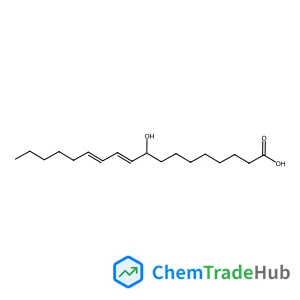
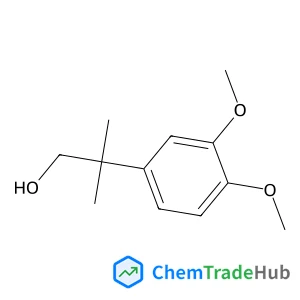
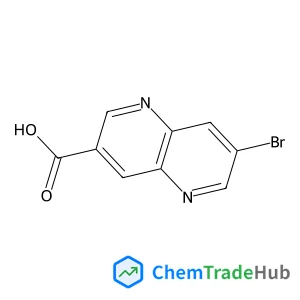
![6-(Benzyloxy)-8-(2-bromoacetyl)-2H-benzo[b][1,4]oxazin-3(4H)-one structure](https://static.chemtradehub.com/structs/926/926319-53-1-2287.webp "6-(Benzyloxy)-8-(2-bromoacetyl)-2H-benzo[b][1,4]oxazin-3(4H)-one structure")
おすすめサプライヤー


免責事項
このページに表示される学術雑誌情報は、参考および研究目的のみを目的としています。当社は雑誌出版社とは提携しておらず、投稿の取り扱いも行っておりません。出版に関するお問い合わせは、各雑誌出版社に直接ご連絡ください。
表示されている情報に誤りがある場合は、support@chemtradehub.com までご連絡ください。迅速に確認し、対応いたします。