












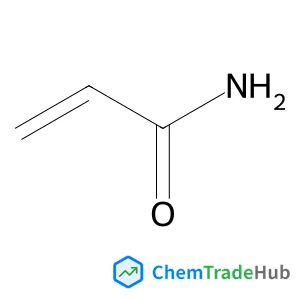
Jacket temperature regulation allowing well-defined non-adiabatic lab-scale solution free radical polymerization of acrylates
文献情報
出版日
2021-04-12
DOI
10.1039/D1RE00099C
インパクトファクター
4.239
著者
Mariya Edeleva, Yoshi W. Marien, Paul H. M. Van Steenberge
原文を見る
要旨
Conventional batch solution free radical polymerization (FRP) of n-butyl acrylate (nBuA) with thermal initiators such as 2,2′-azobis(2-methylpropionitrile) (AIBN) is known to be strongly exothermic and influenced by highly activated side reactions such as backbiting and β-scission. However, most FRP kinetic modeling studies are focusing on simplified (theoretical) isothermal conditions and/or are considering only ball-park values for the Arrhenius parameters. In the present work, we overcome these limitations by combining a detailed tree-based kinetic Monte Carlo (kMC) model for radical acrylate polymerization chemistry with an energy balance so that non-isothermal conditions (targeted temperature in range 313–353 K) can be modeled in the presence and absence of jacket temperature modifications. As the reactor size is limited and solution conditions are selected perfect macro-mixing can be assumed but at the micro-scale chain length dependent diffusional limitations on termination need to be accounted for. The inputted Arrhenius parameters all stem from independent experimental techniques (e.g. stepwise pulsed laser polymerization) and the only tuned parameter is the global heat transfer coefficient as determined from a Pyrex 2 L lab-scale reactor. We highlight the relevance of our Arrhenius parameters to reliably predict non-isothermal reactor conditions and demonstrate that safe reactor operation conditions can only be realized by design of the jacket temperature. We utilize both flat profiles and stepwise profiles, including variations in (i) the number of steps and (ii) upward and downward temperature changes. We also put forward that the heat generation rate can be designed by varying the thermal initiator type and considering thermal initiator cocktails. In the end, we tune the batch time, the log-molar mass distribution (MMD) differentiating between unimodal and bimodal shapes, MMD dispersity, unsaturation level, and short/long chain branching density employing industrially relevant conditions. Such conditions lead to a safe reactor operation but remain non-adiabatic, highlighting the future need of non-isothermal polymer reaction engineering models.
関連文献
Rational synthesis and characterization of porous Cu(ii) coordination polymers
Shin-ichiro Noro
2010-01-18
Perspective
DOI: 10.1039/B916584C
Fast and ultrafast spectroscopic investigation of tetracycline derivatives in organic and aqueous media
Benedetta Carlotti, Domenico Fuoco, Fausto Elisei
2010-07-26
Paper
DOI: 10.1039/C0CP00044B
Molecular dynamics simulations of atomically flat and nanoporous electrodes with a molten salt electrolyte
Jenel Vatamanu, Oleg Borodin, Grant D. Smith
2009-11-07
Paper
DOI: 10.1039/B917592J
Folding oligomers of difluorinated thienylfurans: a DFT study
2009-11-17
Paper
DOI: 10.1039/B916415D
Chemoselective quantum control of carbonyl bonds in Grignard reactions using shaped laser pulses
Caroline Gollub, Markus Kowalewski, Sebastian Thallmair, Regina de Vivie-Riedle
2010-11-16
Paper
DOI: 10.1039/C0CP01657H
A crossed molecular beam study on the reaction of methylidyne radicals [CH(X2Π)] with acetylene [C2H2(X1Σg+)]—competing C3H2 + H and C3H + H2 channels
Pavlo Maksyutenko, Fangtong Zhang, Xibin Gu, Ralf I. Kaiser
2010-11-16
Paper
DOI: 10.1039/C0CP01529F
Manipulating the growth of aqueous semiconductor nanocrystals through amine-promoted kinetic process
Jishu Han, Hao Zhang, Ding Zhou, Bai Yang
2009-11-07
Communication
DOI: 10.1039/B919655B
First-principles investigations of Ti-substituted hydroxyapatite electronic structure
2009-11-10
Paper
DOI: 10.1039/B915171K
A study of alcohol-induced gelation of β-lactoglobulin with small-angle neutron scattering, neutron spin echo, and dynamic light scattering measurements
Koji Yoshida, Toshio Yamaguchi, Noboru Osaka, Hitoshi Endo, Mitsuhiro Shibayama
2010-02-11
Paper
DOI: 10.1039/B920187D
Water-in-oil-in-water double nanoemulsion induced by CO2
Yueju Zhao, Jianling Zhang, Qian Wang, Jianshen Li, Buxing Han
2010-10-29
Paper
DOI: 10.1039/C0CP00869A
こちらもおすすめ
28770-01-62-(2-Isopropyl-1,3-o...
化合物よくある質問
「邻羟基阿托伐他汀内酯标准品」に適用される法規ガイドelinesは何ですか?
CAS番号163217-74-1の「邻羟基阿托伐他汀内酯标准品」は、GHS分類では危険物に分類されず、主にREACH規則とFDA/EPAの管理対象となります。R...
163217-74-1ortho-Hydroxy Atorva...
化合物よくある質問
メチル(3R)-3-アミノ-2,3-ジヒドロ-1-ベンゾファンラニン-5-カルボイル酸塩塩酸塩の主な用途は何ですか?
メチル(3R)-3-アミノ-2,3-ジヒドロ-1-ベンゾファンラニン-5-カルボイル酸塩塩酸塩は、医薬品や合成化学の研究に広く用いられます。また、特定の薬物の前...
2241594-15-8Methyl (3R)-3-amino-...
化合物よくある質問
トランス-4-メチルピロリジン-3-オール塩酸塩はどのように合成されますか?
トランス-4-メチルピロリジン-3-オール塩酸塩は、4-メチルピロリジンの塩酸塩化によって合成されます。一般的な合成方法では、4-メチルピロリジンを塩酸に加えて...
265108-42-7trans-4-Methylpyrrol...
化合物よくある質問
硫雜環丁烷-1,1-二氧化物は安全ですか?
硫雜環丁烷-1,1-二氧化物は安全ではありません。毒性は報告されていませんが、高温下で分解し、可燃性があるため、高圧ガスは注意が必要です。密閉した容器で保管し、...
5687-92-3Thietane 1,1-dioxide
6054-10-02H, 8H-Benzo[1,2-b
化合物よくある質問
9-ヒドロキシエリプチシネ塩酸塩はどのように合成されますか?
9-ヒドロキシエリプチシネ塩酸塩は、エリプチシネから塩酸を添加することで合成されます。選択性は高いですが、収率は約70%です。
52238-35-49-Hydroxyellipticine...
化合物よくある質問
5-塩素-2-(メチルアミノ)フェニル-(2-塩素フェニル)メタン酮の物理化学的性質は何ですか?
5-塩素-2-(メチルアミノ)フェニル-(2-塩素フェニル)メタン酮のCAS番号は5621-86-3です。この化合物は白色の結晶性粉末で、分子量は415.03で...
5621-86-3[5-Chloro-2-(methyla...
化合物よくある質問
1-[2-(4-甲氧基-苯氧基)-乙基]-哌嗪はどのように保存すればよいですか?
1-[2-(4-甲氧基-苯氧基)-乙基]-哌嗪は、直射日光を避けて暗所に、室温(15-25℃)で保管し、密閉容器に入れることで安定性を保つことができます。
117132-44-21-[2-(4-Methoxy-phen...
化合物よくある質問
2-[3-(4-甲氧基フェニル)プロピル]-4,4,5,5-四メチル-1,3,2-ドイボロロールアンの主な用途は何ですか?
2-[3-(4-甲氧基フェニル)プロピル]-4,4,5,5-四メチル-1,3,2-ドイボロロールアンは、医薬品の合成、有機合成化学、および新材料の研究で使用され...
1073371-72-82-[3-(4-Methoxypheny...
掲載誌
Reaction Chemistry & Engineering

CiteScore:
0
自己引用率:
8.8%
年間論文数:
284
Reaction Chemistry & Engineering is an interdisciplinary journal reporting cutting-edge research focused on enhancing the understanding and efficiency of reactions. Reaction engineering leverages the interface where fundamental molecular chemistry meets chemical engineering and technology. Challenges in chemistry can be overcome by the application of new technologies, while engineers may find improved solutions for process development from the latest developments in reaction chemistry. Reaction Chemistry & Engineering is a unique forum for researchers whose interests span the broad areas of chemical engineering and chemical sciences to come together in solving problems of importance to wider society. All papers should be written to be approachable by readers across the engineering and chemical sciences. Papers that consider multiple scales, from the laboratory up to and including plant scale, are particularly encouraged.
おすすめ化合物
おすすめサプライヤー




免責事項
このページに表示される学術雑誌情報は、参考および研究目的のみを目的としています。当社は雑誌出版社とは提携しておらず、投稿の取り扱いも行っておりません。出版に関するお問い合わせは、各雑誌出版社に直接ご連絡ください。
表示されている情報に誤りがある場合は、support@chemtradehub.com までご連絡ください。迅速に確認し、対応いたします。