












Noncovalent interactions in Ir-catalyzed remote C–H borylation: a recent update
文献情報
出版日
2021-05-08
DOI
10.1039/D1QO00452B
インパクトファクター
5.281
著者
Saikat Pandit, Sudip Maiti, Debabrata Maiti
原文を見る
要旨
Iridium catalyzed direct C–H borylation has provided a powerful strategy to construct a complex molecular architecture in a relatively straightforward way. Controlling regioselectivity is one of the most challenging issues in these transformations. Enormous efforts of the synthetic community have helped to overcome the selectivity issue in the case of proximal C–H borylation by introducing a directing group concept along with noncovalent interaction. However, selectively targeting a remote C–H bond is a formidable challenge and often requires special designing of the directing template. In this highlight, we aim to provide a recent update on noncovalent interaction enabled Ir-catalyzed remote C–H borylation, with a special emphasis on the corresponding enantioselective variant.
関連文献
Investigation of the biological functions of heparan sulfate using a chemoenzymatic synthetic approach
Zhangjie Wang, Katelyn Arnold, Vijay Manohar Dhurandhare, Yongmei Xu, Jian Liu
2021-02-22
Review Article
DOI: 10.1039/D0CB00199F
Intermediary conformations linked to the directionality of the aminoacylation pathway of nonribosomal peptide synthetases
Florian Mayerthaler, Anna-Lena Feldberg, Jonas Alfermann, Xun Sun, Wieland Steinchen, Haw Yang, Henning D. Mootz
2021-03-04
Paper
DOI: 10.1039/D0CB00220H
Evaluating the effect of ionic strength on PNA:DNA duplex formation kinetics
Colin S. Swenson, Hershel H. Lackey, Eric J. Reece, Joel M. Harris, Jennifer M. Heemstra, Eric M. Peterson
2021-05-21
Paper
DOI: 10.1039/D1CB00025J
Tranylcypromine specificity for monoamine oxidase is limited by promiscuous protein labelling and lysosomal trapping
Jonas Drechsel, Christina Kyrousi, Silvia Cappello, Stephan A. Sieber
2020-08-12
Communication
DOI: 10.1039/D0CB00048E
Fluorescence lifetime predicts performance of voltage sensitive fluorophores in cardiomyocytes and neurons
Steven C. Boggess, Julia R. Lazzari-Dean, Benjamin K. Raliski, Dong Min Mun, Amy Y. Li, Joshua L. Turnbull
2020-12-11
Paper
DOI: 10.1039/D0CB00152J
Sub-stoichiometric inhibition of IAPP aggregation: a peptidomimetic approach to anti-amyloid agents
Debabrata Maity, Sunil Kumar, Ruyof AlHussein, Madeline Howarth, Laura Karpauskaite, Mazin Magzoub, Andrew D. Hamilton
2020-08-19
Paper
DOI: 10.1039/D0CB00086H
Inhibition of SC4MOL and HSD17B7 shifts cellular sterol composition and promotes oligodendrocyte formation
Matthew J Pleshinger, Ryan M. Friedrich, Zita Hubler, Adrianna M. Rivera-León, Farrah Gao, David Yan, Joel L. Sax, Ramya Srinivasan, Ilya Bederman, H. Elizabeth Shick, Paul J. Tesar, Drew J. Adams
2021-10-21
Paper
DOI: 10.1039/D1CB00145K
Identifying cysteine residues susceptible to oxidation by photoactivatable atomic oxygen precursors using a proteome-wide analysis
Ankita Isor, Benjamin V. Chartier, Masahiro Abo, Emily R. Currens, Eranthie Weerapana, Ryan D. McCulla
2021-01-19
Paper
DOI: 10.1039/D0CB00200C
Continuous direct anodic flow oxidation of aromatic hydrocarbons to benzyl amides
Mikhail A. Kabeshov, Biagia Musio, Steven V. Ley
2017-11-02
Communication
DOI: 10.1039/C7RE00164A
こちらもおすすめ
化合物よくある質問
2-メトキシ-4-(メチルスルフィニル)アミンの主な用途は何ですか?
2-メトキシ-4-(メチルスルフィニル)アミンは、主に医薬品および農薬の製造に使用されます。また、合成化学の一部として研究用材料としても利用されます。
41608-73-52-Methoxy-4-(methyls...
118684-13-24-(Bromomethyl)-3-me...
化合物よくある質問
4,6-二氯-N-甲基ピラミジンアミンの代替品はありますか?
代替品としては、4,6-二クロロピラミジンアミンや他のピラミジン系化合物が考えられます。ただし、目的と用途によって最適な代替品は異なります。
10397-15-64,6-Dichloro-N-methy...
化合物よくある質問
6-氯-4-甲基-1H-吲哚を含む廃棄物はどのように処理すべきですか?
6-氯-4-甲基-1H-吲哚の廃棄物は、適切な容器に収集し、密閉して保管します。温度は常温、湿度は低く、直射日光を避けて保管することを推奨します。廃棄処理は専門...
885520-84-36-chloro-4-methyl-1H...
化合物よくある質問
2-フローユロ-4-(トリフルオロメチル)ベンゾイドについて「に適用される法規ガイドラインは何ですか」
2-フローユロ-4-(トリフルオロメチル)ベンゾイドのCAS番号は207974-08-1です。この化合物はGHS分類で毒性物質と有害な反応物質として分類されます...
207974-08-1[2-Fluoro-4-(trifluo...
化合物よくある質問
4-ニトロフェニルN-[(ベンゼルオキシルカーボンイル]グリシングリシングリシン酸はどのように保存すればよいですか?
4-ニトロフェニルN-[(ベンゼルオキシルカーボンイル]グリシングリシングリシン酸は、室温で暗所に保管し、乾燥した環境で保存することを推奨します。容器は密閉性の...
19811-64-44-Nitrophenyl N-[(be...
化合物よくある質問
イソデスロラタドリンの代替品はありますか?
イソデスロラタドリンの代替品としては、デスロラタドリンや他の抗ヒスタミン薬が挙げられます。具体的には、デスロラタドリン、ラセカミド、フェルタドリンなどが、症状や...
183198-49-4Iso Desloratadine
化合物よくある質問
5-甲氧基-1,2,3,4-四氢异喹啉盐酸盐はどのように合成されますか?
5-甲氧基-1,2,3,4-四氢异喹啉盐酸盐の一般的な合成方法は、メタノール中で5-メトキシ-1,2,3,4-四ヒュドロイソキシンを塩酸で塩化します。この反応で...
103030-69-95-Methoxy-1,2,3,4-te...
化合物よくある質問
4-アミノ-5-メトキシ-2-トルエンサルホニック酸についての法規ガイドラインは何ですか?
CAS番号6471-78-9の4-アミノ-5-メトキシ-2-トルエンサルホニック酸は、GHS分類では corrosive(腐食性)と識別されます。EUのREAC...
6471-78-94-Amino-5-Methoxy-2-...
化合物よくある質問
甲基孕酮を取り扱う際の実験室安全事項は何ですか?
甲基孕酮の取り扱いは、PPE(個人保護具)の使用が必要な重要な安全事項を伴います。防塵マスク、ゴーグル、手袋を着用することが推奨されます。ドラフトチャンバーを使...
204063-33-22-[(Diphenylmethyl)a...
掲載誌
Organic Chemistry Frontiers

CiteScore:
7.8
自己引用率:
8.7%
年間論文数:
724
Organic Chemistry Frontiers publishes high-quality research from across organic chemistry. Emphases are placed on studies that make significant contributions to the field of organic chemistry by reporting either new or significantly improved protocols or methodologies. Topics include, but are not limited to the following: Organic synthesis Development of synthetic methodologies Catalysis Natural products Functional organic materials Supramolecular and macromolecular chemistry Physical and computational organic chemistry
おすすめ化合物
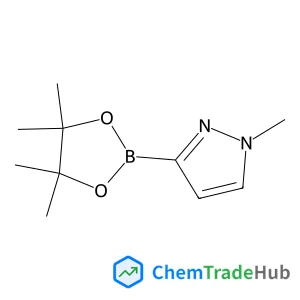
1-Methyl-3-(4,4,5,5-tetramethyl-1,3,2-dioxaborolan-2-yl)-1H-pyrazole
CAS番号:
1020174-04-2
分子式:
C10H17BN2O2
おすすめサプライヤー





免責事項
このページに表示される学術雑誌情報は、参考および研究目的のみを目的としています。当社は雑誌出版社とは提携しておらず、投稿の取り扱いも行っておりません。出版に関するお問い合わせは、各雑誌出版社に直接ご連絡ください。
表示されている情報に誤りがある場合は、support@chemtradehub.com までご連絡ください。迅速に確認し、対応いたします。