












The effect of intermolecular electronic coupling on the exciton dynamics in perylene red nanoparticles
文献情報
出版日
2022-03-30
DOI
10.1039/D1CP05375B
インパクトファクター
3.676
著者
Chris Rehhagen, Shahnawaz Rafiq, Kyra N. Schwarz, Gregory D. Scholes, Stefan Lochbrunner
原文を見る
要旨
Understanding the transport mechanisms of electronic excitations in molecular systems is the basis for their application in light harvesting and opto-electronic devices. The exciton transfer properties depend pivotally on the intermolecular coupling and the latter on the supramolecular structure. In this work, organic nanoparticles of the perylene derivative Perylene Red are prepared with flash-precipitation under different conditions. We correlate their intermolecular couplings, optical spectra, quantum yields, emission lifetimes and their size and characterize their exciton dynamics upon excitation with ultrashort laser pulses by transient absorption spectroscopy. We find that the intermolecular coupling can be varied by changing the preparation conditions and thus the supramolecular structure. In contrast to the monomeric system, the generation of charge-transfer states is found after optical excitation of the nanoparticles. The time of the generation step is in the order of 100 ps and depends on the intermolecular coupling. The mobility of the originally excited excitons is determined from measurements with varying exciton density. To this end, we model the contribution of exciton–exciton annihilation to the exciton decay assuming three-dimensional incoherent diffusion. The extracted exciton diffusion constant of nanoparticles with stronger intermolecular coupling is found to be 0.17 nm2 ps−1 and thereby about ten times higher than in the particles with smaller coupling.
関連文献
New thermal-responsive polymers based on alanine and (meth)acryl amides
Deyang Yu, Chunhui Luo, Wenxin Fu, Zhibo Li
2014-04-28
Paper
DOI: 10.1039/C4PY00480A
Engineering the band gap and energy level of conjugated polymers using a second acceptor unit
Khalid Mahmood, Heng Lu, Zheng-Ping Liu, Cuihong Li, Zhen Lu, Xiao Liu, Tao Fang, Qiaohong Peng, Guangwu Li, Lin Li, Zhishan Bo
2014-04-16
Paper
DOI: 10.1039/C4PY00004H
Synthesis of cationic poly((3-acrylamidopropyl)trimethylammonium chloride) by SARA ATRP in ecofriendly solvent mixtures
Patrícia V. Mendonça, Dominik Konkolewicz, Saadyah E. Averick, Arménio C. Serra, Anatoliy V. Popov, Tamaz Guliashvili, Krzysztof Matyjaszewski, Jorge F. J. Coelho
2014-06-19
Paper
DOI: 10.1039/C4PY00707G
Effect of polymer chemistry on globular protein–polymer block copolymer self-assembly
Dongsook Chang, Christopher N. Lam, Shengchang Tang, Bradley D. Olsen
2014-06-30
Paper
DOI: 10.1039/C4PY00448E
Short peptide based self-assembled nanostructures: implications in drug delivery and tissue engineering
Virander Singh Chauhan
2014-04-23
Review Article
DOI: 10.1039/C4PY00173G
Photoswitchable nanocomposites made from coumarin-functionalized cellulose nanocrystals
Mahesh V. Biyani, Christoph Weder, E. Johan Foster
2014-06-04
Paper
DOI: 10.1039/C4PY00486H
Co-delivery of 5-fluorocytosine and cytosine deaminase into glioma cells mediated by an intracellular environment-responsive nanovesicle
Yuanyuan Yuan, Shudong Lin, Du Cheng, Xiaoying Wang, Qing Jiang, Xintao Shuai
2014-03-25
Paper
DOI: 10.1039/C4PY00291A
Synthesis and characterization of isosorbide-based polyphosphonates as biobased flame-retardants
Timothy C. Mauldin, Jeffrey W. Gilman, John R. Shields, Dylan J. Boday
2014-06-02
Paper
DOI: 10.1039/C4PY00591K
こちらもおすすめ
化合物よくある質問
2,3-スチオエポキシマドルを取り扱う際の実験室安全事項は何ですか?
取り扱いにはPPE(プロテクティブ・パーソナル・エイド)が必要で、防ぐ手袋と保護眼鏡を着用してください。ドラフトチャンバーの使用を推奨します。漏洩した場合は、適...
4267-80-52,3-Thioepoxy Madol
53981-25-22-Amino-6-fluorophen...
化合物よくある質問
BOC-S-3-アミニ-4-(4-メチオキシベンチル)-ブタン酸の代替品はありますか?
この化合物の代替品としては、BOC保護基を有さないアミノ酸やその他の保護基化合物が考えられます。また、メチオキシ基を有しない他の芳香族アミノ酸も代替品として挙げ...
126800-59-7(3S)-4-(4-Methoxyphe...
化合物よくある質問
Methyl 2-(chloromethyl)-3-nitrobenzoate(1218910-61-2)の代替品はありますか?
Methyl 2-(chloromethyl)-3-nitrobenzoate(1218910-61-2)の代替品としては、化学組成を変えることで効果を達成する...
1218910-61-2Methyl 2-(chlorometh...
化合物よくある質問
(2R)-2-アミノ-N-ベンジル-3-ヒドロキシプロパナミドを含む廃棄物はどのように処理すべきですか?
(2R)-2-アミノ-N-ベンジル-3-ヒドロキシプロパナミドを含む廃棄物は、適切な廃棄物管理ガイドラインに基づき処理する必要があります。まず、廃棄物を適切に収...
175481-39-7(2R)-2-amino-N-benzy...
化合物よくある質問
6,7-二氢-咪唑並[1,2-a]ピリドイン-8(5h)-酮はどのように合成されますか?
6,7-二氢-咪唑並[1,2-a]ピリドイン-8(5h)-酮は、2-ブロモフェニルアセトインとリン酸ハロゲン化物を反応させることで合成できます。この反応は高温で...
457949-09-66,7-Dihydroimidazo[1...
化合物よくある質問
エチル(3R)-3-ピロリジニル酢酸水和塩とは何ですか?
エチル(3R)-3-ピロリジニル酢酸水和塩は、CAS番号1332459-32-1の化合物で、(R)-乙基2-(ピロリジン-3-基)酢酸塩水和塩と呼ばれます。この...
1332459-32-1Ethyl (3R)-3-pyrroli...
化合物よくある質問
(2S)-{[(2-メチルエチルオキシ]カルボニル}アミノ)[2-(トリアフルオロメチルフェニル]エチカシック酸の物理化学的性質は何ですか?
(2S)-{[(2-メチルエチルオキシ]カルボニル}アミノ)[2-(トリアフルオロメチルフェニル]エチカシック酸のCAS番号は1203454-45-8です。この...
1203454-45-8(2S)-({[(2-Methyl-2-...
化合物よくある質問
2-ブロモ-1-(2-メチル-2-プロパニル)-4-ニトロベンゼンはどのように保存すればよいですか?
2-ブロモ-1-(2-メチル-2-プロパニル)-4-ニトロベンゼンは、直射日光を避けて暗所で、室温(約15℃〜25℃)、乾燥した場所に保存する必要があります。ま...
6310-17-42-Bromo-1-(2-methyl-...
化合物よくある質問
1-[(4-硝基フェニル)スルホニル]-1H-1,2,4-三唑の市場動向や研究トレンドはどうですか?
市場動向としては、1-[(4-硝基フェニル)スルホニル]-1H-1,2,4-三唑は主に農業用除草剤や合成化学製品の原料として利用されています。研究トレンドとして...
57777-84-11-[(4-Nitrophenyl)su...
掲載誌
Physical Chemistry Chemical Physics

CiteScore:
5.5
自己引用率:
10.3%
年間論文数:
3036
Physical Chemistry Chemical Physics (PCCP) is an international journal co-owned by 19 physical chemistry and physics societies from around the world. This journal publishes original, cutting-edge research in physical chemistry, chemical physics and biophysical chemistry. To be suitable for publication in PCCP, articles must include significant innovation and/or insight into physical chemistry; this is the most important criterion that reviewers and Editors will judge against when evaluating submissions. The journal has a broad scope and welcomes contributions spanning experiment, theory, computation and data science. Topical coverage includes spectroscopy, dynamics, kinetics, statistical mechanics, thermodynamics, electrochemistry, catalysis, surface science, quantum mechanics, quantum computing and machine learning. Interdisciplinary research areas such as polymers and soft matter, materials, nanoscience, energy, surfaces/interfaces, and biophysical chemistry are welcomed if they demonstrate significant innovation and/or insight into physical chemistry. Joined experimental/theoretical studies are particularly appreciated when complementary and based on up-to-date approaches.
おすすめ化合物
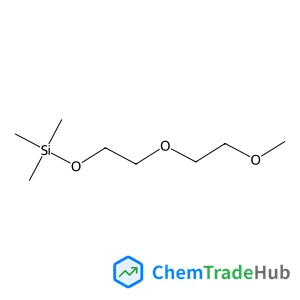
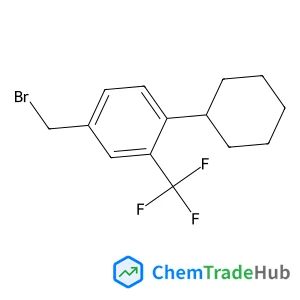
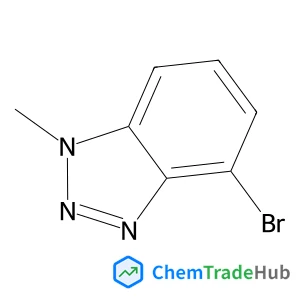
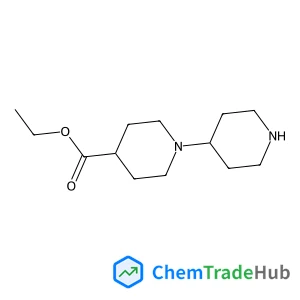
おすすめサプライヤー




免責事項
このページに表示される学術雑誌情報は、参考および研究目的のみを目的としています。当社は雑誌出版社とは提携しておらず、投稿の取り扱いも行っておりません。出版に関するお問い合わせは、各雑誌出版社に直接ご連絡ください。
表示されている情報に誤りがある場合は、support@chemtradehub.com までご連絡ください。迅速に確認し、対応いたします。