












A plethora of isomerization processes and hydrogen scrambling in the fragmentation of the methanol dimer cation: a PEPICO study
文献情報
出版日
2021-12-21
DOI
10.1039/D1CP05155E
インパクトファクター
3.676
著者
Xiangkun Wu, Xiaoguo Zhou, Saša Bjelić, Patrick Hemberger, Bálint Sztáray, Andras Bodi
原文を見る
要旨
The valence photoionization of light and deuterated methanol dimers was studied by imaging photoelectron photoion coincidence spectroscopy in the 10.00–10.35 eV photon energy range. Methanol clusters were generated in a rich methanol beam in nitrogen after expansion into vacuum. They generally photoionize dissociatively to protonated methanol cluster cations, (CH3OH)nH+. However, the stable dimer parent ion (CH3OH)2+ is readily detected below the dissociation threshold to yield the dominant CH3OH2+ fragment ion. In addition to protonated methanol, we could also detect the water- and methyl-loss fragment ions of the methanol dimer cation for the first time. These newly revealed fragmentation channels are slow and cannot compete with protonated methanol cation formation at higher internal energies. In fact, the water- and methyl-loss fragment ions appear together and disappear at a ca. 150 meV higher energy in the breakdown diagram. Experiments with selectively deuterated methanol samples showed H scrambling involving two hydroxyl and one methyl hydrogens prior to protonated methanol formation. These insights guided the potential energy surface exploration to rationalize the dissociative photoionization mechanism. The potential energy surface was further validated by a statistical model including isotope effects to fit the experiment for the light and the perdeuterated methanol dimers simultaneously. The (CH3OH)2+ parent ion dissociates via five parallel channels at low internal energies. The loss of both CH2OH and CH3O neutral fragments leads to protonated methanol. However, the latter, direct dissociation channel is energetically forbidden at low energies. Instead, an isomerization transition state is followed by proton transfer from a methyl group, which leads to the CH3(H)OH+⋯CH2OH ion, the precursor to the CH2OH-, H2O-, and CH3-loss fragments after further isomerization steps, in part by a roaming mechanism. Water loss yields the ethanol cation, and two paths are proposed to account for m/z 49 fragment ions after CH3 loss. The roaming pathways are quickly outcompeted by hydrogen bond breaking to yield CH3OH2+, which explains the dominance of the protonated methanol fragment ion in the mass spectrum.
関連文献
Pressure-induced emission band separation of the hybridized local and charge transfer excited state in a TPE-based crystal
Xuedan Liu, Aisen Li, Weiqing Xu, Zhiyong Ma, Xinru Jia
2018-04-28
Paper
DOI: 10.1039/C8CP02096E
Collisions of noble gas atoms with graphene and a graphene nanodome
Xin Zhang, Shiwei Cao, Zhan Li, Ning Zhang, Ximeng Chen
2018-01-30
Paper
DOI: 10.1039/C7CP07548K
Theoretical study on mesoscopic-size impurity effects in the charge separation process of organic photocells
Motomichi Tashiro, Takahito Nakajima
2018-05-21
Paper
DOI: 10.1039/C7CP08125A
All-atom molecular dynamics simulations of spin labelled double and single-strand DNA for EPR studies
C. Prior, L. Danilāne, V. S. Oganesyan
2018-04-16
Paper
DOI: 10.1039/C7CP08625C
Correction: Insights into the enhanced CeN triple bond in the HCeN molecule
Zhen Pu, Wenjie Yu, Soumendra K. Roy, Chaoyang Li, Bingyun Ao, Tianwei Liu, Maobing Shuai, Xuefeng Wang
2018-05-21
Correction
DOI: 10.1039/C8CP91766C
A molecular dynamics study of the complete binding process of meropenem to New Delhi metallo-β-lactamase 1
Juan Duan, Chuncai Hu, Jiafan Guo, Lianxian Guo, Jia Sun, Zuguo Zhao
2018-02-14
Paper
DOI: 10.1039/C7CP07459J
Phonon transport in Janus monolayer MoSSe: a first-principles study
2018-02-15
Paper
DOI: 10.1039/C8CP00350E
Solvation-controlled lithium-ion complexes in a nonflammable solvent containing ethylene carbonate: structural and electrochemical aspects
Michiru Sogawa, Hikaru Kawanoue, Yanko Marinov Todorov, Daisuke Hirayama, Hideyuki Mimura, Nobuko Yoshimoto, Masayuki Morita, Kenta Fujii
2018-02-09
Paper
DOI: 10.1039/C7CP08511G
Viable aromatic BenHn stars enclosing a planar hypercoordinate boron or late transition metal
Xue-Feng Zhao, Jia-Jia Li, Hai-Ru Li, Caixia Yuan, Xinxin Tian, Si-Dian Li, Yan-Bo Wu, Zhi-Xiang Wang
2018-02-19
Paper
DOI: 10.1039/C7CP06955C
Imaging the ordering of a weakly adsorbed two-dimensional condensate: ambient-pressure microscopy and spectroscopy of CO2 molecules on rutile TiO2(110)
Mausumi Mahapatra, David C. Grinter, Fang Xu, Si Luo, Robert M. Palomino, Shyam Kattel, Iradwikanari Waluyo, Ping Liu, Dario J. Stacchiola, Sanjaya D. Senanayake
2018-05-01
Communication
DOI: 10.1039/C8CP01614C
こちらもおすすめ
化合物よくある質問
間溴苯甲酰腈の市場動向や研究トレンドはどうですか?
間 brom 苯甲酰腈は、合成化学や薬物化学において重要な Intermediate として使用されています。市場動向としては、その合成性と機能性により、研究開...
24999-51-7(3-Bromophenyl)(oxo)...
287966-62-5Desulfo Glucoraphani...
化合物よくある質問
Methyl 2-amino-5-(trifluoromethyl)benzoateに適用される法規ガイドラインは何ですか?
CAS番号117324-58-0の塩酸メチル2アミノ-5-トリフルオロメチルベンゼートは、GHS分類により腐食性物質と判定されます。REACH規則では、製造、販...
117324-58-0Methyl 2-amino-5-(tr...
化合物よくある質問
3-ブロモ-1,3,4,5-四水化-2H-1-ベンザアゼピン-2-オンは安全ですか?
毒性があるため、適切な安全対策が必須です。皮膚や粘膜への刺激性が強く、吸入や誤飲により健康被害を引き起こす可能性があります。取扱時にはガスマスクや手袋、眼鏡を使...
86499-96-93-Bromo-1,3,4,5-tetr...
化合物よくある質問
三氟甲基ピリジン-2-甲アミン塩酸塩は安全ですか?
三氟甲基ピリジン-2-甲アミン塩酸塩は安全性に注意が必要です。毒性は低レベルですが、直接的接触や吸入は避けるべきです。適切な手袋や防塵マスクを着用し、密閉された...
871826-12-9(5-(Trifluoromethyl)...
化合物よくある質問
1-エチル-4-(4-硝基フェニル)ピペリジンは安全ですか?
1-エチル-4-(4-硝基フェニル)ピペリジンは有毒であり、取扱には注意が必要です。保管や作業中に手袋を着用し、目や皮膚に接触しないように注意する必要があります...
115619-00-61-Ethyl-4-(4-nitroph...
化合物よくある質問
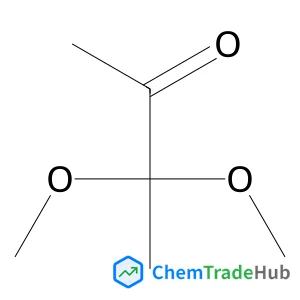
1,1-ジメトキシプロパン-2-オンは安全ですか?
1,1-ジメトキシプロパン-2-オンは一般的に低毒性ですが、皮膚や目への刺激性があるため、取扱いには注意が必要です。蒸気や液体の吸入には有害な可能性があり、適切...
6342-56-91,1-dimethoxypropan-...
化合物よくある質問
コバルト(II) 3,3'-{[(1S,2S)-1,2-ジメチルフENCYCLICALE-1,2-エチエンジイル]ビス[ニトロリルメチルイリデン]}ビス[4-オキソ-2-ペンテン-2-olate]について「に適用される法規ガイドラインは何ですか?
この化合物はCAS番号259259-80-8に対応しています。GHS分類では、毒性、燃焼性、反応性、炎症性を考慮に入れ、適切な危険性分類が行われます。REACH...
259259-80-8Cobalt(2+) (2E,2'E)-...
化合物よくある質問
「カーバミル酸, N-[8-[[2-[[2-(2,6-ジオキソ-3-ピペリジニル)-2,3-ジオキソ-1,3-ジヒドロ-1H-イソイソインドール-4-イルオキシ]アセチル]アミノ]オクチル]-1,1-ジメチレチルエステル」はどのように保存すればよいですか?
この化合物は、冷却庫で-20℃の温度、乾燥した容器に保管し、直日光から保護する必要があります。湿度の高い環境や高温は避けてください。
1950635-34-32-Methyl-2-propanyl ...
1433975-21-3FMoc-D-4-Aph(tBu-CbM...
掲載誌
Physical Chemistry Chemical Physics

CiteScore:
5.5
自己引用率:
10.3%
年間論文数:
3036
Physical Chemistry Chemical Physics (PCCP) is an international journal co-owned by 19 physical chemistry and physics societies from around the world. This journal publishes original, cutting-edge research in physical chemistry, chemical physics and biophysical chemistry. To be suitable for publication in PCCP, articles must include significant innovation and/or insight into physical chemistry; this is the most important criterion that reviewers and Editors will judge against when evaluating submissions. The journal has a broad scope and welcomes contributions spanning experiment, theory, computation and data science. Topical coverage includes spectroscopy, dynamics, kinetics, statistical mechanics, thermodynamics, electrochemistry, catalysis, surface science, quantum mechanics, quantum computing and machine learning. Interdisciplinary research areas such as polymers and soft matter, materials, nanoscience, energy, surfaces/interfaces, and biophysical chemistry are welcomed if they demonstrate significant innovation and/or insight into physical chemistry. Joined experimental/theoretical studies are particularly appreciated when complementary and based on up-to-date approaches.
おすすめ化合物
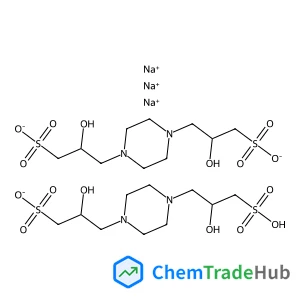
3,3'-(Piperazine-1,4-diyl)bis(2-hydroxypropane-1-sulfonic acid) Sodium Salt
CAS番号:
108321-08-0
分子式:
C20H41N4Na3O16S4
![O-Benzyl-N-[(9H-fluoren-9-ylmethoxy)carbonyl]-N-methyl-L-threonine structure](https://static.chemtradehub.com/structs/198/198561-81-8-a56e.webp "O-Benzyl-N-[(9H-fluoren-9-ylmethoxy)carbonyl]-N-methyl-L-threonine structure")
おすすめサプライヤー





免責事項
このページに表示される学術雑誌情報は、参考および研究目的のみを目的としています。当社は雑誌出版社とは提携しておらず、投稿の取り扱いも行っておりません。出版に関するお問い合わせは、各雑誌出版社に直接ご連絡ください。
表示されている情報に誤りがある場合は、support@chemtradehub.com までご連絡ください。迅速に確認し、対応いたします。