













On the nature of bonding in a new boronyl species Zn2(BO)2: a linear four-center two-electron σ bond
文献情報
出版日
2021-11-20
DOI
10.1039/D1CP03920B
インパクトファクター
3.676
著者
Da-Zhi Li, Li-Juan Zhang, Ling Pei
原文を見る
要旨
The Zn–Zn bond as one of the metal-to-metal bonds in clusters and molecules is of fundamental interest in many areas of natural science. Neutral boronyl can be viewed as a σ radical and is found in boronyl metal complexes. However, a complex with the Zn–Zn bond stabilized by boronyl ligands has not been found so far. Herein, we report on the computational design of the simplest case of such a system: linear D∞h OBZnZnBO. The structural and electronic properties and chemical bonding on a series of zinc complexes Znx(BO)y (x = 1,2; y = 1,2) with boronyl as ligands have been studied using quantum chemical calculations at the B3LYP and PBE0 levels, respectively. For the Zn2(BO)2 cluster, the linear D∞h OBZnZnBO is the global minimum, in which the calculated Zn–Zn bond length of rZn–Zn = 2.400 Å at the B3LYP level, which appears to be close to the latest recommended covalent radii (2.40 Å) of the proposed single bond covalent radii of the Zn–Zn bond. Chemical bonding analyses show that D∞h OBZnZnBO possesses a linear four-center two-electron (4c–2e) σ bond. The σ bond framework has a contribution of Zn orbitals 54% and B orbitals 44%, which involve Zn 4s 20% and 4p 34%, and B 2s 28% and 2p 16%, respectively. Furthermore, the D∞h HZnZnH and NCZnZnCN clusters also exhibit one linear 4c–2e σ bond due to the secondary contribution from the H s and C sp components, respectively. The linear 4c–2e σ bond greatly stabilizes the dizinc complexes. D∞h OBZnZnBO is thermochemically stable with respect to the possible formation channel at room temperature, whereas the formation energy of the exergonic channel, 2ZnBO (C∞v, 2Σg) → OBZnZnBO (D∞h, 1Σg), is evaluated to be −58.75 kcal mol−1 at the B3LYP level. Thus, D∞h OBZnZnBO as the first observation of the Zn–Zn covalent bond in zinc complexes with boronyl as ligands may be synthesized in laboratories in the near future.
関連文献
Origin of cooperativity in hydrogen bonding
Jorge Nochebuena, Cristina Cuautli, Joel Ireta
2017-05-15
Paper
DOI: 10.1039/C7CP01695F
Correlation and squeezing for optical transistor and intensity for router applications in Pr3+:YSO
Ghulam Abbas Khan, Changbiao Li, Faizan Raza, Noor Ahmed, Abdul Rasheed Mahesar, Yanpeng Zhang
2017-05-12
Paper
DOI: 10.1039/C7CP01884C
First-principles study of the structural stability and electrochemical properties of Na2MSiO4 (M = Mn, Fe, Co and Ni) polymorphs
F. Bianchini, H. Fjellvåg, P. Vajeeston
2017-05-08
Paper
DOI: 10.1039/C7CP01395G
Rydberg states of alkali atoms on superfluid helium nanodroplets: inside or outside?
Johann V. Pototschnig, Florian Lackner, Andreas W. Hauser, Wolfgang E. Ernst
2017-05-16
Paper
DOI: 10.1039/C7CP02332D
Photomultiplication type narrowband organic photodetectors working at forward and reverse bias
Jianli Miao, Fujun Zhang, Mingde Du, Wenbin Wang, Ying Fang
2017-05-08
Paper
DOI: 10.1039/C7CP01969F
Prediction of the glass transition temperature and design of phase diagrams of butadiene rubber and styrene–butadiene rubber via molecular dynamics simulations
Myung Shin Ryu, Hyoung Gyu Kim, Hyun You Kim, Kyung-Shin Min, Hak Joo Kim, Hyuck Mo Lee
2017-05-25
Paper
DOI: 10.1039/C7CP00080D
Investigation of the relationship between the cycle performance and the electronic structure in LiAlxMn2−xO4 (x = 0 and 0.2) using soft X-ray spectroscopy
Daisuke Asakura, Yusuke Nanba, Yuki Makinose, Hirofumi Matsuda, Eiji Hosono
2017-05-25
Paper
DOI: 10.1039/C7CP02070H
Electrochemical evaluation methods of vanadium flow battery electrodes
Lantao Wu, Jianshe Wang, Yi Shen, Le Liu, Jingyu Xi
2017-05-09
Paper
DOI: 10.1039/C7CP02581E
How silver segregation stabilizes 1D surface gold oxide: a cluster expansion study combined with ab initio MD simulations
Sandra Hoppe, Yong Li, Lyudmila V. Moskaleva, Stefan Müller
2017-05-09
Paper
DOI: 10.1039/C7CP02221B
こちらもおすすめ
化合物よくある質問
2-ヒドロキシ-5-ニトロベンジンブロモイドの代替品はありますか?
2-ヒドロキシ-5-ニトロベンジンブロモイドは特定の化学反応に適しているため、代替品は限られています。しかし、同様の構造を持つ2-ヒドロキシ-4-ニトロベンジン...
772-33-82-(Bromomethyl)-4-ni...
化合物よくある質問
N-(2-ブロモフェニル)-1-チロール-3-オキソ-3-(ピペリジニル)プロペン-2-イル)ベンゼンアミドを取り扱う際の実験室安全事項は何ですか?
N-(2-ブロモフェニル)-1-チロール-3-オキソ-3-(ピペリジニル)プロペン-2-イル)ベンゼンアミドは有毒で、皮膚や粘膜に刺激を与える可能性があります。...
1800044-77-2N-[(1Z)-1-(2-Bromoph...
化合物よくある質問
1,3プロパンジオール,2-[2-(2アミノ-6クロロ-9Hピリミジン-9-イル)エチル-1,1,2,2-D4]-2,3-ジアセタートの市場動向や研究トレンドはどうですか?
この化合物は、新規治療薬の開発に注目されています。市場では、その有効性と安全性が評価され、研究分野では、分子生物学と医薬化学の新たな発見が期待されています。
1020718-81-31,3-Propanediol, 2-[...
579-44-2Ethanone, 2-hydroxy-...
化合物よくある質問
Succinimidyl-alanyl-phenylalanyl-prolyl-phenylalanine 4-nitroanilide はどの業界で使用されていますか?
Succinimidyl-alanyl-phenylalanyl-prolyl-phenylalanine 4-nitroanilide は主に医薬品開発やポ...
128802-73-3succinimidyl-alanyl-...
化合物よくある質問
メチル6-アミノ-5-クロロピリジン-2-カーボイル酸について、適用される法規ガイドラインは何ですか?
メチル6-アミノ-5-クロロピリジン-2-カーボイル酸(CAS番号: 1256794-05-4)の使用には、GHS( Globally Harmonized S...
1256794-05-4Methyl 6-amino-5-chl...
化合物よくある質問
エチル4-(シクロ Pentagonyl)アミノ-2-メチル硫化基ピリミジン-5-カルボキシレートを取り扱う際の実験室安全事項は何ですか?
取り扱いには、耐薬品性の容器を使用し、通気性の良い場所で操作することを推奨します。漏れ時は、SDS(安全データシート)を参照して適切な措置を取ること。手洗いと洗...
211245-62-4ethyl 4-(cyclopentyl...
化合物よくある質問
(S)-3-ベンZYルピペリジン塩酸塩とは何ですか?
(S)-3-ベンZYルピペリジン塩酸塩は、CAS番号1258940-00-9で表される化合物です。これは、(S)-3-苯基哌啶的盐酸盐であり、主に医薬品の原料と...
1258940-00-9(S)-3-Phenylpiperidi...
化合物よくある質問
3,5-二甲基金剛胺の主な用途は何ですか?
3,5-二甲基金剛胺は、主に医薬品の原料として使用され、また抗うつ薬や抗アルツハイマー薬の開発に利用されます。さらに、化粧品や食品添加物の製造でも重要な役割を果...
19988-45-52-(2,3-Dihydroxyphen...
化合物よくある質問
ビス(4-メチル-2-ペンチル)フェニルカルボン酸エステルの代替品はありますか?
ビス(4-メチル-2-ペンチル)フェニルカルボン酸エステル (CAS番号: 1398066-13-1) の代替品には、ビス(2-エチルヘキシル)フェノールカルボ...
1398066-13-1Bis(4-methyl-2-penty...
掲載誌
Physical Chemistry Chemical Physics

CiteScore:
5.5
自己引用率:
10.3%
年間論文数:
3036
Physical Chemistry Chemical Physics (PCCP) is an international journal co-owned by 19 physical chemistry and physics societies from around the world. This journal publishes original, cutting-edge research in physical chemistry, chemical physics and biophysical chemistry. To be suitable for publication in PCCP, articles must include significant innovation and/or insight into physical chemistry; this is the most important criterion that reviewers and Editors will judge against when evaluating submissions. The journal has a broad scope and welcomes contributions spanning experiment, theory, computation and data science. Topical coverage includes spectroscopy, dynamics, kinetics, statistical mechanics, thermodynamics, electrochemistry, catalysis, surface science, quantum mechanics, quantum computing and machine learning. Interdisciplinary research areas such as polymers and soft matter, materials, nanoscience, energy, surfaces/interfaces, and biophysical chemistry are welcomed if they demonstrate significant innovation and/or insight into physical chemistry. Joined experimental/theoretical studies are particularly appreciated when complementary and based on up-to-date approaches.
おすすめ化合物

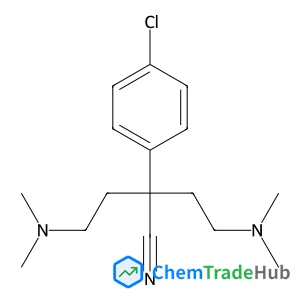
2-(4-Chlorophenyl)-4-(dimethylamino)-2-(2-(dimethylamino)ethyl)butanenitrile
CAS番号:
1246816-57-8
分子式:
C16H24ClN3
おすすめサプライヤー






免責事項
このページに表示される学術雑誌情報は、参考および研究目的のみを目的としています。当社は雑誌出版社とは提携しておらず、投稿の取り扱いも行っておりません。出版に関するお問い合わせは、各雑誌出版社に直接ご連絡ください。
表示されている情報に誤りがある場合は、support@chemtradehub.com までご連絡ください。迅速に確認し、対応いたします。