


Yet another perspective on hole interactions
文献情報
出版日
2021-08-27
DOI
10.1039/D1CP03533A
インパクトファクター
3.676
著者
Naziha Tarannam, Rahul Shukla, Sebastian Kozuch
原文を見る
要旨
Hole interactions are known by different names depending on the key atom of the bond (halogen bond, chalcogen bond, hydrogen bond, etc.), and the geometry of the interaction (σ if in line, π if perpendicular to the Lewis acid plane). However, its origin starts with the creation of a Lewis acid by an underlying covalent bond, which forms an electrostatic depletion and a virtual antibonding orbital, which can create non-covalent interactions with Lewis bases. In this (maybe subjective) perspective, we will claim that hole interactions must be defined via the molecular orbital origin of the molecule. Under this premise we can better explore the richness of such bonding patterns. For that, we will study old, recent and new systems, trying to pinpoint some misinterpretations that are often associated with them. We will use as exemplars the triel bonds, a couple of metal complexes, a discussion on convergent σ-holes, and many cases of anti-electrostatic hole interactions.
おすすめジャーナル

Angewandte Chemie International Edition

Nature Reviews Drug Discovery

Mini-Reviews in Medicinal Chemistry

European Journal of Organic Chemistry

Contact Lens & Anterior Eye

Journal of Medical Biochemistry

CrystEngComm

Journal of Enzyme inhibition and Medicinal Chemistry

Physical Chemistry Chemical Physics

Green Chemistry
関連文献
Dipole strength effects on the polymorphism in smectic A mesophases
2002-01-23
Paper
DOI: 10.1039/B106788E
On the classification of generic phenomena in one-parameter families of thermodynamic binary mixtures
P. Valentin
2002-02-15
Paper
DOI: 10.1039/B109105K
Mass-selected infrared photodissociation spectroscopy of V4O10+
K. R. Asmis, M. Brümmer, C. Kaposta, G. Santambrogio, G. von Helden, K. Rademann, L. Wöste
2002-02-27
Communication
DOI: 10.1039/B111056J
Pairing of the nucleobases guanine and cytosine in the gas phase studied by IR–UV double-resonance spectroscopy and ab initio calculations
Ch. Janzen, P. Imhof, K. Kleinermanns, M. S. de Vries
2002-01-29
Paper
DOI: 10.1039/B107429F
Vibrational spectra of 5,6-dihydrouracil. An experimental matrix isolation, solid state and theoretical study
Leszek Lapinski, Maciej J. Nowak, Dariusz C. Bieńko, Danuta Michalska
2002-02-26
Paper
DOI: 10.1039/B108702A
Synchrotron radiation studies of the kinetics of cBN crystallization in the NH4F–BN system
2002-02-06
Paper
DOI: 10.1039/B107483K
Behavior of superoxide radicals formed on TiO2 powder photocatalysts studied by a chemiluminescent probe method
Yoshio Nosaka, Masatsugu Nakamura, Tsutomu Hirakawa
2002-02-14
Paper
DOI: 10.1039/B108441K
P–ρ–T and Ps–ρs–Ts properties of methanol + water and n-propanol + water solutions in wide range of state parameters
2002-02-18
Paper
DOI: 10.1039/B109077C
Energetics of a model NH–π interaction: the gas phase benzene–NH3 complex
Michel Mons, Iliana Dimicoli, Benjamin Tardivel, François Piuzzi, Valérie Brenner, Philippe Millié
2002-01-15
Paper
DOI: 10.1039/B108146M
Solvent effects in the photodenitrogenation of the azoalkane diazabicyclo[2.2.1]hept-2-ene: viscosity- and polarity-controlled stereoselectivity in housane formation from the diazenyl diradical
Waldemar Adam, Manfred Diedering
2002-02-13
Paper
DOI: 10.1039/B110562K
こちらもおすすめ
化合物よくある質問
アエポキシアビレーターONE酢酸エステルを含む廃棄物はどのように処理すべきですか?
アエポキシアビレーターONE酢酸エステルを含む廃棄物は、焼却や専門廃棄処理が一般的です。具体的には、廃棄物は密閉容器に収集し、適切な温度と湿度の下で保存します。...
2484719-11-9a-Epoxyabiraterone A...
化合物よくある質問
4-ヒドロキシ但線を取り扱う際の実験室安全事項は何ですか?
取り扱いには化学製品安全管理データシート(SDS)を参照してください。温度10℃以下で保存し、密閉容器に保管してください。漏れ時にはドラフトチャンバーを使用し、...
25714-71-04-Hydroxybutanal
化合物よくある質問
4-(3-環戊基尿素)フェノールボロネートはどの業界で使用されていますか?
4-(3-環戊基尿素)フェノールボロネートは主に医薬品産業で使用されています。この化合物は抗炎症薬や抗うつ薬の候補物質として研究されています。また、ポリマー産業...
874297-80-01-Cyclopentyl-3-[4-(...
化合物よくある質問
N~1~-[3-氯-5-(三氟甲基)-2-吡啶]-1,2-乙二胺の市場動向や研究トレンドはどうですか?
市場では、安全性と効果性を基にした化学物質の需要が高まっています。研究分野では、環境に優しい代替品の開発が進んでおり、その結果、この化合物の市場需要は減少傾向に...
219478-19-0N'-[3-chloro-5-(trif...
化合物よくある質問
6-硝基苯并二氢吡喃-4-酮についての法規ガイドラインは何ですか?
6-硝基苯并二氢吡喃-4-酮(CAS番号: 68043-53-8)は、GHS(統一化された化学品の危険性的分類と標識)で急性毒性第4クラスに分類されます。EUで...
68043-53-86-Nitro-2,3-dihydro-...
1016705-16-05-(Hydrazinomethyl)-...
化合物よくある質問
6-乙酰基-2(3H)-苯并噻唑酮は安全ですか?
安全性は化合物の使用方法によります。適切な取扱いと防護措置を講じれば、一定の安全性があります。ただし、吸入や皮膚への接触は避けてください。
133044-44-76-Acetyl-1,3-benzoth...
化合物よくある質問
3-メチル-6-(1-メチルヒドラジニル)ピリジジンはどの業界で使用されていますか?
3-メチル-6-(1-メチルヒドラジニル)ピリジジンは主に医薬品、ポリマー、センサー製造業界で使用されています。特に、医薬品産業では抗がん剤や抗真菌剤の候補物質...
175135-44-13-Methyl-6-(1-methyl...
化合物よくある質問
tert-butyl 5-oxo-2,6-diazaspiro[3.4]octane-2-carboxylateの物理化学的性質は何ですか?
tert-butyl 5-オキソ-2,6-ジアザスパイロ[3.4]オクタネ-2-カルボキサongyangはCAS番号1330765-39-3で、分子量は334....
1330765-39-32-Methyl-2-propanyl ...
化合物よくある質問
3-塩素メチルフェニル-4,4,5,5-テトラメチル-1,3,2-ジオキソボロラノールは安全ですか?
3-塩素メチルフェニル-4,4,5,5-テトラメチル-1,3,2-ジオキソボロラノールは、毒性が低いと考えられていますが、直接的な皮膚接触や吸入は避けるべきです...
1073353-44-22-[3-(Chloromethyl)p...
掲載誌
Physical Chemistry Chemical Physics
CiteScore:
5.5
自己引用率:
10.3%
年間論文数:
3036
Physical Chemistry Chemical Physics (PCCP) is an international journal co-owned by 19 physical chemistry and physics societies from around the world. This journal publishes original, cutting-edge research in physical chemistry, chemical physics and biophysical chemistry. To be suitable for publication in PCCP, articles must include significant innovation and/or insight into physical chemistry; this is the most important criterion that reviewers and Editors will judge against when evaluating submissions. The journal has a broad scope and welcomes contributions spanning experiment, theory, computation and data science. Topical coverage includes spectroscopy, dynamics, kinetics, statistical mechanics, thermodynamics, electrochemistry, catalysis, surface science, quantum mechanics, quantum computing and machine learning. Interdisciplinary research areas such as polymers and soft matter, materials, nanoscience, energy, surfaces/interfaces, and biophysical chemistry are welcomed if they demonstrate significant innovation and/or insight into physical chemistry. Joined experimental/theoretical studies are particularly appreciated when complementary and based on up-to-date approaches.
おすすめ化合物
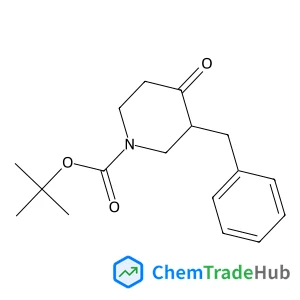
![4-Penten-1-yl 2-[(2-furylmethyl)(1H-imidazol-1-ylcarbonyl)amino]butanoate structure](https://static.chemtradehub.com/structs/101/101903-30-4-ac34.webp "4-Penten-1-yl 2-[(2-furylmethyl)(1H-imidazol-1-ylcarbonyl)amino]butanoate structure")
4-Penten-1-yl 2-[(2-furylmethyl)(1H-imidazol-1-ylcarbonyl)amino]butanoate
CAS番号:
101903-30-4
分子式:
C18H23N3O4
おすすめサプライヤー




免責事項
このページに表示される学術雑誌情報は、参考および研究目的のみを目的としています。当社は雑誌出版社とは提携しておらず、投稿の取り扱いも行っておりません。出版に関するお問い合わせは、各雑誌出版社に直接ご連絡ください。
表示されている情報に誤りがある場合は、support@chemtradehub.com までご連絡ください。迅速に確認し、対応いたします。