












High-temperature molecular screening of hybrid polyOAPS-imide networks based on octa(aminophenyl)silsesquioxane for increased thermomechanical resistance
文献情報
出版日
2021-04-30
DOI
10.1039/D1CP01052B
インパクトファクター
3.676
著者
Sylvie Neyertz, Saman Salimi, Farzaneh Radmanesh, Nieck E. Benes, David Brown
原文を見る
要旨
A new family of hybrid hyper-cross-linked thin films based on inorganic polyhedral oligomeric silsesquioxane (POSS) cages covalently bound with short organic imides has recently been developed using interfacial polycondensation followed by high-temperature imidization. These polyPOSS-imide networks were aimed at gas separations under harsh conditions, but the aliphatic arms of the initial POSS precursor, octa(aminopropyl)silsesquioxane, were found to be a weak link. This work investigates the replacement of the aliphatic arm by a phenyl derivative, octa(aminophenyl)silsesquioxane (OAPS). Although this new precursor is expected to be more thermoresistant, it introduces extra degrees of complexity since the functional -NH2 group on the phenyl ring can either be attached at a meta, a para or an ortho position. In order to avoid a costly programme of synthesis and testing, molecular dynamics (MD) simulations have been used to efficiently screen a large number of candidate structures based on mixtures of the three OAPS isomers, the initial POSS and three organic precursors, the PMDA, 6FDA and ODPA dianhydrides. Following cross-linking at room temperature, twenty-two model networks were further relaxed at the imidization temperature and directly tested under harsh conditions at 300 °C. The screening stage included the characterization of their intercage single-links and double-links, which reinforce the structures, and intracage links, which have the opposite effect. Carrying out the cross-linking reactions to completion significantly improved the resistance to isotropic dilation. The initial POSS as well as the flexible 6FDA and ODPA linkers were found to be prone to large deformations, whereas the orthoOAPS, metaOAPS, paraOAPS and the PMDA linker prevented volume dilations. Upon uniaxial tension, the Young's moduli varied in the order paraOAPS < POSS ≈ metaOAPS < orthoOAPS for the inorganic precursors and in the order 6FDA < ODPA < PMDA for the organic precursors. In all cases, the networks based on either orthoOAPS and/or PMDA displayed superior resistance. Nine polyOAPS-imides were further heated up to 400 °C, i.e. closer to the expected degradation, and re-submitted to isotropic dilations and uniaxial tensions. They confirmed the trends found at 300 °C with no signs of structural collapse. Using OAPS as the inorganic precursor thus significantly reinforces the thermoresistance of these hybrid hyper-cross-linked networks.
関連文献
The influence of the surface composition of mixed monolayer films on the evaporation coefficient of water
Rachael E. H. Miles, Jonathan P. Reid
2016-07-05
Paper
DOI: 10.1039/C6CP03826C
Ab initio studies on the spin-forbidden cooling transitions of the LiRb molecule
Yang You, Chuan-Lu Yang, Qing-Qing Zhang, Mei-Shan Wang, Xiao-Guang Ma, Wen-Wang Liu
2016-05-26
Paper
DOI: 10.1039/C6CP01618A
Metallonaphthalocyanines as triplet sensitizers for near-infrared photon upconversion beyond 850 nm
Shogo Amemori, Nobuo Kimizuka
2015-08-03
Communication
DOI: 10.1039/C5CP02733K
Magnetoresistive polyaniline–silicon carbide metacomposites: plasma frequency determination and high magnetic field sensitivity
Hongbo Gu, Jiang Guo, Mojammel Alam Khan, David P. Young, T. D. Shen, Suying Wei, Zhanhu Guo
2016-06-24
Communication
DOI: 10.1039/C6CP02694J
Computational screening for effective Ge1−xSix nanowire photocatalyst
Teck L. Tan, Man-Fai Ng
2015-07-13
Paper
DOI: 10.1039/C5CP03077C
Study of the interface between Na-rich and Li-rich phases in a Na-inserted spinel Li4Ti5O12 crystal for an electrode of a sodium-ion battery
Mitsunori Kitta, Riki Kataoka, Masanori Kohyama
2016-06-29
Paper
DOI: 10.1039/C6CP03379B
The use of multiple pseudo-physiological solutions to simulate the degradation behavior of pure iron as a metallic resorbable implant: a surface-characterization study
Ranna Tolouei, Jerome Harrison, Carlo Paternoster, Stephane Turgeon, Pascale Chevallier, Diego Mantovani
2016-06-24
Paper
DOI: 10.1039/C6CP02451C
Energy dissipative photoprotective mechanism of carotenoid spheroidene from the photoreaction center of purple bacteria Rhodobacter sphaeroides
Sundaram Arulmozhiraja, Naoki Nakatani, Akira Nakayama
2015-08-04
Paper
DOI: 10.1039/C5CP03089G
Re-examining the Chevrel phase Mo6S8 cathode for Mg intercalation from an electronic structure perspective
Florian Thöle, Liwen F. Wan, David Prendergast
2015-08-12
Communication
DOI: 10.1039/C5CP03046C
Surface directed reversible imidazole ligation to nickel(ii) octaethylporphyrin at the solution/solid interface: a single molecule level study
Goutam Nandi, Bhaskar Chilukuri, K. W. Hipps, Ursula Mazur
2016-07-15
Paper
DOI: 10.1039/C6CP04454A
こちらもおすすめ
化合物よくある質問
2-メトキシ-4-(メチルスルフィニル)アミンの主な用途は何ですか?
2-メトキシ-4-(メチルスルフィニル)アミンは、主に医薬品および農薬の製造に使用されます。また、合成化学の一部として研究用材料としても利用されます。
41608-73-52-Methoxy-4-(methyls...
118684-13-24-(Bromomethyl)-3-me...
化合物よくある質問
4,6-二氯-N-甲基ピラミジンアミンの代替品はありますか?
代替品としては、4,6-二クロロピラミジンアミンや他のピラミジン系化合物が考えられます。ただし、目的と用途によって最適な代替品は異なります。
10397-15-64,6-Dichloro-N-methy...
化合物よくある質問
6-氯-4-甲基-1H-吲哚を含む廃棄物はどのように処理すべきですか?
6-氯-4-甲基-1H-吲哚の廃棄物は、適切な容器に収集し、密閉して保管します。温度は常温、湿度は低く、直射日光を避けて保管することを推奨します。廃棄処理は専門...
885520-84-36-chloro-4-methyl-1H...
化合物よくある質問
2-フローユロ-4-(トリフルオロメチル)ベンゾイドについて「に適用される法規ガイドラインは何ですか」
2-フローユロ-4-(トリフルオロメチル)ベンゾイドのCAS番号は207974-08-1です。この化合物はGHS分類で毒性物質と有害な反応物質として分類されます...
207974-08-1[2-Fluoro-4-(trifluo...
化合物よくある質問
4-ニトロフェニルN-[(ベンゼルオキシルカーボンイル]グリシングリシングリシン酸はどのように保存すればよいですか?
4-ニトロフェニルN-[(ベンゼルオキシルカーボンイル]グリシングリシングリシン酸は、室温で暗所に保管し、乾燥した環境で保存することを推奨します。容器は密閉性の...
19811-64-44-Nitrophenyl N-[(be...
化合物よくある質問
イソデスロラタドリンの代替品はありますか?
イソデスロラタドリンの代替品としては、デスロラタドリンや他の抗ヒスタミン薬が挙げられます。具体的には、デスロラタドリン、ラセカミド、フェルタドリンなどが、症状や...
183198-49-4Iso Desloratadine
化合物よくある質問
5-甲氧基-1,2,3,4-四氢异喹啉盐酸盐はどのように合成されますか?
5-甲氧基-1,2,3,4-四氢异喹啉盐酸盐の一般的な合成方法は、メタノール中で5-メトキシ-1,2,3,4-四ヒュドロイソキシンを塩酸で塩化します。この反応で...
103030-69-95-Methoxy-1,2,3,4-te...
化合物よくある質問
4-アミノ-5-メトキシ-2-トルエンサルホニック酸についての法規ガイドラインは何ですか?
CAS番号6471-78-9の4-アミノ-5-メトキシ-2-トルエンサルホニック酸は、GHS分類では corrosive(腐食性)と識別されます。EUのREAC...
6471-78-94-Amino-5-Methoxy-2-...
化合物よくある質問
甲基孕酮を取り扱う際の実験室安全事項は何ですか?
甲基孕酮の取り扱いは、PPE(個人保護具)の使用が必要な重要な安全事項を伴います。防塵マスク、ゴーグル、手袋を着用することが推奨されます。ドラフトチャンバーを使...
204063-33-22-[(Diphenylmethyl)a...
掲載誌
Physical Chemistry Chemical Physics

CiteScore:
5.5
自己引用率:
10.3%
年間論文数:
3036
Physical Chemistry Chemical Physics (PCCP) is an international journal co-owned by 19 physical chemistry and physics societies from around the world. This journal publishes original, cutting-edge research in physical chemistry, chemical physics and biophysical chemistry. To be suitable for publication in PCCP, articles must include significant innovation and/or insight into physical chemistry; this is the most important criterion that reviewers and Editors will judge against when evaluating submissions. The journal has a broad scope and welcomes contributions spanning experiment, theory, computation and data science. Topical coverage includes spectroscopy, dynamics, kinetics, statistical mechanics, thermodynamics, electrochemistry, catalysis, surface science, quantum mechanics, quantum computing and machine learning. Interdisciplinary research areas such as polymers and soft matter, materials, nanoscience, energy, surfaces/interfaces, and biophysical chemistry are welcomed if they demonstrate significant innovation and/or insight into physical chemistry. Joined experimental/theoretical studies are particularly appreciated when complementary and based on up-to-date approaches.
おすすめ化合物
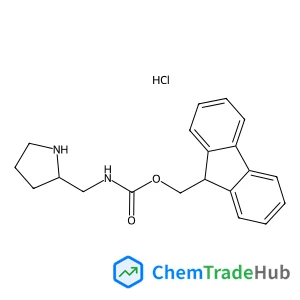
(S)-(9H-Fluoren-9-yl)methyl (pyrrolidin-2-ylmethyl)carbamate hydrochloride
CAS番号:
1217813-15-4
分子式:
C20H23ClN2O2
おすすめサプライヤー






免責事項
このページに表示される学術雑誌情報は、参考および研究目的のみを目的としています。当社は雑誌出版社とは提携しておらず、投稿の取り扱いも行っておりません。出版に関するお問い合わせは、各雑誌出版社に直接ご連絡ください。
表示されている情報に誤りがある場合は、support@chemtradehub.com までご連絡ください。迅速に確認し、対応いたします。