












Surface directed reversible imidazole ligation to nickel(ii) octaethylporphyrin at the solution/solid interface: a single molecule level study
文献情報
出版日
2016-07-15
DOI
10.1039/C6CP04454A
インパクトファクター
3.676
著者
Goutam Nandi, Bhaskar Chilukuri, K. W. Hipps, Ursula Mazur
原文を見る
要旨
Scanning tunneling microscopy (STM) is used to study for the first time the reversible binding of imidazole (Im) and nickel(II) octaethylporphyrin (NiOEP) supported on highly oriented pyrolytic graphite (HOPG) at the phenyloctane/NiOEP/HOPG interface at 25 °C. The ligation of Im to the NiOEP receptor while not observed in fluid solution is readily realized at the solution/HOPG interface. The coordination process scales with increasing Im concentration and can be effectively modeled by the Langmuir isotherm. At room temperature it is determined that the standard free energy of adsorption is ΔGc = −15.8 kJ mol−1 and the standard enthalpy of adsorption is estimated to be ΔHc ≈ −80 kJ mol−1. The reactivity of imidazole toward NiOEP adsorbed on HOPG is attributed to charge donation from the graphite stabilizing the Im–Ni bond. This charge transfer pathway is supported by molecular and periodic modeling calculations which indicate that the Im ligand behaves as a π-acceptor. DFT calculations also show that the nickel ion in the Im–NiOEP/HOPG complex is in a singlet ground state. This is surprising since both our calculations and previous experimental studies find a triplet ground state for the five and six coordinated Im–nickel(II) porphyrins in the gas-phase or in solution. Both the experimental and the theoretical findings provide information that is useful for better understanding of chemical sensing/recognition and catalytic processes that utilize metal–organic complexes adsorbed on surfaces where the reactivity of the metal is moderated by the substrate.
関連文献
New building blocks for the assembly of sequence selective molecular zippers
Chistopher A. Hunter, Philip S. Jones, Pascale M. N. Tiger, Salvador Tomas
2003-06-16
Communication
DOI: 10.1039/B304041K
Structural inversion in 3-D hexagonal organization of coil–rod–coil molecule
Long Yi Jin, Jinyoung Bae, Jong-Hyun Ahn, Myongsoo Lee
2005-01-18
Communication
DOI: 10.1039/B416089D
A novel isopolytungstate functionalized by ruthenium: [HW9O33RuII2(dmso)6]7−
Lihua Bi, Firasat Hussain, Ulrich Kortz, Masahiro Sadakane, Michael H. Dickman
2004-05-17
Communication
DOI: 10.1039/B403902E
A new tetrameric CuII cluster with square topology exhibiting ferro- and antiferromagnetic magnetic pathways : which is which?
Mau Sinha Ray, Ashutosh Ghosh, Ansuman Das, Michael G. B. Drew, Jordi Ribas-Ariño, Juan Novoa, Joan Ribas
2004-04-05
Communication
DOI: 10.1039/B401061B
Phosphodiesterolytic activity of alkaline-earth cations in aqueous DMSO
Olga Taran, Anatoly K. Yatsimirsky
2004-04-27
Communication
DOI: 10.1039/B402432J
Reversible Michael addition of thiols as a new tool for dynamic combinatorial chemistry
Baolu Shi, Michael F. Greaney
2005-01-17
Communication
DOI: 10.1039/B414300K
Generation and pH dependent superquenching of poly(amido) carboxylate dendrons hosting a single “focal point” pyrene
Siddharth Pandey, Rebecca A. Redden, Kristin A. Fletcher, Darryl Y. Sasaki, Angel E. Kaifer, Gary A. Baker
2004-05-10
Communication
DOI: 10.1039/B403477P
Heck arylation of cyclic enol ethers with aryldiazonium salts: regio- and stereoselective synthesis of arylated oxacycles
2003-06-05
Communication
DOI: 10.1039/B305142K
Regioselective insertion of 2-vinylpyridine in niobium and tantalum aryloxide complexes: an alternate route to pyridylalkyl metallacycles‡
Rex A. Corbin, Brandon E. Dusick, Khamphee Phomphrai, Phillip E. Fanwick, Ian P. Rothwell
2005-01-18
Communication
DOI: 10.1039/B416536E
Synthesis of two novel dinuclear palladium(i) complexes and studies of their catalytic activity in amination reactions
Ute Christmann, Ramón Vilar, Andrew J. P. White, David J. Williams
2004-05-05
Communication
DOI: 10.1039/B402283A
こちらもおすすめ
化合物よくある質問
2-メトキシ-4-(メチルスルフィニル)アミンの主な用途は何ですか?
2-メトキシ-4-(メチルスルフィニル)アミンは、主に医薬品および農薬の製造に使用されます。また、合成化学の一部として研究用材料としても利用されます。
41608-73-52-Methoxy-4-(methyls...
118684-13-24-(Bromomethyl)-3-me...
化合物よくある質問
4,6-二氯-N-甲基ピラミジンアミンの代替品はありますか?
代替品としては、4,6-二クロロピラミジンアミンや他のピラミジン系化合物が考えられます。ただし、目的と用途によって最適な代替品は異なります。
10397-15-64,6-Dichloro-N-methy...
化合物よくある質問
6-氯-4-甲基-1H-吲哚を含む廃棄物はどのように処理すべきですか?
6-氯-4-甲基-1H-吲哚の廃棄物は、適切な容器に収集し、密閉して保管します。温度は常温、湿度は低く、直射日光を避けて保管することを推奨します。廃棄処理は専門...
885520-84-36-chloro-4-methyl-1H...
化合物よくある質問
2-フローユロ-4-(トリフルオロメチル)ベンゾイドについて「に適用される法規ガイドラインは何ですか」
2-フローユロ-4-(トリフルオロメチル)ベンゾイドのCAS番号は207974-08-1です。この化合物はGHS分類で毒性物質と有害な反応物質として分類されます...
207974-08-1[2-Fluoro-4-(trifluo...
化合物よくある質問
4-ニトロフェニルN-[(ベンゼルオキシルカーボンイル]グリシングリシングリシン酸はどのように保存すればよいですか?
4-ニトロフェニルN-[(ベンゼルオキシルカーボンイル]グリシングリシングリシン酸は、室温で暗所に保管し、乾燥した環境で保存することを推奨します。容器は密閉性の...
19811-64-44-Nitrophenyl N-[(be...
化合物よくある質問
イソデスロラタドリンの代替品はありますか?
イソデスロラタドリンの代替品としては、デスロラタドリンや他の抗ヒスタミン薬が挙げられます。具体的には、デスロラタドリン、ラセカミド、フェルタドリンなどが、症状や...
183198-49-4Iso Desloratadine
化合物よくある質問
5-甲氧基-1,2,3,4-四氢异喹啉盐酸盐はどのように合成されますか?
5-甲氧基-1,2,3,4-四氢异喹啉盐酸盐の一般的な合成方法は、メタノール中で5-メトキシ-1,2,3,4-四ヒュドロイソキシンを塩酸で塩化します。この反応で...
103030-69-95-Methoxy-1,2,3,4-te...
化合物よくある質問
4-アミノ-5-メトキシ-2-トルエンサルホニック酸についての法規ガイドラインは何ですか?
CAS番号6471-78-9の4-アミノ-5-メトキシ-2-トルエンサルホニック酸は、GHS分類では corrosive(腐食性)と識別されます。EUのREAC...
6471-78-94-Amino-5-Methoxy-2-...
化合物よくある質問
甲基孕酮を取り扱う際の実験室安全事項は何ですか?
甲基孕酮の取り扱いは、PPE(個人保護具)の使用が必要な重要な安全事項を伴います。防塵マスク、ゴーグル、手袋を着用することが推奨されます。ドラフトチャンバーを使...
204063-33-22-[(Diphenylmethyl)a...
掲載誌
Physical Chemistry Chemical Physics

CiteScore:
5.5
自己引用率:
10.3%
年間論文数:
3036
Physical Chemistry Chemical Physics (PCCP) is an international journal co-owned by 19 physical chemistry and physics societies from around the world. This journal publishes original, cutting-edge research in physical chemistry, chemical physics and biophysical chemistry. To be suitable for publication in PCCP, articles must include significant innovation and/or insight into physical chemistry; this is the most important criterion that reviewers and Editors will judge against when evaluating submissions. The journal has a broad scope and welcomes contributions spanning experiment, theory, computation and data science. Topical coverage includes spectroscopy, dynamics, kinetics, statistical mechanics, thermodynamics, electrochemistry, catalysis, surface science, quantum mechanics, quantum computing and machine learning. Interdisciplinary research areas such as polymers and soft matter, materials, nanoscience, energy, surfaces/interfaces, and biophysical chemistry are welcomed if they demonstrate significant innovation and/or insight into physical chemistry. Joined experimental/theoretical studies are particularly appreciated when complementary and based on up-to-date approaches.
おすすめ化合物
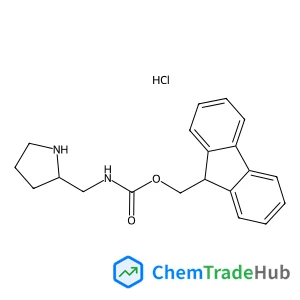
(S)-(9H-Fluoren-9-yl)methyl (pyrrolidin-2-ylmethyl)carbamate hydrochloride
CAS番号:
1217813-15-4
分子式:
C20H23ClN2O2
![tert-Butyl 6-chloro-4-oxospiro[chroman-2,4'-piperidine]-1'-carboxylate structure](https://static.chemtradehub.com/structs/101/1011482-37-3-88a5.webp "tert-Butyl 6-chloro-4-oxospiro[chroman-2,4'-piperidine]-1'-carboxylate structure")
tert-Butyl 6-chloro-4-oxospiro[chroman-2,4'-piperidine]-1'-carboxylate
CAS番号:
1011482-37-3
分子式:
C18H22ClNO4
おすすめサプライヤー



免責事項
このページに表示される学術雑誌情報は、参考および研究目的のみを目的としています。当社は雑誌出版社とは提携しておらず、投稿の取り扱いも行っておりません。出版に関するお問い合わせは、各雑誌出版社に直接ご連絡ください。
表示されている情報に誤りがある場合は、support@chemtradehub.com までご連絡ください。迅速に確認し、対応いたします。