


![N-[(9Z)-9-Octadecen-1-yl]-1,3-propanediamine structure](https://static.chemtradehub.com/structs/717/7173-62-8-d43e.webp "N-[(9Z)-9-Octadecen-1-yl]-1,3-propanediamine structure")
A multifunctional substance P-conjugated chitosan hydrochloride hydrogel accelerates full-thickness wound healing by enhancing synchronized vascularization, extracellular matrix deposition, and nerve regeneration
文献情報
出版日
2021-05-11
DOI
10.1039/D1BM00357G
インパクトファクター
6.843
著者
Hao Li, Mengna Li, Pei Liu, Kaiyang Wang, Haoyu Fang, Junhui Yin, Daoyu Zhu, Qianhao Yang, Qinfei Ke, Yaping Guo, Youshui Gao, Changqing Zhang
原文を見る
要旨
Due to the native skin limitations and the complexity of reconstructive microsurgery, advanced biomaterials are urgently required to promote wound healing for severe skin defects caused by accidents and disasters. Accumulating evidence has supported that substance P (SP) has a potential effect on skin regeneration. However, SP application is seriously impeded by its poor stability and oxidative reactions occurring during production, transportation, and storage. An SP-conjugated chitosan hydrochloride hydrogel (CSCl–SP) fabricated in this study demonstrated an enhanced capacity to repair full-thickness skin defects. CSCl–SP provided a stable in vitro delivery system for SP. The dissolution of CSCl–SP promoted the proliferation, migration, and tube formation, as well as angiogenesis-related gene and protein expression in human umbilical vein endothelial cells. CSCI-SP also stimulated the proliferation, migration, and production of anabolic growth factor in human fibroblasts. Moreover, CSCl–SP significantly promoted the neurite outgrowth in Neuro-2A cells. In vivo, CSCl–SP dramatically strengthened the vascularization, extracellular matrix deposition and remodeling, and nerve regeneration, thereby promoting efficient recovery of the full-thickness skin defect. Thus, synchronized multifunction of the CSCl–SP hydrogel makes it a promising and smart material for intractable skin defects.
おすすめジャーナル

Medicinal Chemistry Research

Chinese Journal of Chemistry

Journal of the Indian Institute of Science

NDT & E International

Main Group Chemistry

Acta Metallurgica Sinica-English Letters

Atomization and Sprays

Colloid Journal

Bioorganic & Medicinal Chemistry Letters

Critical Reviews in Solid State and Materials Sciences
関連文献
Effective reinforcement of electrical conductivity and strength of carbon nanotube fibers by silver-paste-liquid infiltration processing
X. H. Zhong, R. Wang, Y. Y. Wen
2013-01-11
Paper
DOI: 10.1039/C3CP44085K
Microlens array induced light absorption enhancement in polymer solar cells
Yuqing Chen, Max A. Noack
2013-01-24
Paper
DOI: 10.1039/C3CP50297J
The whole process of phase transition and relaxation of poly(N-isopropylacrylamide) aqueous solution
Hayato Inoue, Shota Kuwahara, Kenji Katayama
2013-01-21
Paper
DOI: 10.1039/C3CP43309A
Coordination number model to quantify packing morphology of aligned nanowire arrays
Itai Y. Stein, Brian L. Wardle
2013-01-15
Paper
DOI: 10.1039/C3CP43762K
Local thermal elevation probing of metal nanostructures during laser illumination utilizing surface-enhanced Raman scattering from a single-walled carbon nanotube
Shinji Hoshina, Masanobu Nara, Kei-ichiro Komeda, Ryukou Shito, Satoshi Yasuda, Kei Murakoshi
2013-02-15
Paper
DOI: 10.1039/C3CP43728K
Tunable photoluminescence from nc-Si/a-SiNx:H quantum dot thin films prepared by ICP-CVD
Basudeb Sain, Debajyoti Das
2013-01-17
Paper
DOI: 10.1039/C3CP43875A
Bombardment induced ion transport – Part III: Experimental potassium ion conductivities in poly(para-xylylene)
S. Schulze, M. Schäfer, A. Greiner, K.-M. Weitzel
2012-11-23
Paper
DOI: 10.1039/C2CP43144K
Gas-phase dissociative electron attachment to flavonoids and possible similarities to their metabolic pathways
Stanislav A. Pshenichnyuk
2012-11-23
Paper
DOI: 10.1039/C2CP43379F
Mutual diffusion in the ternary mixture of water + methanol + ethanol and its binary subsystems
Stanislav Pa, Gabriela Guevara-Carrion, Hans Hasse, Jadran Vrabec
2013-01-10
Paper
DOI: 10.1039/C3CP43785J
Metal centered oxidation or ligand centered oxidation of metal dithiolene? Spectral, electrochemical and structural studies on a nickel-4-pyridine-1,2-dithiolate system
Xin-Yu Li, Yong-Gang Sun, Peng Huo, Ming-Yan Shao, Shu-Fang Ji
2013-01-08
Paper
DOI: 10.1039/C3CP44054K
こちらもおすすめ
化合物よくある質問
N-乙酰基-L-精氨酸はどのように合成されますか?
N-乙酰基-L-精氨酸は、L-精氨酸をエタノールと酸化アクリル酸で反応させて得られます。この合成過程では、酸化アクリル酸がL-精氨酸のN-アミノグループに結合す...
155-84-0N~2~-Acetyl-L-argini...
化合物よくある質問
カウウェルパリミタートを含む廃棄物はどのように処理すべきですか?
カウウェルパリミタートの廃棄物は、化学廃棄物として適切に収集し、専門的な廃棄処理業者に委託します。処理には、有害物質の除去と環境への影響最小化が重要です。温度は...
81760-45-4Kahweol palmitate
化合物よくある質問
タテライル1,4,8,11-テトラエチルアセートの代替品はありますか?
タテライル1,4,8,11-テトラエチルアセートの代替品として、他のエチルエステル化合物や、有機窒素化合物が考えられます。ただし、代替品の選択は目的や使用条件に...
126320-57-8Tetraethyl 1,4,8,11-...
化合物よくある質問
異丁卡因を取り扱う際の実験室安全事項は何ですか?
異丁卡因は毒性があり、皮膚や目を刺激する可能性があります。作業中は保護目鏡、防護手袋、防護マスクを使用し、ドラフトチャンバーで扱うべきです。漏えいした場合、その...
94-14-4Isobutamben
化合物よくある質問
4-氯-2-丙基吡啶を取り扱う際の実験室安全事項は何ですか?
4-氯-2-丙基吡啶は有毒で、吸入や皮膚接触を避けることが重要です。PPEとしてゴーグル、マスク、長袖のガウン、手袋を使用し、ドラフトチャンバーを用いて操作しま...
93856-98-54-Chloro-2-propylpyr...
化合物よくある質問
9,10-脱水阿霉素について適用される法規ガイドラインは何ですか?
CAS番号80996-23-2の9,10-脱水阿霉素は、GHS分類においては第3類毒性物質に分類され、REACH規則においてはカテゴリー1の急性毒性物質とされて...
80996-23-29,10-Anhydroadriamyc...
化合物よくある質問
4-(3-溴苯基)噻唑-2-甲酸の物理化学的性質は何ですか?
4-(3-溴苯基)噻唑-2-甲酸の分子量は265.01です。この化合物は水に微溶です。反応性は中程度で、酸性やアルカリ性の条件下で分解する可能性があります。
808128-00-94-(3-Bromophenyl)-1,...
化合物よくある質問
3-(4-塩素フェニル)-3-オキセタニアミン塩酸塩はどの業界で使用されていますか?
3-(4-塩素フェニル)-3-オキセタニアミン塩酸塩は、医薬業界、ポリマー業界、センサー業界、半導体業界などで使用されています。この化合物は薬物開発の一部として...
1245782-61-93-(4-Chlorophenyl)-3...
化合物よくある質問
氮卓斯汀杂质Eを取り扱う際の実験室安全事項は何ですか?
氮卓斯汀杂质E(CAS番号: 20526-97-0)を扱う際は、ゴーグルとシールド付きの手袋を使用し、漏洩がある場合はドラフトチャンバーを使用して処理することを...
20526-97-03-(4-chlorobenzylide...
化合物よくある質問
デシシボチル-n-ブチルボルテゾミブはどのように保存すればよいですか?
デシシボチル-n-ブチルボルテゾミブは室温で保管し、直日光から遠ざけて密栓容器に保管することが推奨されます。
1104011-35-9Desisobutyl-n-butyl ...
掲載誌
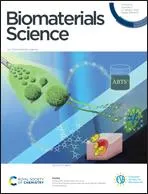
Biomaterials Science
CiteScore:
11.5
自己引用率:
3.4%
年間論文数:
492
Biomaterials Science is an international high impact journal exploring the science of biomaterials and their translation towards clinical use. Its scope encompasses new concepts in biomaterials design, studies into the interaction of biomaterials with the body, and the use of materials to answer fundamental biological questions. Papers do not necessarily need to report a new biomaterial but should provide novel insight into the biological applications of the biomaterial. Articles that primarily focus on demonstrating novel materials chemistry and bring a molecular picture to bear on a given material’s suitability as a biomaterial are more suited to our companion journal, Journal of Materials Chemistry B. Biomaterials Science publishes primary research and review-type articles in the following areas: molecular design of biomaterials, including translation of emerging chemistries to biomaterials science of cells and materials at the nanoscale and microscale materials as model systems for stem cell and human biology materials for tissue engineering and regenerative medicine (Nano)materials and (nano)systems for therapeutic delivery interactions at the biointerface biologically inspired and biomimetic materials, including bio-inspired self-assembly systems and cell-inspired synthetic tools next-generation biomaterials tools and methods
おすすめ化合物
![(1S,2R,4S)-1,7,7-Trimethylbicyclo[2.2.1]heptan-2-ol structure](https://static.chemtradehub.com/structs/464/464-45-9-f88b.webp "(1S,2R,4S)-1,7,7-Trimethylbicyclo[2.2.1]heptan-2-ol structure")
おすすめサプライヤー






免責事項
このページに表示される学術雑誌情報は、参考および研究目的のみを目的としています。当社は雑誌出版社とは提携しておらず、投稿の取り扱いも行っておりません。出版に関するお問い合わせは、各雑誌出版社に直接ご連絡ください。
表示されている情報に誤りがある場合は、support@chemtradehub.com までご連絡ください。迅速に確認し、対応いたします。