



![9-Ethyl-3-{(E)-[ethyl(2-methylphenyl)hydrazono]methyl}-9H-carbazole structure](https://static.chemtradehub.com/structs/127/1274948-12-7-301f.webp "9-Ethyl-3-{(E)-[ethyl(2-methylphenyl)hydrazono]methyl}-9H-carbazole structure")
Highly efficient and stable perovskite solar cells produced by maximizing additive engineering
文献情報
出版日
2020-11-12
DOI
10.1039/D0SE01498B
インパクトファクター
6.367
著者
Linlin Qiu, Jiacheng Zou, Wei-Hsiang Chen, Lika Dong, Deqiang Mei, Jieqiong Wang, Pei-Cheng Jiang
原文を見る
要旨
The crystallinity of a perovskite film can play a key role in the photovoltaic performance and long-term stability of perovskite solar cells (PSCs). Herein, we introduce 4-tert-butylpyridine (tBP) into perovskite on the reduction-active poly(3,4-ethylenedioxythiophene):poly(styrenesulfonate) (PEDOT:PSS) hole transport layer and maximize its morphology-regulating effect via enhancing the concentration of CH3NH3I used in the two-step spin-coating. Since the high concentration iodine methylamine increases the oxidation potential, a perovskite film with large grains can be obtained. Furthermore, we proposed using a small amount of tBP with a high concentration of CH3NH3I and found that it would form a gradient structure in the perovskite. A small amount of tBP in CH3NH3I can further enhance its diffusion mobility into PbI2 films. Moreover, tBP in perovskite with a gradient structure can further induce coordination between tBP and perovskite, leading to considerably large perovskite grains (∼1.4 μm) with defect-free morphology. The perovskite grains can be more completely surrounded by the stronger hydrophobic tBP. Therefore, both the efficiencies and moisture stabilities of the PSCs can be significantly enhanced. PSCs without encapsulation could even maintain more than 80% of their initial PCE after 400 h of moisture exposure (RH ∼50%). Moreover, the flexible devices after optimization could achieve a PCE of 14.92%, and still maintain at 11.39% after 20 times of mechanical bending.
おすすめジャーナル

Crystallography Reports

Saudi Pharmaceutical Journal

Current Opinion in Solid State & Materials Science

Chemical Communications

Russian Journal of General Chemistry

Chemistry Education Research and Practice

Journal of Natural Medicines

Journal of Peptide Science

Russian Journal of Coordination Chemistry

New Journal of Chemistry
関連文献
One-step synthesis of monodisperse water-soluble ‘dual-responsive’ magnetic nanoparticles
Ian Robinson, Cameron Alexander, Le T. Lu, Le D. Tung
2007-10-16
Communication
DOI: 10.1039/B713528A
A cyclodextrin-insulated anthracene rotaxane with enhanced fluorescence and photostability
Matthew T. Stone, Harry L. Anderson
2007-03-12
Communication
DOI: 10.1039/B700868F
Asymmetric synthesis of (+)-cis-nemorensic acid from a chiral Diels–Alder adduct of 2,5-dimethylfuran
Jae Yi Sim, Geum-Sook Hwang, Kyung Hwa Kim, Eun Mi Ko, Do Hyun Ryu
2007-10-01
Communication
DOI: 10.1039/B710537A
Ligand-free Pd/C-catalyzed Suzuki–Miyaura coupling reaction for the synthesis of heterobiaryl derivatives
Yoshiaki Kitamura, Satoko Sako, Takahiro Udzu, Azusa Tsutsui, Tomohiro Maegawa, Yasunari Monguchi, Hironao Sajiki
2007-10-02
Communication
DOI: 10.1039/B712207A
Retracted article: Biogenetic hypothesis and first steps towards a biomimetic synthesis of haouamines
Edmond Gravel, Erwan Poupon, Reynald Hocquemiller
2006-12-19
Communication
DOI: 10.1039/B613737G
Magnetic canting or not? Two isomorphous 3D CoII and NiII coordination polymers with the rare non-interpenetrated (10,3)-d topological network, showing spin-canted antiferromagnetism only in the CoII system
Jian-Rong Li, Qun Yu, Ying Tao, Xian-He Bu, Joan Ribas, Stuart R. Batten
2007-03-01
Communication
DOI: 10.1039/B700569E
Water-induced morphology changes in BaO/γ-Al2O3 NOx storage materials
János Szanyi, Ja Hun Kwak, Do Heui Kim, Xianqin Wang, Jonathan Hanson, Ricardo J. Chimentao, Charles H. F. Peden
2006-12-12
Communication
DOI: 10.1039/B613674E
Electrochemical conversion of dinitrogen to ammonia mediated by a complex of fullerene C60 and γ-cyclodextrin
Lubomír Pospíšil, Jana Bulíčková, Magdaléna Hromadová, Miroslav Gál, Svatopluk Civiš, Jaroslav Cihelka, Ján Tarábek
2007-03-05
Communication
DOI: 10.1039/B701017F
Samarium(ii) iodide-mediated intramolecular pinacol coupling reactions with cyclopropyl ketones
Sarah L. Foster, Sandeep Handa, Michael Krafft, David Rowling
2007-09-05
Communication
DOI: 10.1039/B712542A
こちらもおすすめ
化合物よくある質問
5-苄基四氢吡咯并[3,4-c]吡咯-1,3[2H,3ah]-二酮の主な用途は何ですか?
5-苄基四氢吡咯并[3,4-c]吡咯-1,3[2H,3ah]-二酮は、主に薬理学的研究と合成化学に使用されます。また、特定の医薬品の合成原材料としても利用されま...
370879-53-1(3aR,6aS)-5-benzyl-o...
化合物よくある質問
唾液酸路易ス Aを取り扱う際の実験室安全事項は何ですか?
唾液酸路易ス Aの取り扱いでは、個別の防護具(PPE)が必要で、手袋、顔面保護具、防塵マスクを着用します。ドラフトチャンバーを使用し、漏洩時の適切な処理を行うこ...
92448-22-13'-Sialyl Lewis A
化合物よくある質問
タルトブチル ((1-(2-クロロアセチル)ピペリジン-4-イルメチル)カーバamatはどの業界で使用されていますか?
タルトブチル ((1-(2-クロロアセチル)ピペリジン-4-イルメチル)カーバamatは、医薬品業界、ポリマー業界、センサー技術、半導体業界などで使用されていま...
1353952-84-72-Methyl-2-propanyl ...
化合物よくある質問
3-烯丙基-2-羟基苯甲醛の物理化学的性質は何ですか?
3-烯丙基-2-羟基苯甲醛のCAS番号は24019-66-7です。物化性質としては、白色結晶性粉末で、分子量は174.22です。この化合物は水に溶けやすく、反応...
24019-66-73-Allyl-2-hydroxyben...
化合物よくある質問
乳清酸 Potassium Orotateとは何ですか?
乳清酸 Potassium Orotateは、CAS番号24598-73-0の化合物で、乳清酸と Potassium(カリウム)による塩基です。化学式はC7H7...
24598-73-0Potassium Orotate
化合物よくある質問
4-甲基苯磺酸异丙酯はどの業界で使用されていますか?
4-甲基苯磺酸异丙酯は医薬品業界で広く使用されています。また、ポリマーの増塑剤や半導体製造におけるセンサー材料としても使用されることがあります。
2307-69-9Isopropyl 4-methylbe...
化合物よくある質問
6-(3- Florobenzen)-N-[1-(2,2,2- Trifluoroethyl)-4-Piperidinyl]-3-Pyridinycarboxamideはどの業界で使用されていますか?
6-(3-氟苯基)-N-[1-(2,2,2-三氟乙基)-4-哌啶基]-3-吡啶羧酰胺は医薬品産業で広く使用されており、その特性は抗炎症作用や抗ウイルス作用など、...
1033836-12-26-(3-Fluorophenyl)-N...
化合物よくある質問
左西孟旦はどのように合成されますか?
左西孟旦は、3-[(2-メチルフェニル)-2-(4-メチルフェニル)-1-オキシエチル]-1,2,4-トリTürkiyeン-5-カルボン酸と4-メチルフェニル-...
141505-33-1Levosimendan
化合物よくある質問
3-乙氧基哌啶盐酸盐に適用される法規ガイドラインは何ですか?
CAS番号1159826-79-5の3-乙氧基哌啶盐酸盐は、GHS分類ではイエローカテゴリーに分類され、毒性物質として扱われます。REACH規則では、製造または...
1159826-79-53-Ethoxypiperidine h...
化合物よくある質問
Diethyl (hydroxymethyl)phosphonateの主な用途は何ですか?
Diethyl (hydroxymethyl)phosphonateは、医薬品の製造や農薬、合成化学の一部として利用されます。
3084-40-0Diethyl (hydroxymeth...
掲載誌
おすすめ化合物
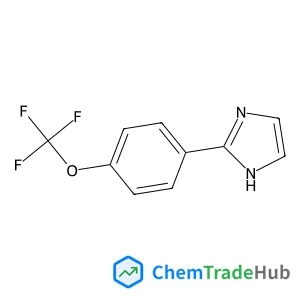
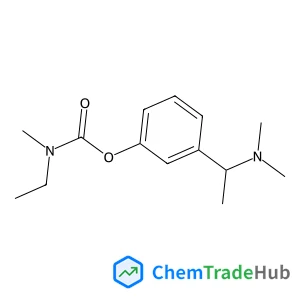
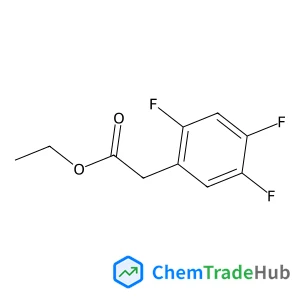
![[3-Formyl-5-(trifluoromethoxy)phenyl]boronic acid structure](https://static.chemtradehub.com/structs/145/1451393-39-7-aebb.webp "[3-Formyl-5-(trifluoromethoxy)phenyl]boronic acid structure")
おすすめサプライヤー






免責事項
このページに表示される学術雑誌情報は、参考および研究目的のみを目的としています。当社は雑誌出版社とは提携しておらず、投稿の取り扱いも行っておりません。出版に関するお問い合わせは、各雑誌出版社に直接ご連絡ください。
表示されている情報に誤りがある場合は、support@chemtradehub.com までご連絡ください。迅速に確認し、対応いたします。