












Model development for enzymatic reactive crystallization of β-lactam antibiotics: a reaction–diffusion-crystallization approach
文献情報
出版日
2020-09-10
DOI
10.1039/D0RE00276C
インパクトファクター
4.239
著者
Hossein Salami, Colton E. Lagerman, Patrick R. Harris, Matthew A. McDonald, Andreas S. Bommarius, Ronald W. Rousseau, Martha A. Grover
原文を見る
要旨
Enzymatic reactive crystallization of β-lactam antibiotics provides a promising method for efficient and large-scale manufacturing. Since practical processes rely on immobilized enzyme for operation, a robust process model needs to take into account three phenomena of enzymatic reaction, species diffusion, and crystallization of the products. In this work a mathematical model and a numerical simulation procedure are developed for enzymatic reactive crystallization using penicillin G acylase immobilized on a porous carrier. Enzymatic reaction is described using previously established kinetic parameters for a commercial enzyme. An experimentally measured diffusivity is used to model the mass transport resistance, and a 1-D population balance model is used for crystallization of needle-like crystals from supersaturated species. The effect of five immobilization parameters, loading, carrier type and size, enzyme distribution, and carrier size distribution is systematically investigated using the developed model and their implications are discussed for synthesis of two β-lactam antibiotics, ampicillin and cephalexin, with different turnover rates. As expected, using carriers with larger radius, higher loading, and smaller diffusivity is shown to lead to significant mass transport resistance and deviation from free enzyme behavior. This effect is more drastic for the ampicillin system, which has faster dynamics due to lower affinity of enzyme for its nucleophile agent. Testing different enzyme distributions, it is shown that accumulation of enzyme at the outer regions of the carrier leads to an improved process and mitigation of mass transport resistance due to higher sensitivity of diffusion timescale to radius, compared to reaction timescale to enzyme concentration. Adding a crystallization module to the model allowed for dynamic modeling of processes with high substrate concentrations applicable to reactive crystallization. Effect of pH as a critical process parameter affecting both reaction and crystallization is discussed, as well as potential intra-carrier crystallization and consequent enzyme blockage.
関連文献
Kinetic and equilibrium studies of σ-adduct formation and nucleophilic substitution in the reactions of 2-phenoxy-3,5-dinitropyridine and 2-ethoxy-3,5-dinitropyridine with aliphatic amines in dipolar aprotic solvents
Michael R. Crampton, Thomas A. Emokpae, Judith A. K. Howard, Chukwuemeka Isanbor, Raju Mondal
2003-02-20
Paper
DOI: 10.1039/B211639C
Trimeric and dimeric sesquiterpenoids from Artemisia atrovirens and their cytotoxicities
Tian-Ze Li, Chang-An Geng, Yun-Bao Ma, Xiao-Yan Huang, Jin-Ping Wang, Xue-Mei Zhang
2021-01-22
Research Article
DOI: 10.1039/D0QO01615B
Metallaphotoredox-catalyzed C–H activation: regio-selective annulation of allenes with benzamide‡
Zihao Zhu, Yuyuan Chen, Xueyao Li, Qingyun Yang, Jie Xia, Wenxuan Zhang, Chao Zhang, Song Wu
2021-01-04
Research Article
DOI: 10.1039/D0QO01127D
Rational design and syntheses of aniline-based diradical dications: isolable congeners of quinodimethane diradicals
Yong Fang, Qiang Sun, Xiaoyu Chen, Yunfan Qiu, Chao Chen, Lei Wang, Yue Zhao, Yuanting Su, Tao Li, Li Zhang, Xinping Wang
2020-12-10
Research Article
DOI: 10.1039/D0QO01265C
Copper-catalyzed three-component oxycyanation of alkenes
Yuehua Zeng, Yajun Li, Daqi Lv
2020-12-25
Research Article
DOI: 10.1039/D0QO01437K
Cascade intramolecular rearrangement/cycloaddition of nitrocyclopropane carboxylates with alkynes/alkenes: access to uncommon bi(hetero)cyclic systems
Rohit Kumar Varshnaya, Priyanka Singh, Navpreet Kaur, Prabal Banerjee
2021-01-21
Research Article
DOI: 10.1039/D0QO01535K
3,6-Diamino-7,8-dihydroisoquinoline-4-carbonitrile derivatives: unexpected facile synthesis, full-color-tunable solid-state emissions and mechanofluorochromic activities
Xinyu Zhang, Dan Wang, Hao Shen, Shuxian Wang, Yunbing Zhou, Yunxiang Lei, Wenxia Gao, Miaochang Liu, Xiaobo Huang, Huayue Wu
2021-01-11
Research Article
DOI: 10.1039/D0QO01527J
A mechanistic study of the manganese porphyrin-catalyzed C–H isocyanation reaction
Ning Liu, Xiahe Chen, Liyuan Jin, Yun-Fang Yang, Yuan-Bin She
2021-02-18
Research Article
DOI: 10.1039/D0QO01442G
こちらもおすすめ
化合物よくある質問
1-{3-[5-(エチルカルボンイル)-2,4-ジメチル-1H-ピロロール-3-基]プロパニル}ピペリジン-4-カルボン酸について、適用される法規ガイドラインは何ですか?
この化合物はCAS番号1142209-81-1であり、GHS分類では corrosive (腐食性物質) と classified (分類物質) として指定され...
1142209-81-11-{3-[5-(Ethoxycarbo...
化合物よくある質問
2,2-二氟-1,3-ベンゾジオキサン-5-カルボキシlic酸とは何ですか?
2,2-二氟-1,3-ベンゾジオキサン-5-カルボキシlic酸は、CAS番号656-46-2の化合物で、化学式はC8H4F2O4です。この化合物は白色の結晶性粉...
656-46-22,2-Difluoro-1,3-ben...
化合物よくある質問
8-氯-4-色原酮の代替品はありますか?
8-氯-4-色原酮(CAS番号: 49701-11-3)の代替品には、他の色原酮類似物や、構造が似ている化合物があります。例えば、8-メチル-4-色原酮や、他の...
49701-11-38-Chloro-2,3-dihydro...
化合物よくある質問
エチル6,6-ジメチル-4,5,6,7-テトラヒドロ-1H-インドアゼー-3-カルボキシレートとは何ですか?
エチル6,6-ジメチル-4,5,6,7-テトラヒドロ-1H-インドアゼー-3-カルボキシレートは、CAS番号1233243-56-5を有する化合物です。これは有...
1233243-56-5Ethyl 6,6-dimethyl-4...
化合物よくある質問
4-叔丁基-6-氯-嘧啶に適用される法規ガイドラインは何ですか?
4-叔丁基-6-氯-嘧啶はCAS番号3435-24-3で、GHS分類では毒性物質とみなし、GHSの危険性分類が適用されます。REACH規則では登録が必要で、Eu...
3435-24-34-Tert-butyl-6-chlor...
化合物よくある質問
維库溴铵杂质Bはどのように合成されますか?
維库溴铵杂质Bは、アンドロステンデンから始まり、一連の合成反応、包括的な選択性と高い収率で合成されます。具体的には、ブロミド化、酸化、ジマーゼ反応、アミド化など...
50587-95-6(2beta,3alpha,5alpha...
化合物よくある質問
2-(4-氟苄基)-吡咯烷の物理化学的性質は何ですか?
CAS番号350017-04-8の2-(4-氟苄基)-吡咯烷は、結晶性の白色粉末です。分子量は199.17 g/molで、水に溶けにくいです。化学反応では比較的...
350017-04-82-(4-Fluorobenzyl)py...
化合物よくある質問
3-喹啉甲醛(2-チロール-8-エチル)は安全ですか?
3-喹啉甲醛(2-チロール-8-エチル)は一定の毒性を持つため、取扱には注意が必要です。使用する際は適切な防護具を着用し、密閉容器で保管・搬送し、直接的な接触を...
335196-05-92-Chloro-8-ethyl-3-q...
化合物よくある質問
エチル3-(ヒドロキシメチル)-1H-ピロール-2-カルボキシレートはどのように保存すればよいですか?
エチル3-(ヒドロキシメチル)-1H-ピロール-2-カルボキシレートは、室温(25℃)以下で保存し、直射日光を避け、乾燥した環境で保管することが推奨されます。ま...
75448-69-0Ethyl 3-(hydroxymeth...
119410-05-88-Chloro-11-(4-piper...
掲載誌
Reaction Chemistry & Engineering

CiteScore:
0
自己引用率:
8.8%
年間論文数:
284
Reaction Chemistry & Engineering is an interdisciplinary journal reporting cutting-edge research focused on enhancing the understanding and efficiency of reactions. Reaction engineering leverages the interface where fundamental molecular chemistry meets chemical engineering and technology. Challenges in chemistry can be overcome by the application of new technologies, while engineers may find improved solutions for process development from the latest developments in reaction chemistry. Reaction Chemistry & Engineering is a unique forum for researchers whose interests span the broad areas of chemical engineering and chemical sciences to come together in solving problems of importance to wider society. All papers should be written to be approachable by readers across the engineering and chemical sciences. Papers that consider multiple scales, from the laboratory up to and including plant scale, are particularly encouraged.
おすすめ化合物

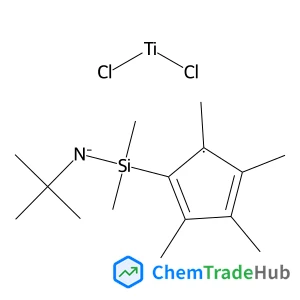
2,3,4,5-TETRAMETHYLCYCLOPENTADIENEDIMETHYLSILYL-TERT-BUTYLAMIDO TITANIUM DICHLORIDE
CAS番号:
135072-61-6
分子式:
C15H27Cl2NSiTi-
![Ethyl (3aS,6aS)-1-benzylhexahydropyrrolo[3,4-b]pyrrole-5(1H)-carboxylate structure](https://static.chemtradehub.com/structs/894/894853-99-7-e175.webp "Ethyl (3aS,6aS)-1-benzylhexahydropyrrolo[3,4-b]pyrrole-5(1H)-carboxylate structure")
Ethyl (3aS,6aS)-1-benzylhexahydropyrrolo[3,4-b]pyrrole-5(1H)-carboxylate
CAS番号:
894853-99-7
分子式:
C16H22N2O2
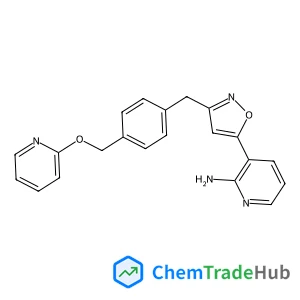
3-(3-(4-((Pyridin-2-yloxy)methyl)benzyl)isoxazol-5-yl)pyridin-2-amine
CAS番号:
936339-60-5
分子式:
C21H18N4O2
おすすめサプライヤー



免責事項
このページに表示される学術雑誌情報は、参考および研究目的のみを目的としています。当社は雑誌出版社とは提携しておらず、投稿の取り扱いも行っておりません。出版に関するお問い合わせは、各雑誌出版社に直接ご連絡ください。
表示されている情報に誤りがある場合は、support@chemtradehub.com までご連絡ください。迅速に確認し、対応いたします。