












Formulation and clinical translation of [177Lu]Lu-trastuzumab for radioimmunotheranostics of metastatic breast cancer
文献情報
出版日
2020-11-14
DOI
10.1039/D0MD00319K
インパクトファクター
0
著者
Mohini Guleria, Rohit Sharma, Jeyachitra Amirdhanayagam, Haladhar D. Sarma, Venkatesh Rangarajan
原文を見る
要旨
Trastuzumab (Herceptin®) is an approved immunotherapeutic agent used for the treatment of metastatic breast cancer over-expressing HER2 antigen receptors. The aim of the present work is to standardize the formulation protocol of [177Lu]Lu-trastuzumab addressing various reaction parameters, evaluating the efficacy of the radiolabeled product by in vitro investigations, scaling-up the preparation for administration in patients and performing preliminary clinical studies in patients suffering from metastatic breast cancer. Trastuzumab was conjugated with a suitable bi-functional chelating agent namely, p-NCS-benzyl-DOTA. On average 6.15 ± 0.92 p-NCS-benzyl-DOTA molecules were observed to be attached to each trastuzumab moiety. [177Lu]Lu-trastuzumab could be prepared with >95% radiochemical purity (% RCP) employing the optimized radiolabeling procedure. In vitro studies revealed the affinity of [177Lu]Lu-trastuzumab towards HER2 +ve cancer cell lines as well as against HER2 protein (Kd = 13.61 nM and 11.36 nM, respectively). The value for percentage immunoreactive fraction (% IRF) for [177Lu]Lu-trastuzumab was observed to be 76.92 ± 2.80. Bio-distribution studies in Swiss mice revealed non-specific uptake in the blood, liver, lungs and heart followed by gradual clearance of activity predominantly through the hepatobiliary route. Preliminary clinical studies carried out in 8 cancer patients with immunohistochemically proven HER2 positive metastatic breast cancer revealed preferential localization of [177Lu]Lu-trastuzumab in breast cancer lesions, which was in concordance with [18F]FDG-PET scans recorded earlier in the same patient indicating the potential of the agent towards radioimmunotheranostic applications.
関連文献
Low-index dielectric metasurfaces supported by metallic substrates for efficient second-harmonic generation in the blue-ultraviolet range
Kwang-Hyon Kim
2020-02-29
Paper
DOI: 10.1039/D0CP00150C
Impact of t-butyl substitution in a rubrene emitter for solid state NIR-to-visible photon upconversion
Edvinas Radiunas, Manvydas Dapkevičius, Steponas Raišys, Saulius Juršėnas, Augustina Jozeliūnaitė, Tomas Javorskis, Ugnė Šinkevičiūtė, Edvinas Orentas, Karolis Kazlauskas
2020-03-05
Paper
DOI: 10.1039/D0CP00144A
Gate voltage impact on charge mobility in end-on stacked conjugated oligomers
Miroslav Menšík, Petr Toman, Cheng-Han Chung, Chimed Ganzorig, Jiří Pfleger
2020-03-25
Paper
DOI: 10.1039/C9CP06477J
Good stability and high thermoelectric performance of Fe doped Cu1.80S
Pengfei Qiu, Kunpeng Zhao, Dudi Ren, Xun Shi
2020-03-17
Paper
DOI: 10.1039/D0CP00733A
Can glycine betaine denature proteins?
Arusha Acharyya, Dayoung Shin, Thomas Troxler, Feng Gai
2020-03-30
Paper
DOI: 10.1039/D0CP00397B
The statistical molecular fragmentation model compared to experimental plasma induced hydrocarbon decays
Stéphane Pasquiers, Nicole Blin-Simiand, Lionel Magne, Nguyen-Thi Van-Oanh, Sébastien Thomas
2020-03-20
Paper
DOI: 10.1039/C9CP06958E
Sulfate modified g-C3N4 with enhanced photocatalytic activity towards hydrogen evolution: the role of sulfate in photocatalysis
Qianwen Chen, Yun Zhao, Lei Zeng, Chunzhen Yang, Feng Huang
2020-04-06
Paper
DOI: 10.1039/C9CP07002H
A fast species redistribution approach to accelerate the kinetic Monte Carlo simulation for heterogeneous catalysis
Xiao-Ming Cao, Zheng-Jiang Shao
2020-03-05
Paper
DOI: 10.1039/D0CP00554A
Induced magnetic field in sp-hybridized carbon rings: analysis of double aromaticity and antiaromaticity in cyclo[2N]carbon allotropes
Nickolas D. Charistos, Alvaro Muñoz-Castro
2020-04-06
Paper
DOI: 10.1039/D0CP01252A
Tunable electronic properties of the novel g-ZnO/1T-TiS2 vdW heterostructure by electric field and strain: crossovers in bandgap and band alignment types
2020-03-20
Paper
DOI: 10.1039/D0CP00524J
こちらもおすすめ
化合物よくある質問
2-ヒドロキシ-5-ニトロベンジンブロモイドの代替品はありますか?
2-ヒドロキシ-5-ニトロベンジンブロモイドは特定の化学反応に適しているため、代替品は限られています。しかし、同様の構造を持つ2-ヒドロキシ-4-ニトロベンジン...
772-33-82-(Bromomethyl)-4-ni...
化合物よくある質問
N-(2-ブロモフェニル)-1-チロール-3-オキソ-3-(ピペリジニル)プロペン-2-イル)ベンゼンアミドを取り扱う際の実験室安全事項は何ですか?
N-(2-ブロモフェニル)-1-チロール-3-オキソ-3-(ピペリジニル)プロペン-2-イル)ベンゼンアミドは有毒で、皮膚や粘膜に刺激を与える可能性があります。...
1800044-77-2N-[(1Z)-1-(2-Bromoph...
化合物よくある質問
1,3プロパンジオール,2-[2-(2アミノ-6クロロ-9Hピリミジン-9-イル)エチル-1,1,2,2-D4]-2,3-ジアセタートの市場動向や研究トレンドはどうですか?
この化合物は、新規治療薬の開発に注目されています。市場では、その有効性と安全性が評価され、研究分野では、分子生物学と医薬化学の新たな発見が期待されています。
1020718-81-31,3-Propanediol, 2-[...
579-44-2Ethanone, 2-hydroxy-...
化合物よくある質問
Succinimidyl-alanyl-phenylalanyl-prolyl-phenylalanine 4-nitroanilide はどの業界で使用されていますか?
Succinimidyl-alanyl-phenylalanyl-prolyl-phenylalanine 4-nitroanilide は主に医薬品開発やポ...
128802-73-3succinimidyl-alanyl-...
化合物よくある質問
メチル6-アミノ-5-クロロピリジン-2-カーボイル酸について、適用される法規ガイドラインは何ですか?
メチル6-アミノ-5-クロロピリジン-2-カーボイル酸(CAS番号: 1256794-05-4)の使用には、GHS( Globally Harmonized S...
1256794-05-4Methyl 6-amino-5-chl...
化合物よくある質問
エチル4-(シクロ Pentagonyl)アミノ-2-メチル硫化基ピリミジン-5-カルボキシレートを取り扱う際の実験室安全事項は何ですか?
取り扱いには、耐薬品性の容器を使用し、通気性の良い場所で操作することを推奨します。漏れ時は、SDS(安全データシート)を参照して適切な措置を取ること。手洗いと洗...
211245-62-4ethyl 4-(cyclopentyl...
化合物よくある質問
(S)-3-ベンZYルピペリジン塩酸塩とは何ですか?
(S)-3-ベンZYルピペリジン塩酸塩は、CAS番号1258940-00-9で表される化合物です。これは、(S)-3-苯基哌啶的盐酸盐であり、主に医薬品の原料と...
1258940-00-9(S)-3-Phenylpiperidi...
化合物よくある質問
3,5-二甲基金剛胺の主な用途は何ですか?
3,5-二甲基金剛胺は、主に医薬品の原料として使用され、また抗うつ薬や抗アルツハイマー薬の開発に利用されます。さらに、化粧品や食品添加物の製造でも重要な役割を果...
19988-45-52-(2,3-Dihydroxyphen...
化合物よくある質問
ビス(4-メチル-2-ペンチル)フェニルカルボン酸エステルの代替品はありますか?
ビス(4-メチル-2-ペンチル)フェニルカルボン酸エステル (CAS番号: 1398066-13-1) の代替品には、ビス(2-エチルヘキシル)フェノールカルボ...
1398066-13-1Bis(4-methyl-2-penty...
掲載誌
おすすめ化合物
![2,6-Bis({(2R)-2-[hydroxy(diphenyl)methyl]-1-pyrrolidinyl}methyl)-4-methylphenol structure](https://static.chemtradehub.com/structs/877/877395-58-9-70bf.webp "2,6-Bis({(2R)-2-[hydroxy(diphenyl)methyl]-1-pyrrolidinyl}methyl)-4-methylphenol structure")
![Methyl 4-({[(2-methyl-2-propanyl)oxy]carbonyl}amino)bicyclo[2.2.2]octane-1-carboxylate structure](https://static.chemtradehub.com/structs/943/943845-74-7-b7e5.webp "Methyl 4-({[(2-methyl-2-propanyl)oxy]carbonyl}amino)bicyclo[2.2.2]octane-1-carboxylate structure")
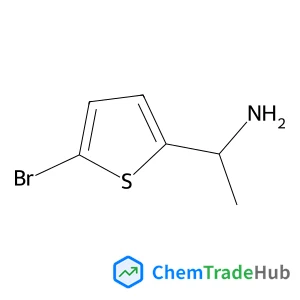
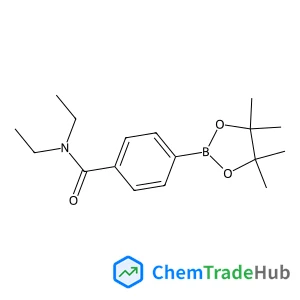
N,N-Diethyl-4-(4,4,5,5-tetramethyl-1,3,2-dioxaborolan-2-yl)benzamide
CAS番号:
325142-99-2
分子式:
C17H26BNO3
おすすめサプライヤー





免責事項
このページに表示される学術雑誌情報は、参考および研究目的のみを目的としています。当社は雑誌出版社とは提携しておらず、投稿の取り扱いも行っておりません。出版に関するお問い合わせは、各雑誌出版社に直接ご連絡ください。
表示されている情報に誤りがある場合は、support@chemtradehub.com までご連絡ください。迅速に確認し、対応いたします。