


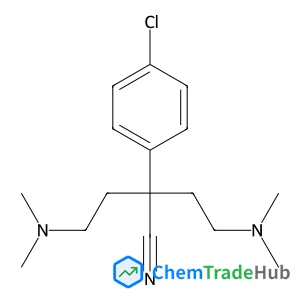
2-(4-Chlorophenyl)-4-(dimethylamino)-2-(2-(dimethylamino)ethyl)butanenitrile
CAS番号:
1246816-57-8
分子式:
C16H24ClN3
Edvinas Radiunas, Manvydas Dapkevičius, Steponas Raišys, Saulius Juršėnas, Augustina Jozeliūnaitė, Tomas Javorskis, Ugnė Šinkevičiūtė, Edvinas Orentas, Karolis Kazlauskas
Solid state NIR-to-visible photon upconversion (UC) mediated by triplet–triplet annihilation (TTA) is necessitated by numerous practical applications. Yet, efficient TTA-UC remains a highly challenging task. In this work palladium phthalocyanine-sensitized NIR-to-vis solid UC films based on a popular rubrene emitter are thoroughly studied with the primary focus on revealing the impact of t-butyl substitution in rubrene on the TTA-UC performance. The solution-processed UC films were additionally doped with a small amount of emissive singlet sink tetraphenyldibenzoperiflanthene (DBP) for collecting upconverted singlets from rubrene and in this way diminishing detrimental singlet fission. Irrespective of the excitation conditions used, t-butyl-substituted rubrene (TBR) was found to exhibit enhanced TTA-UC performance as compared to that of rubrene at an optimal emitter doping of 80 wt% in polystyrene films. Explicitly, in the TTA dominated regime attained at high excitation densities, 4-fold higher UC quantum yield (ΦUC) achieved in TBR-based films was caused by the reduced fluorescence concentration quenching mainly due to suppressed singlet fission. Under low light conditions, i.e. in the regime governed by spontaneous triplet decay, even though triplet exciton diffusion was obstructed in TBR films by t-butyl moieties, the subsequently reduced TTA rate was counterbalanced by both suppressed singlet fission and non-radiative triplet quenching, still ensuring higher ΦUC of these films as compared to those of unsubstituted rubrene films.

Contact Lens & Anterior Eye

Environmental Toxicology and Pharmacology

Angewandte Chemie International Edition

Current Pharmaceutical Biotechnology

CrystEngComm

Foundations of Chemistry

European Journal of Organic Chemistry

Advanced Engineering Materials

Molecular Diversity

Physical Chemistry Chemical Physics
Sandeep P. Patil, Sri Harsha Chilakamarri, Bernd Markert
DOI: 10.1039/C8CP01061G
J. Benedikt, A. Shaw, B. R. Buckley, F. Iza, S. Schäkermann, J. E. Bandow
DOI: 10.1039/C8CP00197A
Bartlomiej Wiendlocha, Jean-Baptiste Vaney, Christophe Candolfi, Anne Dauscher, Bertrand Lenoir, Janusz Tobola
DOI: 10.1039/C8CP00431E
Junyao Li, Narcisse T. Tsona, Lin Du
DOI: 10.1039/C7CP05008A
F. B. Haffner, N. Canilho, B. Medronho, C. Gardiennet, A. Gansmüller, A. Pasc
DOI: 10.1039/C8CP00073E
Emmanuel Assaf, Coralie Schoemaecker, Luc Vereecken, Christa Fittschen
DOI: 10.1039/C7CP05770A
Katharina Kohse-Höinghaus, Jürgen Troe, Jens-Uwe Grabow, Matthias Olzmann, Gernot Friedrichs, Klaus-Dieter Hungenberg
DOI: 10.1039/C8CP90054J
Fenhong Song, Long Ma, Jing Fan, Qicheng Chen, Guangping Lei, Ben Q. Li
DOI: 10.1039/C8CP00956B
Antony Cyril Arulrajan, Christophe Renault, Stanley C. S. Lai
DOI: 10.1039/C8CP01835A
Tao Yang, Diego M. Andrada
DOI: 10.1039/C8CP00951A
2-ヒドロキシ-5-ニトロベンジンブロモイドは特定の化学反応に適しているため、代替品は限られています。しかし、同様の構造を持つ2-ヒドロキシ-4-ニトロベンジン...
N-(2-ブロモフェニル)-1-チロール-3-オキソ-3-(ピペリジニル)プロペン-2-イル)ベンゼンアミドは有毒で、皮膚や粘膜に刺激を与える可能性があります。...
この化合物は、新規治療薬の開発に注目されています。市場では、その有効性と安全性が評価され、研究分野では、分子生物学と医薬化学の新たな発見が期待されています。
Succinimidyl-alanyl-phenylalanyl-prolyl-phenylalanine 4-nitroanilide は主に医薬品開発やポ...
メチル6-アミノ-5-クロロピリジン-2-カーボイル酸(CAS番号: 1256794-05-4)の使用には、GHS( Globally Harmonized S...
取り扱いには、耐薬品性の容器を使用し、通気性の良い場所で操作することを推奨します。漏れ時は、SDS(安全データシート)を参照して適切な措置を取ること。手洗いと洗...
(S)-3-ベンZYルピペリジン塩酸塩は、CAS番号1258940-00-9で表される化合物です。これは、(S)-3-苯基哌啶的盐酸盐であり、主に医薬品の原料と...
3,5-二甲基金剛胺は、主に医薬品の原料として使用され、また抗うつ薬や抗アルツハイマー薬の開発に利用されます。さらに、化粧品や食品添加物の製造でも重要な役割を果...
ビス(4-メチル-2-ペンチル)フェニルカルボン酸エステル (CAS番号: 1398066-13-1) の代替品には、ビス(2-エチルヘキシル)フェノールカルボ...
Physical Chemistry Chemical Physics (PCCP) is an international journal co-owned by 19 physical chemistry and physics societies from around the world. This journal publishes original, cutting-edge research in physical chemistry, chemical physics and biophysical chemistry. To be suitable for publication in PCCP, articles must include significant innovation and/or insight into physical chemistry; this is the most important criterion that reviewers and Editors will judge against when evaluating submissions. The journal has a broad scope and welcomes contributions spanning experiment, theory, computation and data science. Topical coverage includes spectroscopy, dynamics, kinetics, statistical mechanics, thermodynamics, electrochemistry, catalysis, surface science, quantum mechanics, quantum computing and machine learning. Interdisciplinary research areas such as polymers and soft matter, materials, nanoscience, energy, surfaces/interfaces, and biophysical chemistry are welcomed if they demonstrate significant innovation and/or insight into physical chemistry. Joined experimental/theoretical studies are particularly appreciated when complementary and based on up-to-date approaches.
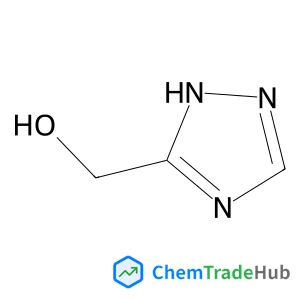
![Pyrazolo[1,5-a]pyridine-3-carbothioamide structure](https://static.chemtradehub.com/structs/885/885275-44-5-aae0.webp "Pyrazolo[1,5-a]pyridine-3-carbothioamide structure")
![2,6-Bis({(2R)-2-[hydroxy(diphenyl)methyl]-1-pyrrolidinyl}methyl)-4-methylphenol structure](https://static.chemtradehub.com/structs/877/877395-58-9-70bf.webp "2,6-Bis({(2R)-2-[hydroxy(diphenyl)methyl]-1-pyrrolidinyl}methyl)-4-methylphenol structure")
![5-Methyl-4,5,6,7-tetrahydropyrazolo[1,5-a]pyrazin-2-amine structure](https://static.chemtradehub.com/structs/122/1227210-33-4-8d64.webp "5-Methyl-4,5,6,7-tetrahydropyrazolo[1,5-a]pyrazin-2-amine structure")



