












Catalytic cycle of the partial oxidation of methane to methanol over Cu-ZSM-5 revealed using DFT calculations
文献情報
出版日
2021-02-05
DOI
10.1039/D0CP06696F
インパクトファクター
3.676
著者
原文を見る
要旨
Density functional theory (DFT) calculations were performed to investigate the catalytic cycle of methane conversion to methanol over both [Cu2(O2)]2+ and [Cu2(μ-O)]2+ active sites in the Cu-ZSM-5 catalyst. The [Cu2(O2)]2+ site is found to be active for the partial oxidation of methane to methanol, and although it has a higher energy barrier in the methane activation step, it involves a very low energy barrier in the methanol formation step (36.3 kJ mol−1) as well as a lower methanol desorption energy (52.5 kJ mol−1). As the [Cu2(O2)]2+ active site is also thermodynamically stable, it may play an important role during methane conversion to methanol. Furthermore, the methane activation step follows the homolytic route and the heterolytic route for the [Cu2(O2)]2+ and [Cu2(μ-O)]2+ active sites, respectively, whereas the methanol formation step follows the direct radical rebound mechanism and the indirect rebound mechanism, respectively. Our calculations further indicate that the electronic properties of the reactive O atoms in the active site influence their reactivity toward methane oxidation. More specifically, the higher the spin density and the more negative the charge of the reactive O atom at the active site are, the lower the energy barrier for methane activation will be; and the more negative the charge of the hydroxyl group in the reaction intermediate during the partial oxidation of methane to methanol is, the higher energy barrier of the methanol formation step will be in the triplet state. Furthermore, we used a larger cluster model to predict the mechanism of the methane activation step and the effect of atomic charge of the O atom at the [Cu2(μ-O)]2+ and [Cu2(O2)]2+ active sites on the energy barriers of partial oxidation of methane to methanol, and the conclusions drawn employing the larger cluster model are consistent with those drawn using the smaller double-5T-ring cluster model. In addition, different from the traditional mechanism for methane activation at [Cu2(O2)]2+, which consists of two transition states, we find that the partial oxidation of methane at [Cu2(O2)]2+ can also occur via a single step by direct insertion of one of the O atoms at the active site into the C–H bond of methane.
関連文献
Thermochemical CO2 splitting via redox cycling of ceria reticulated foam structures with dual-scale porosities
Philipp Furler, Jonathan Scheffe, Daniel Marxer, Michal Gorbar
2014-04-08
Paper
DOI: 10.1039/C4CP01172D
Realizing semiconductor–half-metal transition in zigzag graphene nanoribbons supported on hybrid fluorographene–graphane nanoribbons
Shaobin Tang, Xinrui Cao
2014-09-10
Paper
DOI: 10.1039/C4CP03291H
The catalytic reactions in the Cu–Li–Mg–H high capacity hydrogen storage system
M. H. Braga, A. El-Azab
2014-09-09
Paper
DOI: 10.1039/C4CP01815J
Photoisomerization and structural dynamics of two nitrosylruthenium complexes: a joint study by NMR and nonlinear IR spectroscopies
Jianru Wang, Yan Zhao, Xiaoyan Qiao
2014-09-09
Paper
DOI: 10.1039/C4CP02298J
Direct measurements of the total rate constant of the reaction NCN + H and implications for the product branching ratio and the enthalpy of formation of NCN
Nancy Faßheber, Johannes Dammeier, Gernot Friedrichs
2014-04-29
Paper
DOI: 10.1039/C4CP01107D
Role of the conformational flexibility of evodiamine in its binding to protein hosts: a comparative spectroscopic and molecular modeling evaluation with rutaecarpine
Celesztina Domonkos, Ilona Fitos, Júlia Visy, Ferenc Zsila
2014-09-18
Paper
DOI: 10.1039/C4CP02483D
Femtosecond spectroscopy reveals huge differences in the photoisomerisation dynamics between azobenzenes linked to polymers and azobenzenes in solution
Julia Bahrenburg, Falk Renth, Friedrich Temps, Felix Plamper, Walter Richtering
2014-04-25
Paper
DOI: 10.1039/C4CP01196A
Monitoring the reversible photoisomerization of an azobenzene-functionalized molecular triazatriangulene platform on Au(111) by IRRAS
Hanne Jacob, Sandra Ulrich, Ulrich Jung, Sonja Lemke, Talina Rusch, Christian Schütt, Finn Petersen, Thomas Strunskus, Olaf Magnussen, Rainer Herges, Felix Tuczek
2014-09-17
Paper
DOI: 10.1039/C4CP03438D
Tavorite-FeSO4F as a potential cathode material for Mg ion batteries: a first principles calculation
Jiandong Wu, Guohua Gao, Guangming Wu, Bo Liu, Huiyu Yang, Xiaowei Zhou, Jichao Wang
2014-09-03
Communication
DOI: 10.1039/C4CP03176H
Nanoscale phononic interconnects in THz frequencies
Mahesh R. Neupane, M. M. Sigalas, N. Aravantinos-Zafiris, Roger K. Lake
2014-09-19
Paper
DOI: 10.1039/C4CP02328E
こちらもおすすめ
化合物よくある質問
3-イチチルビフェニルはどのように合成されますか?
3-イチチルビフェニルは、ビフェニルとイチプロピオニトリルを回収率約90%で反応させて合成されます。触媒は通常、亜リチウムホウ素を用います。
5668-93-93-Ethylbiphenyl
化合物よくある質問
8-溴-5-三氟甲基喹啉はどのように合成されますか?
8-溴-5-三氟甲基喹啉は、5-トリフルオロメチル-2-メチル-1,3-ベンゼンジオールをブロモエタノールと反応させて生成します。この反応は塩基性条件下で行われ...
917251-92-48-Bromo-5-(trifluoro...
化合物よくある質問
ジメチル4-(4,4,5,5-テトラメチル-1,3,2-ドioxaborolan-2-基)-2,6-ピリジンジカルボイル酸フェニルアミニドの代替品はありますか?
ジメチル4-(4,4,5,5-テトラメチル-1,3,2-ドioxaborolan-2-基)-2,6-ピリジンジカルボイル酸フェニルアミニドの代替品としては、4-...
741709-66-0Dimethyl 4-(4,4,5,5-...
化合物よくある質問
N-(3,5-ヘキサクロロ-4-ピリドインイル)-8-メチオキシ-5-キノリンカーボン酸の市場動向や研究トレンドはどのようなものでしょうか?
N-(3,5-ヘキサクロロ-4-ピリドインイル)-8-メチオキシ-5-キノリンカーボン酸の市場動向は、主に産業用途での需要により影響を受けます。研究トレンドとし...
199871-63-1N-(3,5-Dichloro-4-py...
化合物よくある質問
イソステアロイルグリセリルは安全ですか?
イソステアロイルグリセリルは一般的に安全性が高いとされていますが、過度な使用や個人差により皮�owsん炎などの反応が起こる可能性があります。使用前に医師に相談す...
222723-55-92-[(5Z,8Z,11Z,14Z)-5...
化合物よくある質問
1-(二苯甲基)-3,3-二氟-氮杂环丁烷の市場動向や研究トレンドはどうですか?
1-(二苯甲基)-3,3-二氟-氮杂环丁烷の市場動向は、医薬品や合成化学の研究分野で注目を集めています。新興研究は、該当化合物の合成改良と生体内での作用メカニズ...
288315-02-61-Benzhydryl-3,3-dif...
化合物よくある質問
3-チオフェンスチオールの物理化学的性質は何ですか?
3-チオフェンスチオールのCAS番号は7774-73-4です。結晶性の白色粉末で、分子量は122.17です。この化合物は水に微溶解し、エタノールやジクロロメタン...
7774-73-43-Thiophenethiol
化合物よくある質問
2-Methyl-2-propanyl (2S)-2-(aminomethyl)-1-piperidinecarboxylateは安全ですか?
2-Methyl-2-propanyl (2S)-2-(aminomethyl)-1-piperidinecarboxylateは一定の安全性基準を満たしていま...
475105-35-22-Methyl-2-propanyl ...
化合物よくある質問
CAS番号1316822-90-8の化合物は安全ですか?
CAS番号1316822-90-8の化合物は安全性に関しては評価が不足していますが、一般的には生物学的に活性な物質であり、取り扱いには適切な安全防護措置が必要で...
1316822-90-8Gal beta(1-3)[Neu5Ac...
化合物よくある質問
Tert-butyl 2-(2-羟基乙基)哌嗪-1-羧酸はどのように保存すればよいですか?
Tert-butyl 2-(2-羟基乙基)哌嗪-1-羧酸は、冷暗所で保存し、直射日光から遠ざけてください。容器は密閉し、高湿度や高温を避けて保管してください。
517866-79-4Tert-butyl 2-(2-hydr...
掲載誌
Physical Chemistry Chemical Physics

CiteScore:
5.5
自己引用率:
10.3%
年間論文数:
3036
Physical Chemistry Chemical Physics (PCCP) is an international journal co-owned by 19 physical chemistry and physics societies from around the world. This journal publishes original, cutting-edge research in physical chemistry, chemical physics and biophysical chemistry. To be suitable for publication in PCCP, articles must include significant innovation and/or insight into physical chemistry; this is the most important criterion that reviewers and Editors will judge against when evaluating submissions. The journal has a broad scope and welcomes contributions spanning experiment, theory, computation and data science. Topical coverage includes spectroscopy, dynamics, kinetics, statistical mechanics, thermodynamics, electrochemistry, catalysis, surface science, quantum mechanics, quantum computing and machine learning. Interdisciplinary research areas such as polymers and soft matter, materials, nanoscience, energy, surfaces/interfaces, and biophysical chemistry are welcomed if they demonstrate significant innovation and/or insight into physical chemistry. Joined experimental/theoretical studies are particularly appreciated when complementary and based on up-to-date approaches.
おすすめ化合物

![N-{[(2-Methyl-2-propanyl)oxy]carbonyl}-L-methionylglycine structure](https://static.chemtradehub.com/structs/234/23446-03-9-e1e5.webp "N-{[(2-Methyl-2-propanyl)oxy]carbonyl}-L-methionylglycine structure")
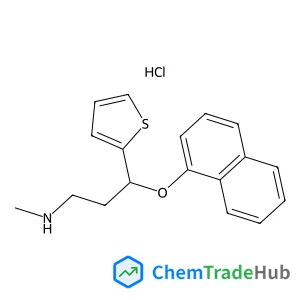
N-Methyl-3-(1-naphthyloxy)-3-(2-thienyl)-1-propanamine hydrochloride (1:1)
CAS番号:
1188266-11-6
分子式:
C18H20ClNOS
おすすめサプライヤー




免責事項
このページに表示される学術雑誌情報は、参考および研究目的のみを目的としています。当社は雑誌出版社とは提携しておらず、投稿の取り扱いも行っておりません。出版に関するお問い合わせは、各雑誌出版社に直接ご連絡ください。
表示されている情報に誤りがある場合は、support@chemtradehub.com までご連絡ください。迅速に確認し、対応いたします。