


Site-by-site tracking of signal transduction in an azidophenylalanine-labeled bacteriophytochrome with step-scan FTIR spectroscopy
文献情報
出版日
2021-02-24
DOI
10.1039/D0CP06553F
インパクトファクター
3.676
著者
Moona Kurttila, Brigitte Stucki-Buchli, Jessica Rumfeldt, Lea Schroeder, Heikki Häkkänen, Alli Liukkonen, Heikki Takala, Tilman Kottke, Janne A. Ihalainen
原文を見る
要旨
Signal propagation in photosensory proteins is a complex and multidimensional event. Unraveling such mechanisms site-specifically in real time is an eligible but a challenging goal. Here, we elucidate the site-specific events in a red-light sensing phytochrome using the unnatural amino acid azidophenylalanine, vibrationally distinguishable from all other protein signals. In canonical phytochromes, signal transduction starts with isomerization of an excited bilin chromophore, initiating a multitude of processes in the photosensory unit of the protein, which eventually control the biochemical activity of the output domain, nanometers away from the chromophore. By implementing the label in prime protein locations and running two-color step-scan FTIR spectroscopy on the Deinococcus radiodurans bacteriophytochrome, we track the signal propagation at three specific sites in the photosensory unit. We show that a structurally switchable hairpin extension, a so-called tongue region, responds to the photoconversion already in microseconds and finalizes its structural changes concomitant with the chromophore, in milliseconds. In contrast, kinetics from the other two label positions indicate that the site-specific changes deviate from the chromophore actions, even though the labels locate in the chromophore vicinity. Several other sites for labeling resulted in impaired photoswitching, low structural stability, or no changes in the difference spectrum, which provides additional information on the inner dynamics of the photosensory unit. Our work enlightens the multidimensionality of the structural changes of proteins under action. The study also shows that the signaling mechanism of phytochromes is accessible in a time-resolved and site-specific approach by azido probes and demonstrates challenges in using these labels.
おすすめジャーナル

Journal of Physics and Chemistry of Solids

Pharmacological Reviews

European Journal of Wood and Wood Products

Planta Medica

Science

Russian Chemical Reviews

Proceedings of the National Academy of Sciences of the United States of America

Journal of Medicinal Chemistry

Kinetics and Catalysis

Helvetica Chimica Acta
関連文献
External electric field induced hydrogen storage/release on calcium-decorated single-layer and bilayer silicene
Er Hong Song, Sung Ho Yoo, Jae Joon Kim, Shiau Wu Lai, Qing Jiang, Sung Oh Cho
2014-09-30
Paper
DOI: 10.1039/C4CP02638A
Atomic charge transfer-counter polarization effects determine infrared CH intensities of hydrocarbons: a quantum theory of atoms in molecules model
Arnaldo F. Silva, Wagner E. Richter, Helen G. C. Meneses, Roy E. Bruns
2014-09-25
Paper
DOI: 10.1039/C4CP02922D
Interfacial structure and orientation of confined ionic liquids on charged quartz surfaces
Yong-Lei Wang
2014-09-09
Paper
DOI: 10.1039/C4CP03077J
Effect of torsional twist on 2nd order non-linear optical activity of anthracene and pyrene tricyanofuran derivatives
Miquel Planells, Maddalena Pizzotti, Gary S. Nichol, Francesca Tessore, Neil Robertson
2014-09-24
Paper
DOI: 10.1039/C4CP03509G
The shape of d-glucosamine
Isabel Peña, Lucie Kolesniková, Carlos Cabezas, Celina Bermúdez, Matías Berdakin, Alcides Simão, José L. Alonso
2014-09-16
Paper
DOI: 10.1039/C4CP03593C
Tavorite-FeSO4F as a potential cathode material for Mg ion batteries: a first principles calculation
Jiandong Wu, Guohua Gao, Guangming Wu, Bo Liu, Huiyu Yang, Xiaowei Zhou, Jichao Wang
2014-09-03
Communication
DOI: 10.1039/C4CP03176H
Tuning electronic and magnetic properties of silicene with magnetic superhalogens
Tianshan Zhao, Shunhong Zhang, Yoshiyuki Kawazoe, Puru Jena
2014-08-07
Paper
DOI: 10.1039/C4CP02758B
Fast carbon dioxide recycling by reaction with γ-Mg(BH4)2
Jenny G. Vitillo, Elena Groppo, Elisa Gil Bardají, Marcello Baricco, Silvia Bordiga
2014-09-05
Communication
DOI: 10.1039/C4CP03300K
Characterization of C60 fullerene complexation with antibiotic doxorubicin
Yu. I. Prylutskyy, I. S. Pashkova, D. Wyrzykowski, A. Woziwodzka, G. Gołuński, J. Piosik, V. V. Cherepanov, U. Ritter
2014-09-03
Paper
DOI: 10.1039/C4CP03367A
こちらもおすすめ
化合物よくある質問
3-イチチルビフェニルはどのように合成されますか?
3-イチチルビフェニルは、ビフェニルとイチプロピオニトリルを回収率約90%で反応させて合成されます。触媒は通常、亜リチウムホウ素を用います。
5668-93-93-Ethylbiphenyl
化合物よくある質問
8-溴-5-三氟甲基喹啉はどのように合成されますか?
8-溴-5-三氟甲基喹啉は、5-トリフルオロメチル-2-メチル-1,3-ベンゼンジオールをブロモエタノールと反応させて生成します。この反応は塩基性条件下で行われ...
917251-92-48-Bromo-5-(trifluoro...
化合物よくある質問
ジメチル4-(4,4,5,5-テトラメチル-1,3,2-ドioxaborolan-2-基)-2,6-ピリジンジカルボイル酸フェニルアミニドの代替品はありますか?
ジメチル4-(4,4,5,5-テトラメチル-1,3,2-ドioxaborolan-2-基)-2,6-ピリジンジカルボイル酸フェニルアミニドの代替品としては、4-...
741709-66-0Dimethyl 4-(4,4,5,5-...
化合物よくある質問
N-(3,5-ヘキサクロロ-4-ピリドインイル)-8-メチオキシ-5-キノリンカーボン酸の市場動向や研究トレンドはどのようなものでしょうか?
N-(3,5-ヘキサクロロ-4-ピリドインイル)-8-メチオキシ-5-キノリンカーボン酸の市場動向は、主に産業用途での需要により影響を受けます。研究トレンドとし...
199871-63-1N-(3,5-Dichloro-4-py...
化合物よくある質問
イソステアロイルグリセリルは安全ですか?
イソステアロイルグリセリルは一般的に安全性が高いとされていますが、過度な使用や個人差により皮�owsん炎などの反応が起こる可能性があります。使用前に医師に相談す...
222723-55-92-[(5Z,8Z,11Z,14Z)-5...
化合物よくある質問
1-(二苯甲基)-3,3-二氟-氮杂环丁烷の市場動向や研究トレンドはどうですか?
1-(二苯甲基)-3,3-二氟-氮杂环丁烷の市場動向は、医薬品や合成化学の研究分野で注目を集めています。新興研究は、該当化合物の合成改良と生体内での作用メカニズ...
288315-02-61-Benzhydryl-3,3-dif...
化合物よくある質問
3-チオフェンスチオールの物理化学的性質は何ですか?
3-チオフェンスチオールのCAS番号は7774-73-4です。結晶性の白色粉末で、分子量は122.17です。この化合物は水に微溶解し、エタノールやジクロロメタン...
7774-73-43-Thiophenethiol
化合物よくある質問
2-Methyl-2-propanyl (2S)-2-(aminomethyl)-1-piperidinecarboxylateは安全ですか?
2-Methyl-2-propanyl (2S)-2-(aminomethyl)-1-piperidinecarboxylateは一定の安全性基準を満たしていま...
475105-35-22-Methyl-2-propanyl ...
化合物よくある質問
CAS番号1316822-90-8の化合物は安全ですか?
CAS番号1316822-90-8の化合物は安全性に関しては評価が不足していますが、一般的には生物学的に活性な物質であり、取り扱いには適切な安全防護措置が必要で...
1316822-90-8Gal beta(1-3)[Neu5Ac...
化合物よくある質問
Tert-butyl 2-(2-羟基乙基)哌嗪-1-羧酸はどのように保存すればよいですか?
Tert-butyl 2-(2-羟基乙基)哌嗪-1-羧酸は、冷暗所で保存し、直射日光から遠ざけてください。容器は密閉し、高湿度や高温を避けて保管してください。
517866-79-4Tert-butyl 2-(2-hydr...
掲載誌
Physical Chemistry Chemical Physics

CiteScore:
5.5
自己引用率:
10.3%
年間論文数:
3036
Physical Chemistry Chemical Physics (PCCP) is an international journal co-owned by 19 physical chemistry and physics societies from around the world. This journal publishes original, cutting-edge research in physical chemistry, chemical physics and biophysical chemistry. To be suitable for publication in PCCP, articles must include significant innovation and/or insight into physical chemistry; this is the most important criterion that reviewers and Editors will judge against when evaluating submissions. The journal has a broad scope and welcomes contributions spanning experiment, theory, computation and data science. Topical coverage includes spectroscopy, dynamics, kinetics, statistical mechanics, thermodynamics, electrochemistry, catalysis, surface science, quantum mechanics, quantum computing and machine learning. Interdisciplinary research areas such as polymers and soft matter, materials, nanoscience, energy, surfaces/interfaces, and biophysical chemistry are welcomed if they demonstrate significant innovation and/or insight into physical chemistry. Joined experimental/theoretical studies are particularly appreciated when complementary and based on up-to-date approaches.
おすすめ化合物
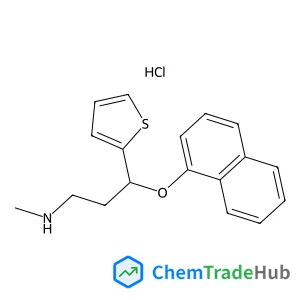
N-Methyl-3-(1-naphthyloxy)-3-(2-thienyl)-1-propanamine hydrochloride (1:1)
CAS番号:
1188266-11-6
分子式:
C18H20ClNOS
おすすめサプライヤー



免責事項
このページに表示される学術雑誌情報は、参考および研究目的のみを目的としています。当社は雑誌出版社とは提携しておらず、投稿の取り扱いも行っておりません。出版に関するお問い合わせは、各雑誌出版社に直接ご連絡ください。
表示されている情報に誤りがある場合は、support@chemtradehub.com までご連絡ください。迅速に確認し、対応いたします。