













Atomic charge transfer-counter polarization effects determine infrared CH intensities of hydrocarbons: a quantum theory of atoms in molecules model
文献情報
出版日
2014-09-25
DOI
10.1039/C4CP02922D
インパクトファクター
3.676
著者
Arnaldo F. Silva, Wagner E. Richter, Helen G. C. Meneses, Roy E. Bruns
原文を見る
要旨
Atomic charge transfer-counter polarization effects determine most of the infrared fundamental CH intensities of simple hydrocarbons, methane, ethylene, ethane, propyne, cyclopropane and allene. The quantum theory of atoms in molecules/charge–charge flux–dipole flux model predicted the values of 30 CH intensities ranging from 0 to 123 km mol−1 with a root mean square (rms) error of only 4.2 km mol−1 without including a specific equilibrium atomic charge term. Sums of the contributions from terms involving charge flux and/or dipole flux averaged 20.3 km mol−1, about ten times larger than the average charge contribution of 2.0 km mol−1. The only notable exceptions are the CH stretching and bending intensities of acetylene and two of the propyne vibrations for hydrogens bound to sp hybridized carbon atoms. Calculations were carried out at four quantum levels, MP2/6-311++G(3d,3p), MP2/cc-pVTZ, QCISD/6-311++G(3d,3p) and QCISD/cc-pVTZ. The results calculated at the QCISD level are the most accurate among the four with root mean square errors of 4.7 and 5.0 km mol−1 for the 6-311++G(3d,3p) and cc-pVTZ basis sets. These values are close to the estimated aggregate experimental error of the hydrocarbon intensities, 4.0 km mol−1. The atomic charge transfer-counter polarization effect is much larger than the charge effect for the results of all four quantum levels. Charge transfer-counter polarization effects are expected to also be important in vibrations of more polar molecules for which equilibrium charge contributions can be large.
関連文献
Synthesis of Ag2S quantum dots in water-in-CO2 microemulsions
2004-09-30
Communication
DOI: 10.1039/B410700D
Structurally diverse Rh(i) and Mn(i) complexes derived from the new ambidentate indeneligand, (1-{iPr2P(S)}-2-{NMe2})C9H6
Dominik Wechsler, Robert McDonald, Michael J. Ferguson, Mark Stradiotto
2004-09-21
Communication
DOI: 10.1039/B410328A
A new approach to bioconjugates for proteins and peptides (“pegylation”) utilising living radical polymerisation
François Lecolley, Lei Tao, Giuseppe Mantovani, Ian Durkin, Sylvie Lautru, David M. Haddleton
2004-07-28
Communication
DOI: 10.1039/B407712A
The isomerisation of (Z)-3-[2H1]-phenylprop-2-enone as a measure of the rate of hydroperoxide addition in Weitz–Scheffer and Juliá–Colonna epoxidations
David R. Kelly, Eva Caroff, Robert W. Flood, William Heal, Stanley M. Roberts
2004-08-25
Communication
DOI: 10.1039/B404389H
A supramolecular approach to the selective detection of dopamine in the presence of ascorbate
Alex Fragoso, Eduardo Almirall, Roberto Cao, Luis Echegoyen, Raúl González-Jonte
2004-08-23
Communication
DOI: 10.1039/B407792J
Estimates of internal energies of vaporisation of some room temperature ionic liquids
Konrad Swiderski, Andrew McLean, Charles M. Gordon, D. Huw Vaughan
2004-09-07
Communication
DOI: 10.1039/B408334B
l-Proline catalyzed asymmetric transfer aldol reaction between diacetone alcohol and aldehydes
S. Chandrasekhar, Ch. Narsihmulu, N. Ramakrishna Reddy, S. Shameem Sultana
2004-09-21
Communication
DOI: 10.1039/B409053P
Synthesis of the ABCD and ABCDE ring systems of azaspiracid-1‡
Xiao-Ti Zhou, Rich G. Carter
2004-09-20
Communication
DOI: 10.1039/B410092A
A modular ditopic crown-shielded phosphate ion-pair receptor
Patrick Gunning, Andrew C. Benniston, Robert D. Peacock
2004-08-20
Communication
DOI: 10.1039/B409132A
A facile synthesis of single-crystal mullite nanobelts
Chuanbao Cao, Xu Xiang, Hesun Zhu
2004-09-24
Communication
DOI: 10.1039/B409087J
こちらもおすすめ
化合物よくある質問
カルボニル基が付いた5-氰基-1-{[(2-メチル-2-プロpanyl)オキシ]カーボンイル}1H-吲哚-2-イリド-2-ボリン酸はどのように保存すればよいですか?
カルボニル基が付いた5-氰基-1-{[(2-メチル-2-プロpanyl)オキシ]カーボンイル}1H-吲哚-2-イリド-2-ボリン酸は、直射日光を避けて室温(15...
475102-15-9(5-Cyano-1-{[(2-meth...
化合物よくある質問
tert-ブチル2-クロロメチルピリジン-3-基炭酸エステルの市場動向や研究トレンドはどうですか?
この化合物は合成化学分野において、特にピリジン化合物の合成や改良に用いられます。最近の研究では、ピリジン化合物の新規合成法や特性の改良が注目されています。市場動...
1203498-98-9tert-Butyl 2-chloro-...
化合物よくある質問
聚二季戊四醇六丙烯酸酯はどの業界で使用されていますか?
聚二季戊四醇六丙烯酸酯は、医薬品、ポリマー、センサー、半導体などの業界で広く使用されています。特にポリマー業界では硬化剤として、医薬分野では医療機器の製造に使用...
29570-58-93-(Acryloyloxy)-2-({...
化合物よくある質問
1-氯-5-硝基异喹啉の市場動向や研究トレンドはどうですか?
1-氯-5-硝基异喹啉は、薬理学や合成化学の研究分野で注目されています。市場動向としては、その生物学的な活性や合成可能性を評価する研究が増えています。また、代替...
58142-97-51-Chloro-5-nitroisoq...
化合物よくある質問
2-チロール-5-メチルスルフェニル-3-trifルオルメチルベンゼンはどのように合成されますか?
2-チロール-5-メチルスルフェニル-3-trifルオルメチルベンゼンは、トリフルオロメチル化反応と硫化反応を経て合成されます。通常、トリフルオロメチル化剤と硫...
957066-04-51-Chloro-4-(methylsu...
化合物よくある質問
p-トールイルマグネシウムブロミドの物理化学的性質は何ですか?
p-トールイルマグネシウムブロミドのCAS番号は4294-57-9です。この化合物は白色の結晶性粉末で、分子量は204.32です。溶剤中で良好に溶解しますが、水...
4294-57-9p-Tolylmagnesium bro...
化合物よくある質問
1-(5-甲基-2-硫化素基)プロパン-1-酮の市場動向や研究トレンドはどうですか?
1-(5-甲基-2-硫化素基)プロパン-1-酮の市場動向は、化学産業全体の需要に影響を受けますが、最近では pharmaceutical 分野での応用が注目され...
59303-13-81-(5-Methyl-2-thieny...
化合物よくある質問
十一碳烯酰甘氨酸を取り扱う際の実験室安全事項は何ですか?
十一碳烯酰甘氨酸は吸入や皮膚から吸収されることがあり、取り扱う際には防塵マスクと手袋を使用してください。ドラフトチャンバーを用いて漏洩を処理し、適切なSDS(S...
54301-26-7N-10-Undecenoylglyci...
化合物よくある質問
1H,1H-全氟-3,6-二氧杂葵-1-醇を取り扱う際の実験室安全事項は何ですか?
この化合物は吸入や皮膚吸収による毒性があるため、防塵マスク、ゴーグル、防護手袋を使用する必要があります。ドラフトチャンバーでの操作が必要です。漏洩時には即座に換...
152914-73-32,2-Difluoro-2-[1,1,...
化合物よくある質問
3-(4-(フルオロメチルオキシ)フェニル)-1,2,4-オキサジアゾール-5-カルボハイドライドは安全ですか?
安全性は化合物の使用方法によります。直接的な毒性は報告されていませんが、吸入や皮膚接触には注意が必要です。適切な防護服を着用し、換気を図ることを推奨します。
883028-82-83-(4-(Trifluorometho...
掲載誌
Physical Chemistry Chemical Physics

CiteScore:
5.5
自己引用率:
10.3%
年間論文数:
3036
Physical Chemistry Chemical Physics (PCCP) is an international journal co-owned by 19 physical chemistry and physics societies from around the world. This journal publishes original, cutting-edge research in physical chemistry, chemical physics and biophysical chemistry. To be suitable for publication in PCCP, articles must include significant innovation and/or insight into physical chemistry; this is the most important criterion that reviewers and Editors will judge against when evaluating submissions. The journal has a broad scope and welcomes contributions spanning experiment, theory, computation and data science. Topical coverage includes spectroscopy, dynamics, kinetics, statistical mechanics, thermodynamics, electrochemistry, catalysis, surface science, quantum mechanics, quantum computing and machine learning. Interdisciplinary research areas such as polymers and soft matter, materials, nanoscience, energy, surfaces/interfaces, and biophysical chemistry are welcomed if they demonstrate significant innovation and/or insight into physical chemistry. Joined experimental/theoretical studies are particularly appreciated when complementary and based on up-to-date approaches.
おすすめ化合物
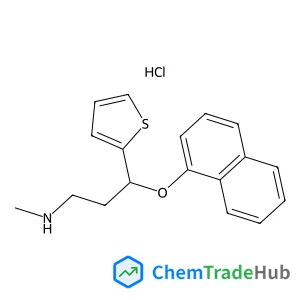
N-Methyl-3-(1-naphthyloxy)-3-(2-thienyl)-1-propanamine hydrochloride (1:1)
CAS番号:
1188266-11-6
分子式:
C18H20ClNOS
![1-(1-Benzyl-1,2,3,6-tetrahydropyridin-4-yl)-1H-benzo[d]imidazol-2(3H)-one structure](https://static.chemtradehub.com/structs/603/60373-71-9-7dfb.webp "1-(1-Benzyl-1,2,3,6-tetrahydropyridin-4-yl)-1H-benzo[d]imidazol-2(3H)-one structure")
1-(1-Benzyl-1,2,3,6-tetrahydropyridin-4-yl)-1H-benzo[d]imidazol-2(3H)-one
CAS番号:
60373-71-9
分子式:
C19H19N3O

おすすめサプライヤー




免責事項
このページに表示される学術雑誌情報は、参考および研究目的のみを目的としています。当社は雑誌出版社とは提携しておらず、投稿の取り扱いも行っておりません。出版に関するお問い合わせは、各雑誌出版社に直接ご連絡ください。
表示されている情報に誤りがある場合は、support@chemtradehub.com までご連絡ください。迅速に確認し、対応いたします。