












Molecular simulation of osmometry in aqueous solutions of the BMIMCl ionic liquid: a potential route to force field parameterization of liquid mixtures
文献情報
出版日
2020-11-17
DOI
10.1039/D0CP03833D
インパクトファクター
3.676
著者
Debdas Dhabal, Tanmoy Patra
原文を見る
要旨
Despite widespread development and use of ionic liquids (ILs) in both academic and industrial research, computational force fields (FFs) for most of those are not available for a precise description of inter-species interactions in aqueous environments. In the scope of this study, by means of molecular simulations, the osmotic coefficient of an aqueous solution of an IL is calculated and used as a basis to reparameterize popular IL-FFs existing in the literature. We first calculate the osmotic coefficients (at 298.15 K and 1 atm pressure) of aqueous solutions of 1-butyl-3-methylimidazolium chloride (BMIMCl), a generic IL, popularly used in biomass processing and the subsequent conversion to value-added intermediates. The performance of two popular atomic, nonpolarizable FFs developed for BMIMCl, one by Lopes, Pádua, and coworkers (FF-LP) and the other by Sambasivarao, Acevedo, and coworkers (FF-SA), when mixed with the SPC/E water model, is tested with respect to their ability to reproduce the experimental osmotic coefficient data. Interestingly, the osmotic coefficient is found to be increasing with a gradual increase in IL molality within the concentration range of our investigation, which is contrary to the experimental trend reported in the literature for the same IL–water mixture. Henceforth, necessary corrections to the nonbonded ion–ion and ion–water interactions are made to match the experimental osmotic coefficient. To further assess the reliability of the new FF, we extensively explore the thermodynamic (density, isothermal compressibility, and thermal expansion coefficient), dynamic (diffusivity and viscosity), and association/dissociation properties (rationalized with the help of radial distribution functions) with both the original and reparameterized FF for a wider range of concentrations up to a molality of 18.50 mol kg−1. The calculated quantities are compared against experimental data wherever available. The modified FF parameters exhibit significant improvements in terms of its ability to match experimental solution properties, such as density, viscosity, association/dissociation, etc. We report that excessive dissociation of BMIMCl in water is responsible for the shortcomings observed in the original FFs and improved prediction of physicochemical properties could be achieved using the modified FFs.
関連文献
Plasmon-controlled fluorescence: a new paradigm in fluorescence spectroscopy
Joseph R. Lakowicz, Krishanu Ray, Mustafa Chowdhury, Henryk Szmacinski, Yi Fu, Jian Zhang, Kazimierz Nowaczyk
2008-07-16
Critical Review
DOI: 10.1039/B802918K
Electrochemiluminescence detection based on Ruthenium(II) tris(bipyridine) immobilised in sulfonic-functionalised titania nanoparticles by ion exchange strategy
Fan Yang
2009-08-05
Paper
DOI: 10.1039/B903434J
Electrochemical studies on the oxidation of guanine and adenine at cyclodextrin modified electrodes
Abdolkarim Abbaspour, Abolhassan Noori
2008-09-02
Paper
DOI: 10.1039/B806920D
Visualization of local electrochemical activity and local nickel ion release on laser-welded NiTi/steel joints using combined alternating current mode and stripping mode SECM
D. Ruhlig, H. Gugel, A. Schulte, W. Theisen, W. Schuhmann
2008-09-23
Paper
DOI: 10.1039/B804718A
Optimization and evaluation of networked single-wall carbon nanotubes as a NO2 gas sensing material
Isao Sasaki, Nobutsugu Minami, Annamalai Karthigeyan, Konstantin Iakoubovskii
2008-11-03
Paper
DOI: 10.1039/B813073F
Nucleic acid biosensors for environmental pollution monitoring
Ilaria Palchetti, Marco Mascini
2008-06-02
Critical Review
DOI: 10.1039/B802920M
Rapid and quantitative detection of the microbial spoilage in milk using Fourier transform infrared spectroscopy and chemometrics
Nicoletta Nicolaou, Royston Goodacre
2008-07-11
Paper
DOI: 10.1039/B804439B
Aptamer-based electrochemical sensors that are not based on the target binding-induced conformational change of aptamers
Ying Lu, Ningning Zhu, Ping Yu, Lanqun Mao
2008-07-28
Paper
DOI: 10.1039/B807913G
Detection of pathological aortic tissues by infrared multispectral imaging and chemometrics
F. Bonnier, D. Bertrand, L. Ventéo, M. Pluot, B. Baehrel, M. Manfait, G. D. Sockalingum
2008-03-13
Paper
DOI: 10.1039/B717164A
こちらもおすすめ
化合物よくある質問
6- bromo-1-cyclopropyl-1H-benzimidazoleの市場動向や研究トレンドはどうですか?
6- bromo-1-cyclopropyl-1H-benzimidazoleは、抗炎症、抗ウイルス作用を持つことが報告されており、新薬開発の研究対象として注目...
1416713-53-56-Bromo-1-cyclopropy...
化合物よくある質問
環氧プロpanol-d5を取り扱う際の実験室安全事項は何ですか?
取り扱う際には、防護眼鏡と手袋を使用し、ドラフトチャンバー内で操作することを推奨します。漏洩時には適切な手順で処理し、安全データシートを常に参照してください。
1246819-20-4Glycidol-d5
化合物よくある質問
2,2’-ジメチル-3,3’-ビピリジンはどのように合成されますか?
2,2’-ジメチル-3,3’-ビピリジンは、ピリジンと2-メチルアクリルアミドを有機合成反応で合成します。この反応では、ピリジンと2-メチルアクリルアミドを含有...
86156-55-02,2’-Dimethyl-3,3’-b...
化合物よくある質問
6-甲基ピリジン-2-ボリック酸の主な用途は何ですか?
6-甲基ピリジン-2-ボリック酸は、合成化学、医薬品合成、以及研究用途などに広く使用され、特に組換えDNA技術や分子生物学の研究において重要な役割を果たします。
372963-50-3(6-Methyl-2-pyridiny...
化合物よくある質問
(R)-3-(1-甲基-2-氧環己基)プロpano酸メチルは安全ですか?
(R)-3-(1-甲基-2-氧環己基)プロpano酸メチルは一定の安全性がありますが、直接的な皮膚接触や吸入は避けるべきです。使用する際は適切な個々の安全データ...
94089-47-1methyl 3-[(1R)-1-met...
化合物よくある質問
ketorolacはどのように保存すればよいですか?
ketorolacは、密封して遮光容器に保管し、直射日光や高温を避けて保存してください。温度は常温で保存し、湿度をなるべく低く保つことが推奨されます。
74103-06-3rac Ketorolac
化合物よくある質問
L-2,3-二氨基丙酸二盐酸盐を取り扱う際の実験室安全事項は何ですか?
L-2,3-二氨基丙酸二盐酸盐は腐食性が強く、皮膚や粘膜に刺激を与える可能性があります。取り扱う際は、防塵マスク、ゴーグル、手袋を使用し、適切な排気設備を使用し...
19777-68-5(S)-2,3-Diaminopropa...
化合物よくある質問
2-(4-溴ピリジン-2-基)乙腈の物理化学的性質は何ですか?
2-(4-溴ピリジン-2-基)乙腈のCAS番号は312325-73-8です。主に結晶形態で存在し、分子量は159.01 g/molです。この化合物は水に溶けやす...
312325-73-8(4-Bromo-2-pyridinyl...
化合物よくある質問
3-フローロ-[1,1-ベンジレン]-3,4-ジカルボン酸を取り扱う際の実験室安全事項は何ですか?
この化合物は毒性は低いですが、直接的な接触や吸入に注意が必要です。PPE(個人防護具)を着用し、ドラフトチャンバーを使用して操作することを推奨します。また、漏洩...
1261915-32-53'-Fluoro-[1,1'-biph...
化合物よくある質問
3-(1-氧代-1,3-二氢-2H-2-异吲哚)丙酸の主な用途は何ですか?
3-(1-氧代-1,3-二氢-2H-2-异吲哚)丙酸は、薬理学研究や医薬品製造において広く用いられる化合物です。また、工業的な用途でも一部の化学反応の触媒や助剤...
83747-30-23-(1-Oxo-1,3-dihydro...
掲載誌
Physical Chemistry Chemical Physics

CiteScore:
5.5
自己引用率:
10.3%
年間論文数:
3036
Physical Chemistry Chemical Physics (PCCP) is an international journal co-owned by 19 physical chemistry and physics societies from around the world. This journal publishes original, cutting-edge research in physical chemistry, chemical physics and biophysical chemistry. To be suitable for publication in PCCP, articles must include significant innovation and/or insight into physical chemistry; this is the most important criterion that reviewers and Editors will judge against when evaluating submissions. The journal has a broad scope and welcomes contributions spanning experiment, theory, computation and data science. Topical coverage includes spectroscopy, dynamics, kinetics, statistical mechanics, thermodynamics, electrochemistry, catalysis, surface science, quantum mechanics, quantum computing and machine learning. Interdisciplinary research areas such as polymers and soft matter, materials, nanoscience, energy, surfaces/interfaces, and biophysical chemistry are welcomed if they demonstrate significant innovation and/or insight into physical chemistry. Joined experimental/theoretical studies are particularly appreciated when complementary and based on up-to-date approaches.
おすすめ化合物

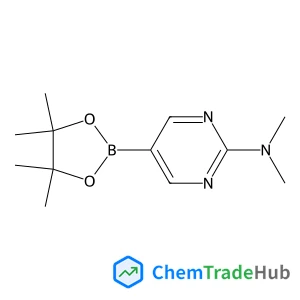
N,N-Dimethyl-5-(4,4,5,5-tetramethyl-1,3,2-dioxaborolan-2-yl)-2-pyrimidinamine
CAS番号:
1032759-30-0
分子式:
C12H20BN3O2

おすすめサプライヤー


免責事項
このページに表示される学術雑誌情報は、参考および研究目的のみを目的としています。当社は雑誌出版社とは提携しておらず、投稿の取り扱いも行っておりません。出版に関するお問い合わせは、各雑誌出版社に直接ご連絡ください。
表示されている情報に誤りがある場合は、support@chemtradehub.com までご連絡ください。迅速に確認し、対応いたします。