












Plasma-chemical promotion of catalysis for CH4 dry reforming: unveiling plasma-enabled reaction mechanisms
文献情報
出版日
2020-08-17
DOI
10.1039/D0CP03127E
インパクトファクター
3.676
著者
Zunrong Sheng, Hyun-Ha Kim, Shuiliang Yao, Tomohiro Nozaki
原文を見る
要旨
A kinetic study revealed that a Ni/Al2O3 catalyst exhibited a drastic increase in CH4 and CO2 conversion under nonthermal plasma when lanthanum was added to the Ni/Al2O3 catalyst as a promoter. For a better fundamental understanding of the plasma and catalyst interfacial phenomena, we employed in situ diffuse reflectance infrared Fourier transform spectroscopy (DRIFTS) under plasma-on conditions to elucidate the nonthermal plasma-enabled reaction enhancement mechanisms. Compared with thermal catalysis, plasma-activated CO2 shows a 1.7-fold enhancement for bidentate (1560 and 1290 cm−1) and monodentate carbonate (1425 and 1345 cm−1) formation on La. Moreover, new peaks of bicarbonate (1655 cm−1) and bridge carbonate (1720 cm−1) were formed due to nonthermal plasma interactions. CO2-TPD study after thermal- and plasma-activated CO2 treatment further confirmed that plasma-activated CO2 enhances bidentate and monodentate carbonate generation with a 1.5-fold promotion at high temperature (500 °C). XRD and EDS analyses suggest that atomic-scale interaction between CO2–La and CHx–Ni is possible over the complex La–Ni–Al oxide; vibrationally excited CO2-induced carbonates provide the key to enhancing the overall performance of CH4 dry reforming at low temperature.
関連文献
Enlarged π-electronic network of a meso-meso, β-β, β-β triply linked dibenzoporphyrin dimer that exhibits a large two-photon absorption cross section
Noboru Ono, Hidemitsu Uno, Deok Yun Kim, Soo Bum Noh, Dongho Kim
2005-07-01
Communication
DOI: 10.1039/B505340D
Noncatalytic mono-N-methylation of aniline in supercritical methanol: the kinetics and acid/base effect
Yoshihiro Takebayashi, Yoshinori Morita, Hideki Sakai, Masahiko Abe, Satoshi Yoda, Takeshi Furuya, Tsutomu Sugeta, Katsuto Otake
2005-07-07
Communication
DOI: 10.1039/B504050G
Easy activation of two C–H bonds of an N-heterocyclic carbeneN-methyl group
Javier A. Cabeza, Ignacio del Río, Daniel Miguel, M. Gabriela Sánchez-Vega
2005-07-05
Communication
DOI: 10.1039/B506287J
Photochromism of diarylethene single crystals: crystal structures and photochromic performance
Masakazu Morimoto, Masahiro Irie
2005-07-01
Feature Article
DOI: 10.1039/B505256D
Novel Pd(ii)-catalysed N,O-bicyclisation as an efficient route to the 6-oxa-2-azabicyclo[3.2.1]octane skeleton
Peter Szolcsányi, Tibor Gracza
2005-07-04
Communication
DOI: 10.1039/B506731F
Properties of composite proton-conducting membranes prepared from three-dimensionally ordered macroporous polyimide matrix and polyelectrolyte
Dai Yamamoto
2005-07-11
Communication
DOI: 10.1039/B505843K
Intermolecular rhodium-catalyzed [2 + 2 + 2] carbocyclization reactions of 1,6-enynes with symmetrical and unsymmetrical alkynes
P. Andrew Evans, James R. Sawyer, Kwong Wah Lai, John C. Huffman
2005-07-07
Communication
DOI: 10.1039/B505383H
Catalytic C–C bond cleavage and C–Si bond formation in the reaction of RCN with Et3SiH promoted by an iron complex
Hiroshi Nakazawa, Kouji Kamata, Masumi Itazaki
2005-07-12
Communication
DOI: 10.1039/B504131G
A surfactant-encapsulated polyoxometalate complex towards a thermotropic liquid crystal
Wen Li, Weifeng Bu, Haolong Li, Lixin Wu, Min Li
2005-06-29
Communication
DOI: 10.1039/B503550C
A chiral porous 3D metal–organic framework with an unprecedented 4-connected network topology
Chuan-De Wu, Wenbin Lin
2005-06-15
Communication
DOI: 10.1039/B505916J
こちらもおすすめ
化合物よくある質問
2-メトキシ-4-(メチルスルフィニル)アミンの主な用途は何ですか?
2-メトキシ-4-(メチルスルフィニル)アミンは、主に医薬品および農薬の製造に使用されます。また、合成化学の一部として研究用材料としても利用されます。
41608-73-52-Methoxy-4-(methyls...
118684-13-24-(Bromomethyl)-3-me...
化合物よくある質問
4,6-二氯-N-甲基ピラミジンアミンの代替品はありますか?
代替品としては、4,6-二クロロピラミジンアミンや他のピラミジン系化合物が考えられます。ただし、目的と用途によって最適な代替品は異なります。
10397-15-64,6-Dichloro-N-methy...
化合物よくある質問
6-氯-4-甲基-1H-吲哚を含む廃棄物はどのように処理すべきですか?
6-氯-4-甲基-1H-吲哚の廃棄物は、適切な容器に収集し、密閉して保管します。温度は常温、湿度は低く、直射日光を避けて保管することを推奨します。廃棄処理は専門...
885520-84-36-chloro-4-methyl-1H...
化合物よくある質問
2-フローユロ-4-(トリフルオロメチル)ベンゾイドについて「に適用される法規ガイドラインは何ですか」
2-フローユロ-4-(トリフルオロメチル)ベンゾイドのCAS番号は207974-08-1です。この化合物はGHS分類で毒性物質と有害な反応物質として分類されます...
207974-08-1[2-Fluoro-4-(trifluo...
化合物よくある質問
4-ニトロフェニルN-[(ベンゼルオキシルカーボンイル]グリシングリシングリシン酸はどのように保存すればよいですか?
4-ニトロフェニルN-[(ベンゼルオキシルカーボンイル]グリシングリシングリシン酸は、室温で暗所に保管し、乾燥した環境で保存することを推奨します。容器は密閉性の...
19811-64-44-Nitrophenyl N-[(be...
化合物よくある質問
イソデスロラタドリンの代替品はありますか?
イソデスロラタドリンの代替品としては、デスロラタドリンや他の抗ヒスタミン薬が挙げられます。具体的には、デスロラタドリン、ラセカミド、フェルタドリンなどが、症状や...
183198-49-4Iso Desloratadine
化合物よくある質問
5-甲氧基-1,2,3,4-四氢异喹啉盐酸盐はどのように合成されますか?
5-甲氧基-1,2,3,4-四氢异喹啉盐酸盐の一般的な合成方法は、メタノール中で5-メトキシ-1,2,3,4-四ヒュドロイソキシンを塩酸で塩化します。この反応で...
103030-69-95-Methoxy-1,2,3,4-te...
化合物よくある質問
4-アミノ-5-メトキシ-2-トルエンサルホニック酸についての法規ガイドラインは何ですか?
CAS番号6471-78-9の4-アミノ-5-メトキシ-2-トルエンサルホニック酸は、GHS分類では corrosive(腐食性)と識別されます。EUのREAC...
6471-78-94-Amino-5-Methoxy-2-...
化合物よくある質問
甲基孕酮を取り扱う際の実験室安全事項は何ですか?
甲基孕酮の取り扱いは、PPE(個人保護具)の使用が必要な重要な安全事項を伴います。防塵マスク、ゴーグル、手袋を着用することが推奨されます。ドラフトチャンバーを使...
204063-33-22-[(Diphenylmethyl)a...
掲載誌
Physical Chemistry Chemical Physics

CiteScore:
5.5
自己引用率:
10.3%
年間論文数:
3036
Physical Chemistry Chemical Physics (PCCP) is an international journal co-owned by 19 physical chemistry and physics societies from around the world. This journal publishes original, cutting-edge research in physical chemistry, chemical physics and biophysical chemistry. To be suitable for publication in PCCP, articles must include significant innovation and/or insight into physical chemistry; this is the most important criterion that reviewers and Editors will judge against when evaluating submissions. The journal has a broad scope and welcomes contributions spanning experiment, theory, computation and data science. Topical coverage includes spectroscopy, dynamics, kinetics, statistical mechanics, thermodynamics, electrochemistry, catalysis, surface science, quantum mechanics, quantum computing and machine learning. Interdisciplinary research areas such as polymers and soft matter, materials, nanoscience, energy, surfaces/interfaces, and biophysical chemistry are welcomed if they demonstrate significant innovation and/or insight into physical chemistry. Joined experimental/theoretical studies are particularly appreciated when complementary and based on up-to-date approaches.
おすすめ化合物
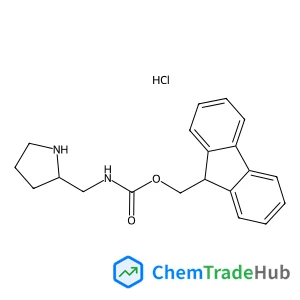
(S)-(9H-Fluoren-9-yl)methyl (pyrrolidin-2-ylmethyl)carbamate hydrochloride
CAS番号:
1217813-15-4
分子式:
C20H23ClN2O2
おすすめサプライヤー




免責事項
このページに表示される学術雑誌情報は、参考および研究目的のみを目的としています。当社は雑誌出版社とは提携しておらず、投稿の取り扱いも行っておりません。出版に関するお問い合わせは、各雑誌出版社に直接ご連絡ください。
表示されている情報に誤りがある場合は、support@chemtradehub.com までご連絡ください。迅速に確認し、対応いたします。