












Stability, electronic and mechanical properties of chalcogen (Se and Te) monolayers
文献情報
出版日
2020-02-12
DOI
10.1039/D0CP00511H
インパクトファクター
3.676
著者
Jaspreet Singh, Pooja Jamdagni, Mukesh Jakhar, Ashok Kumar
原文を見る
要旨
The successful experimental fabrication of 2D tellurium (Te) has resulted in growing interest in the monolayers of group VI elements. By employing density functional theory, we have explored the stability and electronic and mechanical properties of 1T-MoS2-like chalcogen (α-Se and α-Te) monolayers. Phonon spectra are free from imaginary modes suggesting these monolayers to be dynamically stable. The stability of these monolayers is further confirmed by room temperature AIMD simulations. Both α-Se and α-Te are indirect gap semiconductors with a band gap (calculated using the hybrid HSE06 functional) of 1.16 eV and 1.11 eV, respectively, and these gaps are further tunable with mechanical strains. Both monolayers possess strong absorption spectra in the visible region. The ideal strengths of these monolayers are comparable with those of many existing 2D materials. Significantly, these monolayers possess ultrahigh carrier mobilities of the order of 103 cm2 V−1 s−1. Combining the semiconducting nature, visible light absorption and superior carrier mobilities, these monolayers can be promising candidates for the superior performance of next-generation nanoscale devices.
関連文献
Understanding the origin of structure sensitivity in hydrodechlorination of trichloroethylene on a palladium catalyst
Chaitra S. Shenoy, Tuhin S. Khan, Kirti Verma, Mesfin Tsige, M. Ali Haider, Shelaka Gupta
2021-09-17
Paper
DOI: 10.1039/D1RE00252J
Kinetic study of o-nitrotoluene nitration in a homogeneously continuous microflow
Jing Song, Yongjin Cui, Guangsheng Luo, Jian Deng, Yujun Wang
2021-09-28
Paper
DOI: 10.1039/D1RE00362C
Renewable dimethyl carbonate for tertiary amine quaternisation: kinetic measurements and process optimisation
Roel J. T. Kleijwegt, Vera C. Henricks, Wyatt Winkenwerder, Wim Baan, John van der Schaaf
2021-08-09
Paper
DOI: 10.1039/D1RE00191D
Tuning the selectivity of CO2 hydrogenation using ceramic hollow fiber catalytic modules
Prachiti R. Bedadur, Arun Torris
2021-06-09
Paper
DOI: 10.1039/D1RE00076D
Effect of DMSO on the catalytical production of 2,5-bis(hydoxymethyl)furan from 5-hydroxymethylfurfural over Ni/SiO2 catalysts
Houman Ojagh, Abdenour Achour, Phuoc Hoang Ho, Diana Bernin, Derek Creaser, Oleg Pajalic, Johan Holmberg, Louise Olsson
2021-10-13
Paper
DOI: 10.1039/D1RE00255D
Microplasma synthesized gold nanoparticles for surface enhanced Raman spectroscopic detection of methylene blue
Xuanhe Li, Wei-Hung Chiang, Kuan Chang, Hujun Xu
2021-11-12
Paper
DOI: 10.1039/D1RE00446H
Well-defined PCL-graft-PDMAEMA prepared by ring-opening polymerisation and click chemistry
Vincent Darcos, Sarah El Habnouni, Benjamin Nottelet, Abdeslam El Ghzaoui, Jean Coudane
2010-01-25
Communication
DOI: 10.1039/C0PY00004C
Nitroxide-mediated copolymerization of methacrylic acid with sodium 4-styrene sulfonate: towards new water-soluble macroalkoxyamines for the synthesis of amphiphilic block copolymers and nanoparticles
Ségolène Brusseau, Joël Belleney, Stéphanie Magnet, Laurence Couvreur
2010-03-04
Paper
DOI: 10.1039/B9PY00371A
こちらもおすすめ
化合物よくある質問
2,3-スチオエポキシマドルを取り扱う際の実験室安全事項は何ですか?
取り扱いにはPPE(プロテクティブ・パーソナル・エイド)が必要で、防ぐ手袋と保護眼鏡を着用してください。ドラフトチャンバーの使用を推奨します。漏洩した場合は、適...
4267-80-52,3-Thioepoxy Madol
53981-25-22-Amino-6-fluorophen...
化合物よくある質問
BOC-S-3-アミニ-4-(4-メチオキシベンチル)-ブタン酸の代替品はありますか?
この化合物の代替品としては、BOC保護基を有さないアミノ酸やその他の保護基化合物が考えられます。また、メチオキシ基を有しない他の芳香族アミノ酸も代替品として挙げ...
126800-59-7(3S)-4-(4-Methoxyphe...
化合物よくある質問
Methyl 2-(chloromethyl)-3-nitrobenzoate(1218910-61-2)の代替品はありますか?
Methyl 2-(chloromethyl)-3-nitrobenzoate(1218910-61-2)の代替品としては、化学組成を変えることで効果を達成する...
1218910-61-2Methyl 2-(chlorometh...
化合物よくある質問
(2R)-2-アミノ-N-ベンジル-3-ヒドロキシプロパナミドを含む廃棄物はどのように処理すべきですか?
(2R)-2-アミノ-N-ベンジル-3-ヒドロキシプロパナミドを含む廃棄物は、適切な廃棄物管理ガイドラインに基づき処理する必要があります。まず、廃棄物を適切に収...
175481-39-7(2R)-2-amino-N-benzy...
化合物よくある質問
6,7-二氢-咪唑並[1,2-a]ピリドイン-8(5h)-酮はどのように合成されますか?
6,7-二氢-咪唑並[1,2-a]ピリドイン-8(5h)-酮は、2-ブロモフェニルアセトインとリン酸ハロゲン化物を反応させることで合成できます。この反応は高温で...
457949-09-66,7-Dihydroimidazo[1...
化合物よくある質問
エチル(3R)-3-ピロリジニル酢酸水和塩とは何ですか?
エチル(3R)-3-ピロリジニル酢酸水和塩は、CAS番号1332459-32-1の化合物で、(R)-乙基2-(ピロリジン-3-基)酢酸塩水和塩と呼ばれます。この...
1332459-32-1Ethyl (3R)-3-pyrroli...
化合物よくある質問
(2S)-{[(2-メチルエチルオキシ]カルボニル}アミノ)[2-(トリアフルオロメチルフェニル]エチカシック酸の物理化学的性質は何ですか?
(2S)-{[(2-メチルエチルオキシ]カルボニル}アミノ)[2-(トリアフルオロメチルフェニル]エチカシック酸のCAS番号は1203454-45-8です。この...
1203454-45-8(2S)-({[(2-Methyl-2-...
化合物よくある質問
2-ブロモ-1-(2-メチル-2-プロパニル)-4-ニトロベンゼンはどのように保存すればよいですか?
2-ブロモ-1-(2-メチル-2-プロパニル)-4-ニトロベンゼンは、直射日光を避けて暗所で、室温(約15℃〜25℃)、乾燥した場所に保存する必要があります。ま...
6310-17-42-Bromo-1-(2-methyl-...
化合物よくある質問
1-[(4-硝基フェニル)スルホニル]-1H-1,2,4-三唑の市場動向や研究トレンドはどうですか?
市場動向としては、1-[(4-硝基フェニル)スルホニル]-1H-1,2,4-三唑は主に農業用除草剤や合成化学製品の原料として利用されています。研究トレンドとして...
57777-84-11-[(4-Nitrophenyl)su...
掲載誌
Physical Chemistry Chemical Physics

CiteScore:
5.5
自己引用率:
10.3%
年間論文数:
3036
Physical Chemistry Chemical Physics (PCCP) is an international journal co-owned by 19 physical chemistry and physics societies from around the world. This journal publishes original, cutting-edge research in physical chemistry, chemical physics and biophysical chemistry. To be suitable for publication in PCCP, articles must include significant innovation and/or insight into physical chemistry; this is the most important criterion that reviewers and Editors will judge against when evaluating submissions. The journal has a broad scope and welcomes contributions spanning experiment, theory, computation and data science. Topical coverage includes spectroscopy, dynamics, kinetics, statistical mechanics, thermodynamics, electrochemistry, catalysis, surface science, quantum mechanics, quantum computing and machine learning. Interdisciplinary research areas such as polymers and soft matter, materials, nanoscience, energy, surfaces/interfaces, and biophysical chemistry are welcomed if they demonstrate significant innovation and/or insight into physical chemistry. Joined experimental/theoretical studies are particularly appreciated when complementary and based on up-to-date approaches.
おすすめ化合物
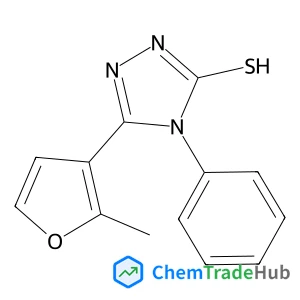
5-(2-Methyl-3-furyl)-4-phenyl-2,4-dihydro-3H-1,2,4-triazole-3-thione
CAS番号:
346464-59-3
分子式:
C13H11N3OS
![1-[4-(4-Methyl-1H-imidazol-1-yl)phenyl]ethanone structure](https://static.chemtradehub.com/structs/142/142161-53-3-7f55.webp "1-[4-(4-Methyl-1H-imidazol-1-yl)phenyl]ethanone structure")
![6,6-Dimethylbicyclo[3.1.1]hept-2-ene-2-carbaldehyde structure](https://static.chemtradehub.com/structs/564/564-94-3-e746.webp "6,6-Dimethylbicyclo[3.1.1]hept-2-ene-2-carbaldehyde structure")
おすすめサプライヤー






免責事項
このページに表示される学術雑誌情報は、参考および研究目的のみを目的としています。当社は雑誌出版社とは提携しておらず、投稿の取り扱いも行っておりません。出版に関するお問い合わせは、各雑誌出版社に直接ご連絡ください。
表示されている情報に誤りがある場合は、support@chemtradehub.com までご連絡ください。迅速に確認し、対応いたします。