













Metallic two-dimensional BP2: a high-performance electrode material for Li- and Na-ion batteries
文献情報
出版日
2021-02-01
DOI
10.1039/D0CP00187B
インパクトファクター
3.676
著者
Xiao-Juan Ye, Jie Xu, Yan-Dong Guo, Chun-Sheng Liu
原文を見る
要旨
Searching for high-performance electrode materials is an important topic in rechargeable batteries. Using first-principles calculations, we systematically explore the potential application of a two-dimensional BP2 monolayer as a cathode material for Li-ion and Na-ion batteries. The pristine BP2 monolayer exhibits metallic characteristics, which facilitate the transportation of electrons. The Li and Na atoms bind strongly to the BP2 monolayer, indicating a good structural stability. Furthermore, the geometrical structure of BP2 is well maintained during the adsorption process. The Li and Na ions prefer to move along the zigzag direction with relatively low energy barriers. Especially, the ultralow Na diffusion barrier (0.03 eV) implies that monolayer BP2 has an excellent charge/discharge capability. The specific capacity and average electrode potential of Li (Na) are 619.45 (279.93) mA h g−1 and 2.89 (2.49) V, respectively. These results reveal that the BP2 monolayer is an appealing cathode material for alkali-metal batteries.
関連文献
On heterogeneity in fluorescent few-atom silver nanoclusters
Isabel Díez, Robin H. A. Ras, Mykola I. Kanyuk, Alexander P. Demchenko
2012-11-14
Paper
DOI: 10.1039/C2CP43045B
Switching of emissive and NLO properties in push–pull chromophores with crescent PPV-like structures
Carmine Coluccini, Arvind K. Sharma, Marco Caricato, Angelo Sironi, Elena Cariati, Stefania Righetto, Elisa Tordin, Chiara Botta, Alessandra Forni
2012-11-26
Paper
DOI: 10.1039/C2CP43140H
The solvent effect on the luminescence of silver nanoclusters
Yang Li, Xumei Wang, Shuping Xu, Weiqing Xu
2013-01-14
Communication
DOI: 10.1039/C3CP44309D
Local surface structure effect on reactivity of molecules confined between metallic surfaces
Julibeth M. Martínez de la Hoz, Perla B. Balbuena
2012-11-30
Paper
DOI: 10.1039/C2CP43517A
Experimental investigation and modeling of the kinetics of CCl4pyrolysis behind reflected shock waves using high-repetition-rate time-of-flight mass spectrometry
M. Aghsaee, A. Drakon, A. Eremin, S. H. Dürrstein, H. Böhm, H. Somnitz, M. Fikri, C. Schulz
2013-01-22
Paper
DOI: 10.1039/C2CP42574B
The first dehydration and the competing reaction pathways of glucose homogeneously and heterogeneously catalyzed by acids
David Lee Phillips
2013-01-03
Paper
DOI: 10.1039/C2CP43644B
Mixture of ionic liquid and carbon nanotubes: comparative studies of the structural characteristics and dispersion of the aggregated non-bundled and bundled carbon nanotubes
Morteza Mohammadi, Masumeh Foroutan
2012-12-11
Paper
DOI: 10.1039/C2CP43522E
Computation of DNP coupling factors of a nitroxide radical in toluene: seamless combination of MD simulations and analytical calculations
Deniz Sezer
2012-11-05
Paper
DOI: 10.1039/C2CP42430D
Nanoparticle translocation through a lipid bilayer tuned by surface chemistry
Edroaldo Lummertz da Rocha, Giovanni Finoto Caramori, Carlos Renato Rambo
2012-11-20
Paper
DOI: 10.1039/C2CP44035K
Glycine conformers: a never-ending story?
Vincenzo Barone, Malgorzata Biczysko, Cristina Puzzarini
2012-11-30
Communication
DOI: 10.1039/C2CP43884D
こちらもおすすめ
化合物よくある質問
3-(2-オキサプロピル)ベンzoic酸はどのように合成されますか?
3-(2-オキサプロピル)ベンzoic酸は、ベンzoic酸とプロパノ酸をヒドロキシム化合物として反応させて生成します。具体的には、ベンzoic酸とプロパノ酸を反...
205927-63-53-(2-Oxopropyl)benzo...
114873-01-73-Fluoro-N-{[(2-meth...
化合物よくある質問
4-メチル-4-ピペリジニル-1-ピロリドイン甲酸の主な用途は何ですか?
4-メチル-4-ピペリジニル-1-ピロリドイン甲酸は、主に医薬品の合成材料や研究用物質として使用されます。さらに、一部の薬理学的研究にも応用されています。
885523-47-7(4-Methyl-4-piperidi...
化合物よくある質問
Biotin-PEG3-oxyamine HCl塩について、適切な化合物名称に適用される法規ガイドラインは何ですか?
Biotin-PEG3-oxyamine HCl塩は、GHS( Globally Harmonized System of Classification and...
1786206-22-1Biotin-PEG3-oxyamine...
化合物よくある質問
N-(4-イソチオシアネートフェニル)-2-メトキシアリニンはどのように合成されますか?
N-(4-イソチオシアネートフェニル)-2-メトキシアリニンは、4-イソチオシアノフェノールと2-メトキシアリニルアミンのアミニド反応を用いて合成されます。この...
915919-57-2N-(4-Isothiocyanatop...
化合物よくある質問
金粉蕨亭2'-O-葡萄糖甙の主な用途は何ですか?
金粉蕨亭2'-O-葡萄糖甙は主に薬理研究や医薬品製造に使用され、抗炎症作用や抗がん作用などがあります。また、その構造や性質から、合成化学や化学生理学の研究にも用...
76947-60-92-(7-Hydroxy-2,2,4,6...
化合物よくある質問
2-(2-ニトロフェニル)酢酸ヒドライドの物理化学的性質は何ですか?
2-(2-ニトロフェニル)酢酸ヒドライドのCAS番号は114953-81-0です。この化合物は白色結晶性粉末で、分子量は244.12です。水溶性は限られており、...
114953-81-02-(2-Nitrophenyl)ace...
化合物よくある質問
5-(ヒドロキシメチル)-2-チオキソ-2,3-ジヒドロピリミジン-4(1H)-オンを取り扱う際の実験室安全事項は何ですか?
この化合物は高活性のため、取り扱いには注意が必要です。PPE(個人保護具)としてゴーグル、ガントリー、および防滴シールドを着用することが推奨されます。ドラフトチ...
93185-31-05-(Hydroxymethyl)-2-...
化合物よくある質問
11-脱氢血栓烷 b2の市場動向や研究トレンドはどうですか?
11-脱氢血栓烷 b2は、血栓溶解・抗凝固作用に関する研究で注目を集めています。特に心血管疾患の治療法開発において、市場の需要が高まっています。研究トレンドとし...
67910-12-77-{(2R,3S,4S)-4-Hydr...
化合物よくある質問
3,3-二甲基哌啶-4-酮はどのように保存すればよいですか?
3,3-二甲基哌啶-4-酮は避光、常温、乾燥した場所で保存してください。容器は密閉し、遠くから火源を離して保管することを確認してください。
150668-82-93,3-Dimethyl-4-piper...
掲載誌
Physical Chemistry Chemical Physics

CiteScore:
5.5
自己引用率:
10.3%
年間論文数:
3036
Physical Chemistry Chemical Physics (PCCP) is an international journal co-owned by 19 physical chemistry and physics societies from around the world. This journal publishes original, cutting-edge research in physical chemistry, chemical physics and biophysical chemistry. To be suitable for publication in PCCP, articles must include significant innovation and/or insight into physical chemistry; this is the most important criterion that reviewers and Editors will judge against when evaluating submissions. The journal has a broad scope and welcomes contributions spanning experiment, theory, computation and data science. Topical coverage includes spectroscopy, dynamics, kinetics, statistical mechanics, thermodynamics, electrochemistry, catalysis, surface science, quantum mechanics, quantum computing and machine learning. Interdisciplinary research areas such as polymers and soft matter, materials, nanoscience, energy, surfaces/interfaces, and biophysical chemistry are welcomed if they demonstrate significant innovation and/or insight into physical chemistry. Joined experimental/theoretical studies are particularly appreciated when complementary and based on up-to-date approaches.
おすすめ化合物
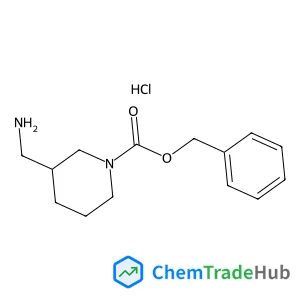
![Benzyl spiro[indole-3,4'-piperidine]-1(2H)-carboxylate hydrochloride (1:1) structure](https://static.chemtradehub.com/structs/159/159635-46-8-8de0.webp "Benzyl spiro[indole-3,4'-piperidine]-1(2H)-carboxylate hydrochloride (1:1) structure")
Benzyl spiro[indole-3,4'-piperidine]-1(2H)-carboxylate hydrochloride (1:1)
CAS番号:
159635-46-8
分子式:
C20H23ClN2O2
おすすめサプライヤー





免責事項
このページに表示される学術雑誌情報は、参考および研究目的のみを目的としています。当社は雑誌出版社とは提携しておらず、投稿の取り扱いも行っておりません。出版に関するお問い合わせは、各雑誌出版社に直接ご連絡ください。
表示されている情報に誤りがある場合は、support@chemtradehub.com までご連絡ください。迅速に確認し、対応いたします。