![4-[(2,4-Dihydroxyphenyl)diazenyl]-5-hydroxy-2,7-naphthalenedisulfonic acid structure](https://static.chemtradehub.com/structs/362/3627-01-8-79ac.webp "4-[(2,4-Dihydroxyphenyl)diazenyl]-5-hydroxy-2,7-naphthalenedisulfonic acid structure")
4-[(2,4-Dihydroxyphenyl)diazenyl]-5-hydroxy-2,7-naphthalenedisulfonic acid
CAS番号:
3627-01-8
分子式:
C16H12N2O9S2
M. Aghsaee, A. Drakon, A. Eremin, S. H. Dürrstein, H. Böhm, H. Somnitz, M. Fikri, C. Schulz
The pyrolysis kinetics of CCl4 behind reflected shock waves was studied with high-repetition-rate time-of-flight mass spectrometry. For modeling, quantum mechanical calculations were performed to evaluate the dissociation energies of CCl bonds for the different CClx (x = 1 to 4) radicals. Good agreement with the JANAF thermochemical table was found. With the reaction mechanism developed for CCl4 decomposition satisfactory agreement with experimental results was obtained. The investigations show the importance of C2Cl2 formation for understanding the processes of carbon cluster growth leading to carbonaceous particle formation.
Dominik Lindorfer, Frank Müh, Thomas Renger
DOI: 10.1039/C6CP08778G
L. Nyström, R. Nordström, Z. P. Xu, M. Davoudi
DOI: 10.1039/C7CP02701J
Pratik P. Dholabhai, Enrique Martínez, Nicholas T. Brown, Blas Pedro Uberuaga
DOI: 10.1039/C7CP04884J
Xiao Su, T. Alan Hatton
DOI: 10.1039/C7CP02822A
Sarah D. Hann, Daeyeon Lee, Kathleen J. Stebe
DOI: 10.1039/C7CP02809A
Sandeep Verma
DOI: 10.1039/C7CP04069E
Chun-Yu Chang, Yu-Ching Huang, Chien-An Chen, Chun-Jen Su
DOI: 10.1039/C7CP04238H
Navjot Kaur, Shuchi Gupta, Neetu Goel
DOI: 10.1039/C7CP05153K
3-(2-オキサプロピル)ベンzoic酸は、ベンzoic酸とプロパノ酸をヒドロキシム化合物として反応させて生成します。具体的には、ベンzoic酸とプロパノ酸を反...
4-メチル-4-ピペリジニル-1-ピロリドイン甲酸は、主に医薬品の合成材料や研究用物質として使用されます。さらに、一部の薬理学的研究にも応用されています。
Biotin-PEG3-oxyamine HCl塩は、GHS( Globally Harmonized System of Classification and...
N-(4-イソチオシアネートフェニル)-2-メトキシアリニンは、4-イソチオシアノフェノールと2-メトキシアリニルアミンのアミニド反応を用いて合成されます。この...
金粉蕨亭2'-O-葡萄糖甙は主に薬理研究や医薬品製造に使用され、抗炎症作用や抗がん作用などがあります。また、その構造や性質から、合成化学や化学生理学の研究にも用...
2-(2-ニトロフェニル)酢酸ヒドライドのCAS番号は114953-81-0です。この化合物は白色結晶性粉末で、分子量は244.12です。水溶性は限られており、...
この化合物は高活性のため、取り扱いには注意が必要です。PPE(個人保護具)としてゴーグル、ガントリー、および防滴シールドを着用することが推奨されます。ドラフトチ...
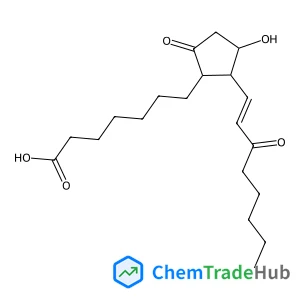
11-脱氢血栓烷 b2は、血栓溶解・抗凝固作用に関する研究で注目を集めています。特に心血管疾患の治療法開発において、市場の需要が高まっています。研究トレンドとし...
3,3-二甲基哌啶-4-酮は避光、常温、乾燥した場所で保存してください。容器は密閉し、遠くから火源を離して保管することを確認してください。

Physical Chemistry Chemical Physics (PCCP) is an international journal co-owned by 19 physical chemistry and physics societies from around the world. This journal publishes original, cutting-edge research in physical chemistry, chemical physics and biophysical chemistry. To be suitable for publication in PCCP, articles must include significant innovation and/or insight into physical chemistry; this is the most important criterion that reviewers and Editors will judge against when evaluating submissions. The journal has a broad scope and welcomes contributions spanning experiment, theory, computation and data science. Topical coverage includes spectroscopy, dynamics, kinetics, statistical mechanics, thermodynamics, electrochemistry, catalysis, surface science, quantum mechanics, quantum computing and machine learning. Interdisciplinary research areas such as polymers and soft matter, materials, nanoscience, energy, surfaces/interfaces, and biophysical chemistry are welcomed if they demonstrate significant innovation and/or insight into physical chemistry. Joined experimental/theoretical studies are particularly appreciated when complementary and based on up-to-date approaches.
![[4-Chloro-3-(diethylcarbamoyl)phenyl]boronic acid structure](https://static.chemtradehub.com/structs/871/871332-68-2-0e3b.webp "[4-Chloro-3-(diethylcarbamoyl)phenyl]boronic acid structure")