












Multimode binding and stimuli responsive displacement of acridine orange dye complexed with p-sulfonatocalix[4/6]arene macrocycles
文献情報
出版日
2020-06-01
DOI
10.1039/D0CP00030B
インパクトファクター
3.676
著者
Dona M. Tom
原文を見る
要旨
Interaction of acridine orange (AOH+) dye with water soluble anionic p-sulfonatocalix[n]arene (SCXn) hosts, SCX4 and SCX6, having different cavity dimensions, has been investigated using multispectroscopic techniques. Intriguing modulation in the photophysical properties of AOH+ upon interaction with SCXn hosts indicate the formation of different host–guest complexes at different regions of the host concentrations. At lower host concentrations, AOH+ undergoes SCXn assisted aggregation, causing a drastic reduction in fluorescence intensity. At higher host concentrations, aggregated-AOH+–SCXn complexes disintegrate and monomeric-AOH+–SCXn exo and inclusion complexes are eventually formed, leading to a huge fluorescence enhancement finally. Observed effects are more pronounced with SCX6 as compared to SCX4 host. Time-resolved fluorescence studies indicate that at very high host concentrations, there is also a diffusion-controlled dynamic quenching for both monomeric-AOH+–SCXn exo and inclusion complexes, caused by the free SCXn present in the solution, a phenomenon not reported before for such host–guest systems. The aggregated-AOH+–SCXn complexes at lower host concentration were employed to investigate displacement study using an antiviral drug, 1-adamantanamine (AD) and a neurotransmitter, acetylcholine (AcCh), as the competitive binders cum external stimuli, which resulted in a drastic recovery of the fluorescence reduced initially due to aggregation process. Though both the AOH+–SCXn systems act as efficient supramolecular assemblies in sensing AD and AcCh as the analytes through fluorescence “OFF–ON” mechanism, the effect is more pronounced for AOH+–SCX4 system as compared to AOH+–SCX6. SCXn induced interesting modulation in the photophysical properties of AOH+ and the stimulus responsive dye displacement observed for aggregated-AOH+–SCXn systems can expectedly find applications in fluorescence OFF–ON sensing, supramolecular functional materials and similar others.
関連文献
Silver-catalyzed hydrosilylation of aldehydes
Bradley M. Wile, Mark Stradiotto
2006-08-23
Communication
DOI: 10.1039/B609679D
Cathodic chemistry of high performance Zr coated alkaline materials
Stuart Licht, Xingwen Yu, Dong Zheng
2006-09-05
Communication
DOI: 10.1039/B608716G
Three-dimensionally ordered macroporous carbons having walls composed of hollow mesosized spheres
Sang-Wook Woo, Keiji Sasajima, Takashi Takei
2006-09-18
Communication
DOI: 10.1039/B607196A
Thermoreversible sol–gel transition of an aqueous solution of polyrotaxane composed of highly methylated α-cyclodextrin and polyethylene glycol
Masatoshi Kidowaki, Toshiyuki Kataoka
2006-08-21
Communication
DOI: 10.1039/B607373E
Synthesis of propargylic fluorides from allenylsilanes
Laurence Carroll, Mª Carmen Pacheco, Ludivine Garcia, Véronique Gouverneur
2006-08-23
Communication
DOI: 10.1039/B610013A
Large mixed metal nitride clusters encapsulated in a small cage: the confinement of the C68-based clusterfullerenes
Lothar Dunsch
2008-04-18
Communication
DOI: 10.1039/B803200A
A facile route to hollow nanospheres of mesoporous silica with tunable size
Zhange Feng, Yongsheng Li, Dechao Niu, Liang Li, Wenru Zhao, Hangrong Chen, Lei Li, Jianhua Gao, Meiling Ruan
2008-05-01
Communication
DOI: 10.1039/B804594A
Ultra-fast and scalable sidewall functionalisation of single-walled carbon nanotubes with carboxylic acid
Brenda Long, Tan Man Wu, Francesco Stellacci
2008-04-16
Communication
DOI: 10.1039/B719380G
Total syntheses of amythiamicins A, B and C‡
Dattatraya H. Dethe, David Y.-K. Chen
2008-05-08
Communication
DOI: 10.1039/B805069B
こちらもおすすめ
28770-01-62-(2-Isopropyl-1,3-o...
化合物よくある質問
「邻羟基阿托伐他汀内酯标准品」に適用される法規ガイドelinesは何ですか?
CAS番号163217-74-1の「邻羟基阿托伐他汀内酯标准品」は、GHS分類では危険物に分類されず、主にREACH規則とFDA/EPAの管理対象となります。R...
163217-74-1ortho-Hydroxy Atorva...
化合物よくある質問
メチル(3R)-3-アミノ-2,3-ジヒドロ-1-ベンゾファンラニン-5-カルボイル酸塩塩酸塩の主な用途は何ですか?
メチル(3R)-3-アミノ-2,3-ジヒドロ-1-ベンゾファンラニン-5-カルボイル酸塩塩酸塩は、医薬品や合成化学の研究に広く用いられます。また、特定の薬物の前...
2241594-15-8Methyl (3R)-3-amino-...
化合物よくある質問
トランス-4-メチルピロリジン-3-オール塩酸塩はどのように合成されますか?
トランス-4-メチルピロリジン-3-オール塩酸塩は、4-メチルピロリジンの塩酸塩化によって合成されます。一般的な合成方法では、4-メチルピロリジンを塩酸に加えて...
265108-42-7trans-4-Methylpyrrol...
化合物よくある質問
硫雜環丁烷-1,1-二氧化物は安全ですか?
硫雜環丁烷-1,1-二氧化物は安全ではありません。毒性は報告されていませんが、高温下で分解し、可燃性があるため、高圧ガスは注意が必要です。密閉した容器で保管し、...
5687-92-3Thietane 1,1-dioxide
6054-10-02H, 8H-Benzo[1,2-b
化合物よくある質問
9-ヒドロキシエリプチシネ塩酸塩はどのように合成されますか?
9-ヒドロキシエリプチシネ塩酸塩は、エリプチシネから塩酸を添加することで合成されます。選択性は高いですが、収率は約70%です。
52238-35-49-Hydroxyellipticine...
化合物よくある質問
5-塩素-2-(メチルアミノ)フェニル-(2-塩素フェニル)メタン酮の物理化学的性質は何ですか?
5-塩素-2-(メチルアミノ)フェニル-(2-塩素フェニル)メタン酮のCAS番号は5621-86-3です。この化合物は白色の結晶性粉末で、分子量は415.03で...
5621-86-3[5-Chloro-2-(methyla...
化合物よくある質問
1-[2-(4-甲氧基-苯氧基)-乙基]-哌嗪はどのように保存すればよいですか?
1-[2-(4-甲氧基-苯氧基)-乙基]-哌嗪は、直射日光を避けて暗所に、室温(15-25℃)で保管し、密閉容器に入れることで安定性を保つことができます。
117132-44-21-[2-(4-Methoxy-phen...
化合物よくある質問
2-[3-(4-甲氧基フェニル)プロピル]-4,4,5,5-四メチル-1,3,2-ドイボロロールアンの主な用途は何ですか?
2-[3-(4-甲氧基フェニル)プロピル]-4,4,5,5-四メチル-1,3,2-ドイボロロールアンは、医薬品の合成、有機合成化学、および新材料の研究で使用され...
1073371-72-82-[3-(4-Methoxypheny...
掲載誌
Physical Chemistry Chemical Physics

CiteScore:
5.5
自己引用率:
10.3%
年間論文数:
3036
Physical Chemistry Chemical Physics (PCCP) is an international journal co-owned by 19 physical chemistry and physics societies from around the world. This journal publishes original, cutting-edge research in physical chemistry, chemical physics and biophysical chemistry. To be suitable for publication in PCCP, articles must include significant innovation and/or insight into physical chemistry; this is the most important criterion that reviewers and Editors will judge against when evaluating submissions. The journal has a broad scope and welcomes contributions spanning experiment, theory, computation and data science. Topical coverage includes spectroscopy, dynamics, kinetics, statistical mechanics, thermodynamics, electrochemistry, catalysis, surface science, quantum mechanics, quantum computing and machine learning. Interdisciplinary research areas such as polymers and soft matter, materials, nanoscience, energy, surfaces/interfaces, and biophysical chemistry are welcomed if they demonstrate significant innovation and/or insight into physical chemistry. Joined experimental/theoretical studies are particularly appreciated when complementary and based on up-to-date approaches.
おすすめ化合物
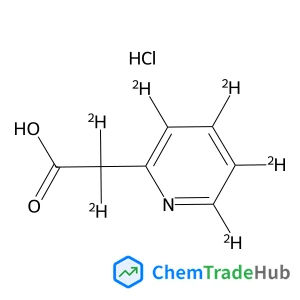
2,2-dideuterio-2-(3,4,5,6-tetradeuterio-2-pyridyl)acetic acid;hydrochloride
CAS番号:
1329799-67-8
分子式:
C7H2ClD6NO2
![1-[(4-Methylphenyl)sulfonyl]-3-(4,4,5,5-tetramethyl-1,3,2-dioxaborolan-2-yl)-1H-pyrrolo[2,3-b]pyridine-5-carbonitrile structure](https://static.chemtradehub.com/structs/143/1434747-57-5-fc0d.webp "1-[(4-Methylphenyl)sulfonyl]-3-(4,4,5,5-tetramethyl-1,3,2-dioxaborolan-2-yl)-1H-pyrrolo[2,3-b]pyridine-5-carbonitrile structure")
おすすめサプライヤー





免責事項
このページに表示される学術雑誌情報は、参考および研究目的のみを目的としています。当社は雑誌出版社とは提携しておらず、投稿の取り扱いも行っておりません。出版に関するお問い合わせは、各雑誌出版社に直接ご連絡ください。
表示されている情報に誤りがある場合は、support@chemtradehub.com までご連絡ください。迅速に確認し、対応いたします。