












The endo-aza-Michael addition in the synthesis of piperidines and pyrrolidines
文献情報
出版日
2020-01-16
DOI
10.1039/C9OB02388G
インパクトファクター
3.876
著者
Roderick W. Bates, Weiting Ko, Viktor Barát
原文を見る
要旨
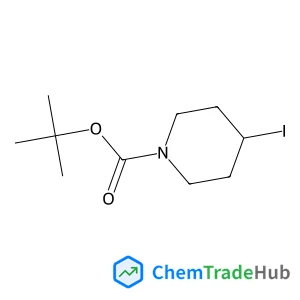
Intramolecular endo-aza-Michael additions are categorised in various ways. Firstly whether they are single or double reactions, secondly whether they are endo- or exo-activated (or both), thirdly whether the Michael acceptor is an alkene or an alkyne, and finally whether the product is a six or a five membered ring. Reactions in the various categories are illustrated by syntheses of piperidines and pyrrolidines, including a range of natural products. The question of the stereochemical outcome and whether it is understood is discussed.
関連文献
Ag-Catalyzed cycloisomerization of 1,6-enynamide: an intramolecular type II Alder-ene reaction
Mei-Hua Shen, Yu-Mei Zhang, Chun Jiang, Hua-Dong Xu, Defeng Xu
2019-11-18
Research Article
DOI: 10.1039/C9QO01258C
Visible-light-mediated difluoromethylphosphonation of alkenes for the synthesis of CF2P-containing heterocycles
Qiang Yang, Qing-Qing Lin, Hou-Ying Xing, Zhi-Gang Zhao
2019-10-25
Research Article
DOI: 10.1039/C9QO01030K
Stereoselective assembly of 3,4-epoxypyrrolines via nucleophilic addition induced domino cyclization of 6-halo-1-oxa-4-azahexatrienes
Ilia A. Smetanin, Anastasiya V. Agafonova, Nikolai V. Rostovskii, Alexander F. Khlebnikov, Dmitry S. Yufit, Mikhail S. Novikov
2019-12-26
Research Article
DOI: 10.1039/C9QO01401B
Rhodium-catalyzed homodimerization–cyclization reaction of two vinyl isocyanides: a general route to 2-(isoquinolin-1-yl)oxazoles
Zhuo Wang, Xiang-He Meng, Pei Liu, Wan-Ying Hu, Yu-Long Zhao
2019-11-22
Research Article
DOI: 10.1039/C9QO01229J
Cu-catalyzed C–N bond cleavage of 3-aminoindazoles for the C–H arylation of enamines
Yao Zhou, Ya Wang, Zhiyi Song, Tamaki Nakano
2019-11-01
Research Article
DOI: 10.1039/C9QO01177C
Reductive coupling of imines with redox-active esters by visible light photoredox organocatalysis
Jiaqi Jia, Quentin Lefebvre
2020-01-22
Research Article
DOI: 10.1039/C9QO01428D
Trifluoroacetimidoyl halides: a potent synthetic origin
Zhengkai Chen, Sipei Hu
2019-12-02
Review Article
DOI: 10.1039/C9QO01167F
Visible light-mediated atom transfer radical addition to styrene: base controlled selective (phenylsulfonyl)difluoromethylation
Jie Sheng, Kang-Jie Bian, Yi-Ming Su, Guang-Xu Liao, Ruomeng Duan, Chen Li, Zhihong Liu, Xi-Sheng Wang
2020-01-10
Research Article
DOI: 10.1039/C9QO01433K
こちらもおすすめ
化合物よくある質問
3-(5-フェニル-2-ファイル)-プロパン酸の市場動向や研究トレンドはどうですか?
この化合物の市場動向は不明ですが、類似化合物の需要は化学繊維、医薬品、農薬分野で安定しています。研究トレンドとしては、該当化合物の生物学的活性の評価や、その他の...
3465-61-03-(5-Phenyl-2-furyl)...
化合物よくある質問
3- Chloro-1H-indazol-5-olはどのように保存すればよいですか?
3- チロロ-1H-吲唑-5-醇は遮光し、直射日光を避けて、温度は室温を推奨し、密閉容器に保存してください。
885519-34-63-Chloro-1H-indazol-...
849924-76-11,2,3,4,5-Cyclopenta...
化合物よくある質問
L-(1-~13~C)メチオニンの市場動向や研究トレンドはどうですか?
L-(1-~13~C)メチオニンは、医薬品やバイオテクノロジー分野での研究が増加しており、その価格は安定しています。新興研究分野では、代謝解析や遺伝子機能解析で...
81202-04-2L-(1-~13~C)Methionin...
化合物よくある質問
1,3-フェニレンビスメチレンビスアクリレートは安全ですか?
1,3-フェニレンビスメチレンビスアクリレートは一般的に安全ですが、直接皮膚に触れる場合は保護用具を使用することを推奨します。高濃度の蒸気が吸入された場合は呼吸...
22757-16-01,3-Phenylenebis(met...
化合物よくある質問
丹参醇Aはどのように保存すればよいですか?
丹参醇Aは、直射日光を避けて室温で保存し、密栓容器に入れることをお勧めします。適切な保存条件は、安定性を保ち、安全性を確保する上で重要です。
189308-08-5Danshenol A
化合物よくある質問
4-メチル-2-(1,1,1-三フロロ-2-メチルプロパニル)ピリドインとは何ですか?
CAS番号1378865-93-0の4-メチル-2-(1,1,1-三フロロ-2-メチルプロパニル)ピリドインは、合成化学分野で用いられる有機化合物の一種です。こ...
1378865-93-04-Methyl-2-(1,1,1-tr...
化合物よくある質問
N-フェニルベンジル-2-クロロ酢氨を取り扱う際の実験室安全事項は何ですか?
N-フェニルベンジル-2-クロロ酢氨は毒性があり、皮膚や粘膜に刺激を与えます。取り扱う際には、保護眼鏡、手袋、ゴーグルを着用することを強く推奨します。ドラフトチ...
2653-14-7N-benzyl-2-chloro-N-...
化合物よくある質問
UCN-02を取り扱う際の実験室安全事項は何ですか?
UCN-02は毒性は低いですが、人体への直接的な接触は避けるべきです。PPE要件はグローブと顔面保護具を着用することです。ドラフトチャンバーを使用して漏洩を処理...
121569-61-7UCN-02
化合物よくある質問
N-[3-[2-(二甲基氨基)乙氧基]-4-甲氧基苯基]-2'-甲基-4'-(5-甲基-1,2,4-恶二唑-3-基)-[1,1'-联苯]-4-甲酰胺を取り扱う際の実験室安全事項は何ですか?
手袋と保護眼鏡を着用し、漏洩時には吸気防止装置を使用してください。室温、乾燥した場所に保管し、直日光から隔離してください。SDS(安全データシート)を参照してく...
170230-39-4N-{3-[2-(Dimethylami...
掲載誌
Organic & Biomolecular Chemistry

CiteScore:
3.4
自己引用率:
10.3%
年間論文数:
1041
Organic & Biomolecular Chemistry (OBC) publishes original and high impact research and reviews in organic chemistry. We welcome research that shows new or significantly improved protocols or methodologies in total synthesis, synthetic methodology or physical and theoretical organic chemistry as well as research that shows a significant advance in the organic chemistry or molecular design aspects of chemical biology, catalysis, supramolecular and macromolecular chemistry, theoretical chemistry, mechanism-oriented physical organic chemistry, medicinal chemistry or natural products. Articles published in the journal should report new work which makes a highly-significant impact in the field. Routine and incremental work is generally not suitable for publication in the journal. More details about key areas of our scope are below. In all cases authors should include in their article clear rationale for why their research has been carried out.
おすすめ化合物
おすすめサプライヤー




免責事項
このページに表示される学術雑誌情報は、参考および研究目的のみを目的としています。当社は雑誌出版社とは提携しておらず、投稿の取り扱いも行っておりません。出版に関するお問い合わせは、各雑誌出版社に直接ご連絡ください。
表示されている情報に誤りがある場合は、support@chemtradehub.com までご連絡ください。迅速に確認し、対応いたします。