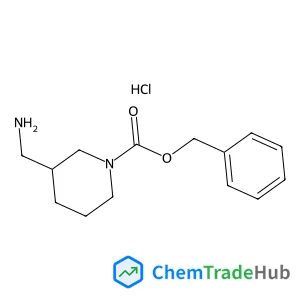
![Benzyl spiro[indole-3,4'-piperidine]-1(2H)-carboxylate hydrochloride (1:1) structure](https://static.chemtradehub.com/structs/159/159635-46-8-8de0.webp "Benzyl spiro[indole-3,4'-piperidine]-1(2H)-carboxylate hydrochloride (1:1) structure")
Benzyl spiro[indole-3,4'-piperidine]-1(2H)-carboxylate hydrochloride (1:1)
CAS番号:
159635-46-8
分子式:
C20H23ClN2O2
Chaocang Weng, Lei Gao, Guotao Duan
The low enhancement factor of semiconductor SERS substrates is a major obstacle for their practical application. Therefore, there is a need to explore the facile synthesis of new SERS substrates and reveal the SERS enhancement mechanism. Here, we develop a simple, facile and low-cost two-step method to synthesize copper sulfide based nanostructures with different Cu7.2S4 contents. The as-synthesized sample is composed of nanosheets with the CuS phase structure. With the increase of the annealing temperature to 300 °C, the CuS content gradually decreases and disappears, and the content of Cu7.2S4 and CuSO4 appears and gradually increases. At the annealing temperature of 350 °C, only CuSO4 exists. Compared with pure CuS or pure CuSO4, the detection limit of R6G molecules is the lowest for the composite sample with a higher content of Cu7.2S4, indicating that the introduction of non-stoichiometric Cu7.2S4 can improve the SERS performance and the higher content of Cu7.2S4 leads to a higher SERS activity. Furthermore, to investigate the SERS mechanism, the energy band structures and energy-level diagrams of different probe molecules over CuS, Cu7.2S4 and CuxS are studied by DFT calculations. Theoretical calculations indicate that the excellent SERS behavior depends on charge transfer resonance. Our work provides a general approach for the construction of excellent metal compound semiconductor SERS active substrates.

Russian Journal of General Chemistry

Organic Process Research & Development

Current Opinion in Colloid & Interface Science

Crystallography Reports

Chemical Communications

Russian Journal of Organic Chemistry

Nature Medicine

Journal of Saudi Chemical Society

Russian Journal of Coordination Chemistry

Drug Discovery Today
P. Müller-Buschbaum, T. Ittner, B. Mahltig, S. Cunis, G. V. Krosigk, R. Gehrke, C. Creton, M. Stamm
DOI: 10.1039/B210684A
G. R. Luckhurst, S. Romano
DOI: 10.1039/B211762M
Verónica de Zea Bermudez, Denis Ostrovskii, M. Cristina Gonçalves, Luís D. Carlos, Rute A. Sá Ferreira, Lucinda Reis, Per Jacobsson
DOI: 10.1039/B308201F
F. J. Arroyo, F. Carrique, S. Ahualli, A. V. Delgado
DOI: 10.1039/B312839C
Jun Wang, Yu Zhu, Jian Zhou, Xiao-Hua Lu
DOI: 10.1039/B313307A
Sabine Seisel, Yu Lian, Thorsten Keil, Maxim E. Trukhin, Reinhard Zellner
DOI: 10.1039/B314568A
Andrea Amadei, Nico Sanna, Andrea Grandi, Giovanni Chillemi, Alfredo Di Nola, Marco D’Abramo, Massimiliano Aschi
DOI: 10.1039/B515648C
Nirmalya Kumar Chaki, Bhalchandra Kakade, Kunjukrishna Pillai Vijayamohanan, Poonam Singh, C. V. Dharmadhikari
DOI: 10.1039/B516650K
Shenghai Wu, Patrick Dupré, Terry A. Miller
DOI: 10.1039/B518279D
3-(2-オキサプロピル)ベンzoic酸は、ベンzoic酸とプロパノ酸をヒドロキシム化合物として反応させて生成します。具体的には、ベンzoic酸とプロパノ酸を反...
4-メチル-4-ピペリジニル-1-ピロリドイン甲酸は、主に医薬品の合成材料や研究用物質として使用されます。さらに、一部の薬理学的研究にも応用されています。
Biotin-PEG3-oxyamine HCl塩は、GHS( Globally Harmonized System of Classification and...
N-(4-イソチオシアネートフェニル)-2-メトキシアリニンは、4-イソチオシアノフェノールと2-メトキシアリニルアミンのアミニド反応を用いて合成されます。この...
金粉蕨亭2'-O-葡萄糖甙は主に薬理研究や医薬品製造に使用され、抗炎症作用や抗がん作用などがあります。また、その構造や性質から、合成化学や化学生理学の研究にも用...
2-(2-ニトロフェニル)酢酸ヒドライドのCAS番号は114953-81-0です。この化合物は白色結晶性粉末で、分子量は244.12です。水溶性は限られており、...
この化合物は高活性のため、取り扱いには注意が必要です。PPE(個人保護具)としてゴーグル、ガントリー、および防滴シールドを着用することが推奨されます。ドラフトチ...
11-脱氢血栓烷 b2は、血栓溶解・抗凝固作用に関する研究で注目を集めています。特に心血管疾患の治療法開発において、市場の需要が高まっています。研究トレンドとし...
3,3-二甲基哌啶-4-酮は避光、常温、乾燥した場所で保存してください。容器は密閉し、遠くから火源を離して保管することを確認してください。

Physical Chemistry Chemical Physics (PCCP) is an international journal co-owned by 19 physical chemistry and physics societies from around the world. This journal publishes original, cutting-edge research in physical chemistry, chemical physics and biophysical chemistry. To be suitable for publication in PCCP, articles must include significant innovation and/or insight into physical chemistry; this is the most important criterion that reviewers and Editors will judge against when evaluating submissions. The journal has a broad scope and welcomes contributions spanning experiment, theory, computation and data science. Topical coverage includes spectroscopy, dynamics, kinetics, statistical mechanics, thermodynamics, electrochemistry, catalysis, surface science, quantum mechanics, quantum computing and machine learning. Interdisciplinary research areas such as polymers and soft matter, materials, nanoscience, energy, surfaces/interfaces, and biophysical chemistry are welcomed if they demonstrate significant innovation and/or insight into physical chemistry. Joined experimental/theoretical studies are particularly appreciated when complementary and based on up-to-date approaches.