












Theoretical modeling of the valence UV spectra of 1,2,3-triazine and uracil in solution
文献情報
出版日
2006-02-24
DOI
10.1039/B515648C
インパクトファクター
3.676
著者
Andrea Amadei, Nico Sanna, Andrea Grandi, Giovanni Chillemi, Alfredo Di Nola, Marco D’Abramo, Massimiliano Aschi
原文を見る
要旨
Assessment of the perturbed matrix method (PMM) ability in reproducing valence UV absorption spectra is carried out on two model systems: 1,2,3-triazine in methanol solution and uracil in water solution. Results show that even using the simplest definition of the quantum center, i.e. the portion of the system explicitly treated quantum mechanically, PMM provides rather good results. This paper further confirms the possibility of using PMM as a theoretical–computational tool, complementary to other methodologies, for addressing the electronic properties in molecular systems of high complexity.
関連文献
Copper-catalyzed oxidative multicomponent reaction: synthesis of imidazo fused heterocycles with molecular oxygen
Xianwei Li, Tianzhang Wang, Yu-Jing Lu, Shaomin Ji, Yanping Huo, Bifu Liu
2018-08-02
Paper
DOI: 10.1039/C8OB01532E
Total synthesis of (±)-rhazinal, an alkaloidal spindle toxin from Kopsia teoi
Martin G. Banwell, Alison J. Edwards, Jason A. Smith, Ernest Hamel, Pascal Verdier-Pinard
2002-12-19
Paper
DOI: 10.1039/B209992F
Functionalization of diazotetronic acid and application in a stereoselective modular synthesis of pulvinone, aspulvinones A–E, G, Q and their analogues
Amarender Manchoju, Ritesh A. Annadate, Lise Desquien, Sunil V. Pansare
2018-08-10
Paper
DOI: 10.1039/C8OB01511B
Diastereoselective synthesis and profiling of bicyclic imidazolidinone derivatives bearing a difluoromethylated catechol unit as potent phosphodiesterase 4 inhibitors
Ivan S. Golovanov, Vladimir A. Tartakovsky, Alexey Yu. Sukhorukov, Sema L. Ioffe
2018-07-10
Paper
DOI: 10.1039/C8OB01039K
Vinyl sulfonyl chemistry-driven unidirectional transport of a macrocycle through a [2]rotaxane
Arthur H. G. David, Pablo García–Cerezo, Araceli G. Campaña, Francisco Santoyo–González, Victor Blanco
2021-11-26
Research Article
DOI: 10.1039/D1QO01491A
Synthesis of 2-trifluoromethylquinolines through rhodium-catalysed redox-neutral [3 + 3] annulation between anilines and CF3-ynones using traceless directing groups
Haichao Huang, Hailong Wang, Chao Gong, Zhenjing Zhuang, Wenmin Feng, Si-Hai Wu, Lianhui Wang
2021-11-29
Research Article
DOI: 10.1039/D1QO01478A
An alternative route for the synthesis of hydroxylated pillar[5]arene-based amphiphiles
Talal F. Al-Azemi, Mickey Vinodh, Fatemeh H. Alipour, Abdirahman A. Mohamod
2018-09-26
Paper
DOI: 10.1039/C8OB02074D
Preferential precipitation of C70 over C60 with p-halohomooxacalix[3]arenes
Naoki Komatsu
2002-11-27
Paper
DOI: 10.1039/B208107E
Synthesis of functionalized 2,5-dihydropyrrole derivatives via a convenient [3 + 2] annulation of azomethine ylides with allenoates
Zhusheng Huang, Zonghao Dai, Jin Zhu, Fulai Yang, Qingfa Zhou
2018-08-28
Communication
DOI: 10.1039/C8OB01946K
Synthesis of meso-substituted porphyrins carrying carboranes and oligo(ethylene glycol) units for potential applications in boron neutron capture therapy
Christophe Frixa, Mary F. Mahon, Andrew S. Thompson, Michael D. Threadgill
2002-12-19
Paper
DOI: 10.1039/B209534C
こちらもおすすめ
化合物よくある質問
3-(2-オキサプロピル)ベンzoic酸はどのように合成されますか?
3-(2-オキサプロピル)ベンzoic酸は、ベンzoic酸とプロパノ酸をヒドロキシム化合物として反応させて生成します。具体的には、ベンzoic酸とプロパノ酸を反...
205927-63-53-(2-Oxopropyl)benzo...
114873-01-73-Fluoro-N-{[(2-meth...
化合物よくある質問
4-メチル-4-ピペリジニル-1-ピロリドイン甲酸の主な用途は何ですか?
4-メチル-4-ピペリジニル-1-ピロリドイン甲酸は、主に医薬品の合成材料や研究用物質として使用されます。さらに、一部の薬理学的研究にも応用されています。
885523-47-7(4-Methyl-4-piperidi...
化合物よくある質問
Biotin-PEG3-oxyamine HCl塩について、適切な化合物名称に適用される法規ガイドラインは何ですか?
Biotin-PEG3-oxyamine HCl塩は、GHS( Globally Harmonized System of Classification and...
1786206-22-1Biotin-PEG3-oxyamine...
化合物よくある質問
N-(4-イソチオシアネートフェニル)-2-メトキシアリニンはどのように合成されますか?
N-(4-イソチオシアネートフェニル)-2-メトキシアリニンは、4-イソチオシアノフェノールと2-メトキシアリニルアミンのアミニド反応を用いて合成されます。この...
915919-57-2N-(4-Isothiocyanatop...
化合物よくある質問
金粉蕨亭2'-O-葡萄糖甙の主な用途は何ですか?
金粉蕨亭2'-O-葡萄糖甙は主に薬理研究や医薬品製造に使用され、抗炎症作用や抗がん作用などがあります。また、その構造や性質から、合成化学や化学生理学の研究にも用...
76947-60-92-(7-Hydroxy-2,2,4,6...
化合物よくある質問
2-(2-ニトロフェニル)酢酸ヒドライドの物理化学的性質は何ですか?
2-(2-ニトロフェニル)酢酸ヒドライドのCAS番号は114953-81-0です。この化合物は白色結晶性粉末で、分子量は244.12です。水溶性は限られており、...
114953-81-02-(2-Nitrophenyl)ace...
化合物よくある質問
5-(ヒドロキシメチル)-2-チオキソ-2,3-ジヒドロピリミジン-4(1H)-オンを取り扱う際の実験室安全事項は何ですか?
この化合物は高活性のため、取り扱いには注意が必要です。PPE(個人保護具)としてゴーグル、ガントリー、および防滴シールドを着用することが推奨されます。ドラフトチ...
93185-31-05-(Hydroxymethyl)-2-...
化合物よくある質問
11-脱氢血栓烷 b2の市場動向や研究トレンドはどうですか?
11-脱氢血栓烷 b2は、血栓溶解・抗凝固作用に関する研究で注目を集めています。特に心血管疾患の治療法開発において、市場の需要が高まっています。研究トレンドとし...
67910-12-77-{(2R,3S,4S)-4-Hydr...
化合物よくある質問
3,3-二甲基哌啶-4-酮はどのように保存すればよいですか?
3,3-二甲基哌啶-4-酮は避光、常温、乾燥した場所で保存してください。容器は密閉し、遠くから火源を離して保管することを確認してください。
150668-82-93,3-Dimethyl-4-piper...
掲載誌
Physical Chemistry Chemical Physics

CiteScore:
5.5
自己引用率:
10.3%
年間論文数:
3036
Physical Chemistry Chemical Physics (PCCP) is an international journal co-owned by 19 physical chemistry and physics societies from around the world. This journal publishes original, cutting-edge research in physical chemistry, chemical physics and biophysical chemistry. To be suitable for publication in PCCP, articles must include significant innovation and/or insight into physical chemistry; this is the most important criterion that reviewers and Editors will judge against when evaluating submissions. The journal has a broad scope and welcomes contributions spanning experiment, theory, computation and data science. Topical coverage includes spectroscopy, dynamics, kinetics, statistical mechanics, thermodynamics, electrochemistry, catalysis, surface science, quantum mechanics, quantum computing and machine learning. Interdisciplinary research areas such as polymers and soft matter, materials, nanoscience, energy, surfaces/interfaces, and biophysical chemistry are welcomed if they demonstrate significant innovation and/or insight into physical chemistry. Joined experimental/theoretical studies are particularly appreciated when complementary and based on up-to-date approaches.
おすすめ化合物
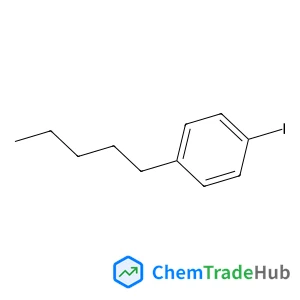
![[4-Chloro-3-(diethylcarbamoyl)phenyl]boronic acid structure](https://static.chemtradehub.com/structs/871/871332-68-2-0e3b.webp "[4-Chloro-3-(diethylcarbamoyl)phenyl]boronic acid structure")
おすすめサプライヤー





免責事項
このページに表示される学術雑誌情報は、参考および研究目的のみを目的としています。当社は雑誌出版社とは提携しておらず、投稿の取り扱いも行っておりません。出版に関するお問い合わせは、各雑誌出版社に直接ご連絡ください。
表示されている情報に誤りがある場合は、support@chemtradehub.com までご連絡ください。迅速に確認し、対応いたします。