












The influence of gold nanoparticles on the two photon absorption of photochromic molecular systems
文献情報
出版日
2019-08-05
DOI
10.1039/C9CP03283E
インパクトファクター
3.676
著者
Andreas Erbs Hillers-Bendtsen, Kurt V. Mikkelsen
原文を見る
要旨
In this study, we investigate the influence of gold nanoparticles on the nonlinear optical properties of the dihydroazulene/vinylheptafulvene photo- and thermochromic system. The influence is studied using a combined quantum mechanical/molecular mechanical approach wherein the molecules are treated with quantum mechanics. The nanoparticle is modelled using molecular mechanics where the gold atoms are represented by their polarizabilities. The quantum mechanical part of the system, namely the molecules, is described using density functional theory with the long-range corrected functional CAM-B3LYP and the correlation consistent basis set aug-cc-pDVZ. The results of the investigation show that the two photon absorptions of the molecules are indeed affected by the gold nanoparticle. The influence of the nanoparticle is especially large for the vinylheptafulvene molecule when decreasing the molecule–cluster distance. From the results, we observe that the interactions with the gold nanoparticle are very dependent on molecular conformation, relative molecular orientation, and distance between the molecule and the cluster. We conclude that the three studied molecules are affected differently by the nanoparticle, and we suggest that experiments are carried out to further investigate how these molecules coordinate to and interact with gold nanoparticles. This could present a new tool for controlling molecular properties. Furthermore, we see that the results of this study are in good agreement with earlier studies of other properties on the same system.
関連文献
Intramolecular dehydration of biomass-derived sugar alcohols in high-temperature water
Natsumi Muramatsu, Naoki Mimura, Osamu Sato
2016-11-29
Paper
DOI: 10.1039/C6CP06831F
Role of polar side chains in Li+ coordination and transport properties of polyoxetane-based polymer electrolytes
Ryansu Sai, Kazuhide Ueno, Kenta Fujii, Yohei Nakano, Naho Shigaki, Hiromori Tsutsumi
2017-01-23
Paper
DOI: 10.1039/C6CP08386B
The crucial role of Mn spiral spin order in stabilizing the Dy–Mn exchange striction in multiferroic DyMnO3
H. W. Wang, C. L. Li, S. L. Yuan, J. F. Wang, C. L. Lu, J.-M. Liu
2017-01-04
Paper
DOI: 10.1039/C6CP06369A
Toward full simulation of the electrochemical oxygen reduction reaction on Pt using first-principles and kinetic calculations
Minoru Otani
2017-01-04
Paper
DOI: 10.1039/C6CP08466D
Charge transport mechanisms in sol–gel grown La0.7Pb0.3MnO3/LaAlO3 manganite films
Eesh Vaghela, M. J. Keshvani, Keval Gadani, Zalak Joshi, Hetal Boricha, K. Asokan, D. Venkateshwarlu, V. Ganesan, N. A. Shah, P. S. Solanki
2017-01-31
Paper
DOI: 10.1039/C6CP07730G
Enhanced selective oxidation of h-BN nanosheet through a substrate-mediated localized charge effect
Xiaojun Wu, Jinlong Yang
2017-01-12
Paper
DOI: 10.1039/C6CP07402B
Hybrid host materials for highly efficient electrophosphorescence and thermally activated delayed fluorescence independent of the linkage mode
Chao Wu, Qingxun Guo, Wujun Ma, Xiaoping Li, Panlong Qiu, Jianyong Hu, Qiang Wang
2017-01-18
Paper
DOI: 10.1039/C6CP08334J
Fast and accurate MAS–DNP simulations of large spin ensembles
Shimon Vega
2017-01-05
Paper
DOI: 10.1039/C6CP07881H
Free-energy patterns in inclusion complexes: the relevance of non-included moieties in the stability constants
Tânia F. G. G. Cova, Sandra C. C. Nunes, Alberto A. C. C. Pais
2017-01-10
Paper
DOI: 10.1039/C6CP08081B
Suitability of N-propanoic acid spiropyrans and spirooxazines for use as sensitizing dyes in dye-sensitized solar cells
Noah M. Johnson, Yuriy Y. Smolin, Daniel Hagaman, Masoud Soroush, Kenneth K. S. Lau, Hai-Feng Ji
2017-01-04
Paper
DOI: 10.1039/C6CP07853B
こちらもおすすめ
化合物よくある質問
2-ブロモ-9,9-ジフェニル-9H-フルオレンの主な用途は何ですか?
2-溴-9,9-二苯基芴は、医薬品、工業材料、有機合成の研究分野で応用されます。特に、レーザー材料や機能性ポリマーの合成に使用されることがあります。また、蛍光色...
474918-32-62-Bromo-9,9-diphenyl...
化合物よくある質問
四氯化铱の市場動向や研究トレンドはどうですか?
四氯化铱の市場は研究開発分野で注目されており、特にナノ技術や金属有機框架(MOFs)の分野での需要が増加傾向にあります。価格は安定しており、中国や韓国での生産が...
207399-11-9Tetrachloroiridium h...
882-06-44-Nitrocinnamic acid
化合物よくある質問
1-(4-溴-3-氟苯基)-2-氯乙酮を含む廃棄物はどのように処理すべきですか?
1-(4-溴-3-氟苯基)-2-氯乙酮 (CAS番号: 1260857-14-4) の廃棄物は専門的な廃棄処理が必要です。まず、廃棄物は密閉された容器に収集し、...
1260857-14-41-(4-Bromo-3-fluorop...
化合物よくある質問
苦参酚Kとは何ですか?
苦参酚Kは、CAS番号101236-49-1を持つ化合物で、主に天然由来の生薬から抽出されます。この化合物は、抗炎症作用や抗癌作用を持つことが報告されています。
101236-49-1Kushenol K
化合物よくある質問
POTASSIUM (1-(TERTBUTOXYCARBONYL)AZETIDIN-3-YL)TRIFLUOROBORATE を含む廃棄物はどのように処理すべきですか?
POTASSIUM (1-(TERTBUTOXYCARBONYL)AZETIDIN-3-YL)TRIFLUOROBORATE を含む廃棄物は、まず安全なエント...
1430219-73-0Potassium (1-(tert-b...
化合物よくある質問
4-庚基-4’-联苯羧酸の市場動向や研究トレンドはどうですか?
4-庚基-4’-聯苯羧酸は、特殊化学品や合成化学の分野で用いられる化学物質ですが、市場動向としては、研究開発の進展とともに需要が増加しています。また、環境配慮型...
58573-94-74'-Heptyl-4-biphenyl...
化合物よくある質問
6-ブロモ-3-メトキシ-1-フェニル-1H-インドゾールを含む廃棄物はどのように処理すべきですか?
6-ブロモ-3-メトキシ-1-フェニル-1H-インドゾールを含む廃棄物は、適切な化学廃棄処理が必要です。通常、廃棄物は密閉容器に収集され、専門の廃棄処理業者に引...
1332527-03-36-Bromo-3-methoxy-1-...
化合物よくある質問
4,4-二甲基-2-吡咯烷酮はどの業界で使用されていますか?
4,4-二甲基-2-吡咯烷酮は医薬、ポリマー、センサー、半導体などの業界で広く使用されています。特に溶媒としての性能が高く評価されています。
66899-02-34,4-dimethylpyrrolid...
51312-42-6Sodium Phosphotungst...
掲載誌
Physical Chemistry Chemical Physics

CiteScore:
5.5
自己引用率:
10.3%
年間論文数:
3036
Physical Chemistry Chemical Physics (PCCP) is an international journal co-owned by 19 physical chemistry and physics societies from around the world. This journal publishes original, cutting-edge research in physical chemistry, chemical physics and biophysical chemistry. To be suitable for publication in PCCP, articles must include significant innovation and/or insight into physical chemistry; this is the most important criterion that reviewers and Editors will judge against when evaluating submissions. The journal has a broad scope and welcomes contributions spanning experiment, theory, computation and data science. Topical coverage includes spectroscopy, dynamics, kinetics, statistical mechanics, thermodynamics, electrochemistry, catalysis, surface science, quantum mechanics, quantum computing and machine learning. Interdisciplinary research areas such as polymers and soft matter, materials, nanoscience, energy, surfaces/interfaces, and biophysical chemistry are welcomed if they demonstrate significant innovation and/or insight into physical chemistry. Joined experimental/theoretical studies are particularly appreciated when complementary and based on up-to-date approaches.
おすすめ化合物
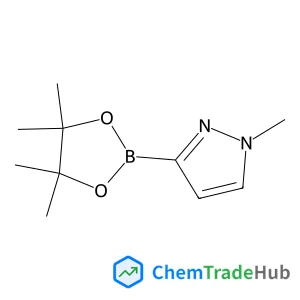
1-Methyl-3-(4,4,5,5-tetramethyl-1,3,2-dioxaborolan-2-yl)-1H-pyrazole
CAS番号:
1020174-04-2
分子式:
C10H17BN2O2
![1,2-Diphenyl-4-[2-(phenylsulfinyl)ethyl]-3,5-pyrazolidinedione structure](https://static.chemtradehub.com/structs/57-/57-96-5-efcc.webp "1,2-Diphenyl-4-[2-(phenylsulfinyl)ethyl]-3,5-pyrazolidinedione structure")
おすすめサプライヤー





免責事項
このページに表示される学術雑誌情報は、参考および研究目的のみを目的としています。当社は雑誌出版社とは提携しておらず、投稿の取り扱いも行っておりません。出版に関するお問い合わせは、各雑誌出版社に直接ご連絡ください。
表示されている情報に誤りがある場合は、support@chemtradehub.com までご連絡ください。迅速に確認し、対応いたします。