












Effect of toxic ligands on O2 binding to heme and their toxicity mechanism
文献情報
出版日
2019-06-13
DOI
10.1039/C9CP02583A
インパクトファクター
3.676
著者
Renyi Li, Xianqi Dai, Zhen Feng, Yi Li, Mingyu Zhao, Jing Liu, Huiting Li, Yang Chen, Yaqiang Ma, Yanan Tang
原文を見る
要旨
Heme, as the cofactor and active site of Hb, enables Hb to carry out the necessary function required for O2 management for life, that is, reversible O2 binding for transport. In this paper, the microscopic mechanism of heme-associated poisoning has been elucidated from the perspective of electronic interaction by performing first-principles calculations. The results show that the functional groups (–CHO, –COOH, –NO2, –NH2) and CN exhibit a stronger affinity for heme than O2 and are more likely to occupy the O2 binding site, which results in the loss of the ability of heme to carry O2. Moreover, the addition of functional groups, CO and CN to heme at the side site can cause a pronounced enhancement toward the O2 binding characteristics of heme, which prevents heme from releasing O2 to oxygen-consuming tissues as the blood circulates. The reversible O2 binding function of heme is disrupted by the presence of these toxic ligands in the heme binding pocket, which greatly affects O2 transport in the blood. The inability of tissues to obtain O2 leads to tissue hypoxia, which is the main cause of poisoning. Based on the energy, geometry and electronic properties, the hypoxia mechanism proposed by us coincides well with experiment, and the research has the potential to provide a theoretical reference for the relevant areas of bioscience.
関連文献
Doping engineering of thermoelectric transport in BNC heteronanotubes
Gustavo Cuba-Supanta, Rafael Gutierrez, Justo Rojas-Tapia
2018-12-17
Paper
DOI: 10.1039/C8CP05592K
Emulsions stabilized with mixed SiO2 and Fe3O4 nanoparticles: mechanisms of stabilization and long-term stability
M. Koroleva, D. Bidanov, E. Yurtov
2018-12-12
Paper
DOI: 10.1039/C8CP05292A
Effect of protein–protein interactions and solvent viscosity on the rotational diffusion of proteins in crowded environments
Grzegorz Nawrocki, Alp Karaboga
2018-12-12
Paper
DOI: 10.1039/C8CP06142D
DFT investigations for the catalytic reaction mechanism of methane combustion occurring on Pd(ii)/Al-MCM-41
Anis Gannouni, Carine Michel, Françoise Delbecq, Mongia Saïd Zina
2018-09-20
Paper
DOI: 10.1039/C8CP04178D
Influence of Mn co-doping on the magnetic properties of planar arrays of GaxFe4−xN nanocrystals in a GaN matrix
L. Del Bianco, F. Spizzo, Tian Li, R. Adhikari, A. Bonanni
2018-09-26
Paper
DOI: 10.1039/C8CP04475A
Pronounced changes in atomistic mechanisms for the Cl− + CH3I SN2 reaction with increasing collision energy
Subha Pratihar, Maria Carolina Nicola Barbosa Muniz, Xinyou Ma, Itamar Borges, Jr., William L. Hase
2019-01-03
Paper
DOI: 10.1039/C8CP06198J
The prediction of far-infrared spectra for planetary nitrile ices using periodic density functional theory with comparison to thin film experiments
C. Ennis, D. R. T. Appadoo, E. G. Robertson
2018-09-07
Paper
DOI: 10.1039/C8CP04219E
Two-dimensional stable transition metal carbides (MnC and NbC) with prediction and novel functionalizations
Yina Huang, Baolin Wang, Qiangqiang Meng, Lele Fan, Qinfang Zhang
2018-09-10
Paper
DOI: 10.1039/C8CP04541K
Microscopic origin of pressure-induced phase-transitions in urea: a detailed investigation through first principles calculations
B. Moses Abraham, B. Adivaiah
2018-11-30
Paper
DOI: 10.1039/C8CP04827D
こちらもおすすめ
化合物よくある質問
四氢-3-呋喃羧酰胺を含む廃棄物はどのように処理すべきですか?
四氢-3-呋喃羧酰胺を含む廃棄物の処理は、まず安全に収集し、化学的処理または専門廃棄処理を行うことが推奨されます。高温焼却は一般的な選択肢ですが、環境保護の観点...
871677-92-8Tetrahydro-3-furanca...
化合物よくある質問
DIMETHYL 3-AMINO-2,5-THIOPHENEDICARBOXYLATEについて「に適用される法規ガイドラインは何ですか」
DIMETHYL 3-AMINO-2,5-THIOPHENEDICARBOXYLATE(CAS番号: 785803-74-9)は、GHS( Globally H...
785803-74-9Dimethyl 3-amino-2,5...
化合物よくある質問
5-フェニル-2,2'-ビピリジンはどのように合成されますか?
5-フェニル-2,2'-ビピリジンは、ピリジン環とフェニル基を有する化合物から合成されます。一般的な合成方法は、4-ブロミノ苯と2,2'-ビピリジンの窒素上的ウ...
156972-80-45-Phenyl-2,2'-bipyri...
化合物よくある質問
三溴甲基苯砜とは何ですか?
三溴甲基苯砜はCAS番号17025-47-7の化合物で、(Tribromomethyl)sulfonyl]benzeneと呼ばれています。この物質は、芳香族化合...
17025-47-7[(Tribromomethyl)sul...
化合物よくある質問
四氢吡喃-4,4-二甲酸二甲酯を含む廃棄物はどのように処理すべきですか?
四氢吡喃-4,4-二甲酸二甲酯の廃棄物は、専門の廃棄処理業者に委託して安全に処理することが推奨されます。具体的には、反応性の点から常温で保存し、容器は密閉状態で...
149777-00-4Dimethyl tetrahydro-...
化合物よくある質問
N-叔丁氧羰基-N-甲乙二胺はどのように合成されますか?
N-叔丁氧羰基-N-甲乙二胺は、N-叔丁氧羰基アミンとプロピニルアミンのジアミン反応により合成されます。反応は無機触媒なしで行え、選択性と収率は良好です。
121492-06-62-Methyl-2-propanyl ...
化合物よくある質問
1,2-プロパンジオール-D6はどのように合成されますか?
1,2-プロパンジオール-D6は、プロパン-1,2-ジオールをD6同位体と交換反応を行うことで合成されます。この反応は触媒を必要とし、選択性と収率が良好です。
52910-80-21,2-Propane-d6-diol
化合物よくある質問
4,4'-異プロピルジキレートとは何ですか?
4,4'-異プロピルジキレートは、CAS番号7418-16-8の化合物で、4,4'-(2,2-プロパネディイル)ジシクロヘキサンカーボン酸は、白色の粉末またはク...
7418-16-84,4'-(2,2-Propanediy...
化合物よくある質問
2-メチル-2-プロパンチル (2S)-4-酸化-2-(1,3-チアゾリジン-3-イルカルベニル)-1-ピロリジンカルボキシレートの主な用途は何ですか?
この化合物は主に医薬品の開発に関与しており、特に抗炎症薬や神経保護剤の研究に利用されます。また、有機合成の中間体として工業製品の製造にも応用されることがあります...
401564-36-12-Methyl-2-propanyl ...
化合物よくある質問
ナトリウム5'-O-{ヘキシロキシ[(ヘキシロキシフォスフィニルオキシ)フィロホスフィル]アデノシン}を含む廃棄物はどのように処理すべきですか?
ナトリウム5'-O-{ヘキシロキシ[(ヘキシロキシフォスフィニルオキシ)フィロホスフィル]アデノシン}を含む廃棄物は、適切な化学廃棄処理施設に引き渡す必要があり...
1172-42-5Sodium 5'-O-{hydroxy...
掲載誌
Physical Chemistry Chemical Physics

CiteScore:
5.5
自己引用率:
10.3%
年間論文数:
3036
Physical Chemistry Chemical Physics (PCCP) is an international journal co-owned by 19 physical chemistry and physics societies from around the world. This journal publishes original, cutting-edge research in physical chemistry, chemical physics and biophysical chemistry. To be suitable for publication in PCCP, articles must include significant innovation and/or insight into physical chemistry; this is the most important criterion that reviewers and Editors will judge against when evaluating submissions. The journal has a broad scope and welcomes contributions spanning experiment, theory, computation and data science. Topical coverage includes spectroscopy, dynamics, kinetics, statistical mechanics, thermodynamics, electrochemistry, catalysis, surface science, quantum mechanics, quantum computing and machine learning. Interdisciplinary research areas such as polymers and soft matter, materials, nanoscience, energy, surfaces/interfaces, and biophysical chemistry are welcomed if they demonstrate significant innovation and/or insight into physical chemistry. Joined experimental/theoretical studies are particularly appreciated when complementary and based on up-to-date approaches.
おすすめ化合物
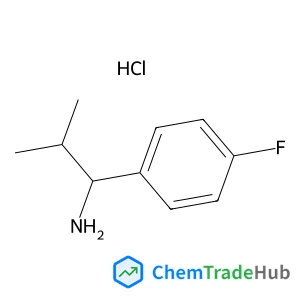
(1R)-1-(4-Fluorophenyl)-2-methyl-1-propanamine hydrochloride (1:1)
CAS番号:
1213329-40-8
分子式:
C10H15ClFN
おすすめサプライヤー




免責事項
このページに表示される学術雑誌情報は、参考および研究目的のみを目的としています。当社は雑誌出版社とは提携しておらず、投稿の取り扱いも行っておりません。出版に関するお問い合わせは、各雑誌出版社に直接ご連絡ください。
表示されている情報に誤りがある場合は、support@chemtradehub.com までご連絡ください。迅速に確認し、対応いたします。