












![2-{[(1R,2S)-2-Aminocyclohexyl]amino}-4-{[3-(2H-1,2,3-triazol-2-yl)phenyl]amino}-5-pyrimidinecarboxamide structure](https://static.chemtradehub.com/structs/137/1370261-96-3-40df.webp "2-{[(1R,2S)-2-Aminocyclohexyl]amino}-4-{[3-(2H-1,2,3-triazol-2-yl)phenyl]amino}-5-pyrimidinecarboxamide structure")
Microscopic origin of pressure-induced phase-transitions in urea: a detailed investigation through first principles calculations
文献情報
出版日
2018-11-30
DOI
10.1039/C8CP04827D
インパクトファクター
3.676
著者
B. Moses Abraham, B. Adivaiah
原文を見る
要旨
The potential crystal structures and properties of urea as a function of pressure were studied using ab initio based electronic structure calculations. The enthalpy-pressure behavior shows that urea undergoes a pressure induced structural phase transition from P21m (phase I) → P212121 (phase III) at 0.66 GPa with a volume collapse of 4.83%, driven by softening of the acoustic mode along the Γ–X direction. Another phase transition from the P212121 → P21212 structure was identified at 3.09 GPa. The violation of Born stability criteria in the P212121 structure along with softening of the acoustic mode in the U–R direction was responsible for the pressure induced phase transition. Furthermore, the application of pressure led to the breaking and formation of N–H⋯O bonds in the crystal structure of urea during the phase transition, i.e., the H-acceptor capacitance of the oxygen atoms was varied between phases I/IV and -III. Band structure calculations were performed using a hybrid functional (Heyd, Scuseria and Ernzerhof, HSE) which includes a part of exact Fock-exchange. The computed electronic band structure showed that the urea polymorphs are insulators with a direct band gap of 6.21, 6.85 and 6.99 eV for phase-I, -III and -IV, respectively, at selected pressures. We have also presented the dielectric functions (real (ε1(ω)) and imaginary (ε2(ω)) parts), refractive index and absorption coefficients to explore the optical characteristics of the urea phases. The geometric interpretation of intermolecular interactions were quantitatively visualized using Hirshfeld surface analysis. Our results provide a complete picture of various properties of urea polymorphs that lay the foundation for further understanding of structures and their applications.
関連文献
CO tolerance of Pt/FeOx catalyst in both thermal catalytic H2 oxidation and electrochemical CO oxidation: the effect of Pt deficit electron state
Feng Zhou, Rajesh Kodiyath, Hideki Abe, Youquan Deng
2016-10-04
Paper
DOI: 10.1039/C6CP05289D
Origin of the catalytic activity of face-centered-cubic ruthenium nanoparticles determined from an atomic-scale structure
L. S. R. Kumara, Anli Yang, Chulho Song, Kohei Kusada, Hirokazu Kobayashi
2016-10-11
Paper
DOI: 10.1039/C6CP04088H
The influences of operating conditions and design configurations on the performance of symmetric electrochemical capacitors
Sunny E. Iyuke
2016-09-23
Paper
DOI: 10.1039/C6CP06214H
Crystal structures and superconductivity of technetium hydrides under pressure
Xiaofeng Li, Hanyu Liu, Feng Peng
2016-09-27
Paper
DOI: 10.1039/C6CP05702K
Molecular simulations of nitrogen-doped hierarchical carbon adsorbents for post-combustion CO2 capture
Peter Psarras, Jiajun He, Jennifer Wilcox
2016-10-03
Paper
DOI: 10.1039/C6CP05865E
DFT insights into the adsorption of NH3-SCR related small gases in Mn-MOF-74
2016-09-26
Paper
DOI: 10.1039/C6CP05557E
Permselectivity and thickness-dependent ion transport properties of overoxidized polyaniline: a mechanistic investigation
Subrata Mondal, M. V. Sangaranarayanan
2016-10-17
Paper
DOI: 10.1039/C6CP04975C
Correction: Simulations of the water exchange dynamics of lanthanide ions in 1-ethyl-3-methylimidazolium ethyl sulfate ([EMIm][EtSO4]) and water
Yi-Jung Tu, Matthew J. Allen, G. Andrés Cisneros
2016-09-14
Correction
DOI: 10.1039/C6CP90231F
Enhancing cycling durability of Li-ion batteries with hierarchical structured silicon–graphene hybrid anodes
Melanie J. Loveridge, Michael J. Lain, Qianye Huang, Chaoying Wan, Alexander J. Roberts, George S. Pappas, Rohit Bhagat
2016-10-21
Paper
DOI: 10.1039/C6CP06788C
こちらもおすすめ
化合物よくある質問
6- bromo-1-cyclopropyl-1H-benzimidazoleの市場動向や研究トレンドはどうですか?
6- bromo-1-cyclopropyl-1H-benzimidazoleは、抗炎症、抗ウイルス作用を持つことが報告されており、新薬開発の研究対象として注目...
1416713-53-56-Bromo-1-cyclopropy...
化合物よくある質問
環氧プロpanol-d5を取り扱う際の実験室安全事項は何ですか?
取り扱う際には、防護眼鏡と手袋を使用し、ドラフトチャンバー内で操作することを推奨します。漏洩時には適切な手順で処理し、安全データシートを常に参照してください。
1246819-20-4Glycidol-d5
化合物よくある質問
2,2’-ジメチル-3,3’-ビピリジンはどのように合成されますか?
2,2’-ジメチル-3,3’-ビピリジンは、ピリジンと2-メチルアクリルアミドを有機合成反応で合成します。この反応では、ピリジンと2-メチルアクリルアミドを含有...
86156-55-02,2’-Dimethyl-3,3’-b...
化合物よくある質問
6-甲基ピリジン-2-ボリック酸の主な用途は何ですか?
6-甲基ピリジン-2-ボリック酸は、合成化学、医薬品合成、以及研究用途などに広く使用され、特に組換えDNA技術や分子生物学の研究において重要な役割を果たします。
372963-50-3(6-Methyl-2-pyridiny...
化合物よくある質問
(R)-3-(1-甲基-2-氧環己基)プロpano酸メチルは安全ですか?
(R)-3-(1-甲基-2-氧環己基)プロpano酸メチルは一定の安全性がありますが、直接的な皮膚接触や吸入は避けるべきです。使用する際は適切な個々の安全データ...
94089-47-1methyl 3-[(1R)-1-met...
化合物よくある質問
ketorolacはどのように保存すればよいですか?
ketorolacは、密封して遮光容器に保管し、直射日光や高温を避けて保存してください。温度は常温で保存し、湿度をなるべく低く保つことが推奨されます。
74103-06-3rac Ketorolac
化合物よくある質問
L-2,3-二氨基丙酸二盐酸盐を取り扱う際の実験室安全事項は何ですか?
L-2,3-二氨基丙酸二盐酸盐は腐食性が強く、皮膚や粘膜に刺激を与える可能性があります。取り扱う際は、防塵マスク、ゴーグル、手袋を使用し、適切な排気設備を使用し...
19777-68-5(S)-2,3-Diaminopropa...
化合物よくある質問
2-(4-溴ピリジン-2-基)乙腈の物理化学的性質は何ですか?
2-(4-溴ピリジン-2-基)乙腈のCAS番号は312325-73-8です。主に結晶形態で存在し、分子量は159.01 g/molです。この化合物は水に溶けやす...
312325-73-8(4-Bromo-2-pyridinyl...
化合物よくある質問
3-フローロ-[1,1-ベンジレン]-3,4-ジカルボン酸を取り扱う際の実験室安全事項は何ですか?
この化合物は毒性は低いですが、直接的な接触や吸入に注意が必要です。PPE(個人防護具)を着用し、ドラフトチャンバーを使用して操作することを推奨します。また、漏洩...
1261915-32-53'-Fluoro-[1,1'-biph...
化合物よくある質問
3-(1-氧代-1,3-二氢-2H-2-异吲哚)丙酸の主な用途は何ですか?
3-(1-氧代-1,3-二氢-2H-2-异吲哚)丙酸は、薬理学研究や医薬品製造において広く用いられる化合物です。また、工業的な用途でも一部の化学反応の触媒や助剤...
83747-30-23-(1-Oxo-1,3-dihydro...
掲載誌
Physical Chemistry Chemical Physics

CiteScore:
5.5
自己引用率:
10.3%
年間論文数:
3036
Physical Chemistry Chemical Physics (PCCP) is an international journal co-owned by 19 physical chemistry and physics societies from around the world. This journal publishes original, cutting-edge research in physical chemistry, chemical physics and biophysical chemistry. To be suitable for publication in PCCP, articles must include significant innovation and/or insight into physical chemistry; this is the most important criterion that reviewers and Editors will judge against when evaluating submissions. The journal has a broad scope and welcomes contributions spanning experiment, theory, computation and data science. Topical coverage includes spectroscopy, dynamics, kinetics, statistical mechanics, thermodynamics, electrochemistry, catalysis, surface science, quantum mechanics, quantum computing and machine learning. Interdisciplinary research areas such as polymers and soft matter, materials, nanoscience, energy, surfaces/interfaces, and biophysical chemistry are welcomed if they demonstrate significant innovation and/or insight into physical chemistry. Joined experimental/theoretical studies are particularly appreciated when complementary and based on up-to-date approaches.
おすすめ化合物
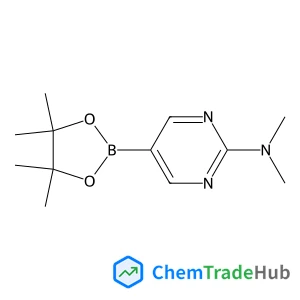
N,N-Dimethyl-5-(4,4,5,5-tetramethyl-1,3,2-dioxaborolan-2-yl)-2-pyrimidinamine
CAS番号:
1032759-30-0
分子式:
C12H20BN3O2
![6-Bromo-2,3-dihydro-1H-pyrido[2,3-b][1,4]oxazine structure](https://static.chemtradehub.com/structs/120/1203499-17-5-b4d1.webp "6-Bromo-2,3-dihydro-1H-pyrido[2,3-b][1,4]oxazine structure")
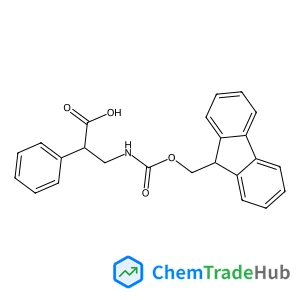
(S)-3-((((9H-Fluoren-9-yl)methoxy)carbonyl)amino)-2-phenylpropanoic acid
CAS番号:
1217663-60-9
分子式:
C24H21NO4
おすすめサプライヤー





免責事項
このページに表示される学術雑誌情報は、参考および研究目的のみを目的としています。当社は雑誌出版社とは提携しておらず、投稿の取り扱いも行っておりません。出版に関するお問い合わせは、各雑誌出版社に直接ご連絡ください。
表示されている情報に誤りがある場合は、support@chemtradehub.com までご連絡ください。迅速に確認し、対応いたします。