












![[3-Fluoro-5-(2,2,2-trifluoroethoxy)phenyl]boronic acid structure](https://static.chemtradehub.com/structs/850/850589-55-8-a8ed.webp "[3-Fluoro-5-(2,2,2-trifluoroethoxy)phenyl]boronic acid structure")
Tuning molecular dynamics by hydration and confinement: antiplasticizing effect of water in hydrated prilocaine nanoclusters
文献情報
出版日
2019-06-25
DOI
10.1039/C9CP01771B
インパクトファクター
3.676
著者
I. Combarro-Palacios, G. A. Schwartz, L. C. Pardo, S. Cerveny, R. Macovez
原文を見る
要旨
In glass-forming substances, the addition of water tends to produce the effect of lowering the glass transition temperature, Tg. In a previous work by some of us (Ruiz et al., Sci. Rep., 2017, 7, 7470) we reported on a rare anti-plasticizing effect of water on the molecular dynamics of a simple molecular system, the pharmaceutically active prilocaine molecule, for which the addition of water leads to an increase of Tg. In the present work, we study pure and hydrated prilocaine confined in 0.5 nm and 1 nm pore size molecular sieves, and carry out a comparison with the bulk compounds in order to gain a better understanding of the microscopic mechanisms that result in this rare effect. We find that the Tg of the drug under nanometric confinement can be lower than the bulk value by as much as 17 K. Through the concurrent use of differential scanning calorimetry and broadband dielectric spectroscopy we are able to observe the antiplasticizing effect of water in prilocaine also under nanometric confinement, finding an increase of Tg of up to almost 6 K upon hydration. The extension of our analysis to nanoconfined systems provides a plausible explanation for the very uncommon antiplasticizing effect, based on the formation of water-prilocaine molecular complexes. Moreover, this study deepens the understanding of the behavior of drugs under confinement, which is of relevance not only from a fundamental point of view, but also for practical applications such as drug delivery.
関連文献
Unexpected stable phases of tungsten borides
Changming Zhao, Yifeng Duan, Jie Gao, Wenjie Liu, Haiming Dong, Huafeng Dong, Dekun Zhang
2018-09-07
Paper
DOI: 10.1039/C8CP04222E
Polymerization-induced polymer aggregation or polymer aggregation-enhanced polymerization? A computer simulation study
Si-Min Kong, Yao-Hong Xue, Xiao-Li Liu, Xiao-Xi Jia, Feng-Chao Cui
2018-09-10
Paper
DOI: 10.1039/C8CP03069C
Exchange equilibria of carboxylate-terminated ligands at PbS nanocrystal surfaces
Melody L. Kessler, Hannah E. Starr, Robin R. Knauf, Kelley J. Rountree, Jillian L. Dempsey
2018-09-07
Paper
DOI: 10.1039/C8CP04275F
π-Hydrogen bonding and aromaticity: a systematic interplay study
A-Reza Nekoei, Morteza Vatanparast
2018-12-01
Paper
DOI: 10.1039/C8CP07003B
Detecting weak signals from interfaces by high accuracy phase-resolved SFG spectroscopy
Martin Thämer, R. Kramer Campen, Martin Wolf
2018-09-28
Paper
DOI: 10.1039/C8CP04239J
Stationary polaron properties in organic crystalline semiconductors
Marcelo Lopes Pereira Junior, Rafael Timóteo de Sousa Júnior, Geraldo Magela e Silva
2019-01-14
Paper
DOI: 10.1039/C8CP06915H
Revealing the role of phosphoric acid in all-vanadium redox flow batteries with DFT calculations and in situ analysis
Fabio Jonas Oldenburg, Marta Bon, Daniele Perego, Daniela Polino, Teodoro Laino, Lorenz Gubler
2018-08-31
Paper
DOI: 10.1039/C8CP04517H
Effects of the interplay between electron–electron interaction and intrinsic spin–orbit interaction on the indirect RKKY coupling in graphene nanoflakes
Akram Mirehi, Ebrahim Heidari-Semiromi
2018-12-21
Paper
DOI: 10.1039/C8CP05041D
Evaluating chemical bonding in dioxides for the development of metal–oxygen batteries: vibrational spectroscopic trends of dioxygenyls, dioxygen, superoxides and peroxides
Petar M. Radjenovic, Laurence J. Hardwick
2019-01-08
Paper
DOI: 10.1039/C8CP04652B
こちらもおすすめ
化合物よくある質問
四氢-3-呋喃羧酰胺を含む廃棄物はどのように処理すべきですか?
四氢-3-呋喃羧酰胺を含む廃棄物の処理は、まず安全に収集し、化学的処理または専門廃棄処理を行うことが推奨されます。高温焼却は一般的な選択肢ですが、環境保護の観点...
871677-92-8Tetrahydro-3-furanca...
化合物よくある質問
DIMETHYL 3-AMINO-2,5-THIOPHENEDICARBOXYLATEについて「に適用される法規ガイドラインは何ですか」
DIMETHYL 3-AMINO-2,5-THIOPHENEDICARBOXYLATE(CAS番号: 785803-74-9)は、GHS( Globally H...
785803-74-9Dimethyl 3-amino-2,5...
化合物よくある質問
5-フェニル-2,2'-ビピリジンはどのように合成されますか?
5-フェニル-2,2'-ビピリジンは、ピリジン環とフェニル基を有する化合物から合成されます。一般的な合成方法は、4-ブロミノ苯と2,2'-ビピリジンの窒素上的ウ...
156972-80-45-Phenyl-2,2'-bipyri...
化合物よくある質問
三溴甲基苯砜とは何ですか?
三溴甲基苯砜はCAS番号17025-47-7の化合物で、(Tribromomethyl)sulfonyl]benzeneと呼ばれています。この物質は、芳香族化合...
17025-47-7[(Tribromomethyl)sul...
化合物よくある質問
四氢吡喃-4,4-二甲酸二甲酯を含む廃棄物はどのように処理すべきですか?
四氢吡喃-4,4-二甲酸二甲酯の廃棄物は、専門の廃棄処理業者に委託して安全に処理することが推奨されます。具体的には、反応性の点から常温で保存し、容器は密閉状態で...
149777-00-4Dimethyl tetrahydro-...
化合物よくある質問
N-叔丁氧羰基-N-甲乙二胺はどのように合成されますか?
N-叔丁氧羰基-N-甲乙二胺は、N-叔丁氧羰基アミンとプロピニルアミンのジアミン反応により合成されます。反応は無機触媒なしで行え、選択性と収率は良好です。
121492-06-62-Methyl-2-propanyl ...
化合物よくある質問
1,2-プロパンジオール-D6はどのように合成されますか?
1,2-プロパンジオール-D6は、プロパン-1,2-ジオールをD6同位体と交換反応を行うことで合成されます。この反応は触媒を必要とし、選択性と収率が良好です。
52910-80-21,2-Propane-d6-diol
化合物よくある質問
4,4'-異プロピルジキレートとは何ですか?
4,4'-異プロピルジキレートは、CAS番号7418-16-8の化合物で、4,4'-(2,2-プロパネディイル)ジシクロヘキサンカーボン酸は、白色の粉末またはク...
7418-16-84,4'-(2,2-Propanediy...
化合物よくある質問
2-メチル-2-プロパンチル (2S)-4-酸化-2-(1,3-チアゾリジン-3-イルカルベニル)-1-ピロリジンカルボキシレートの主な用途は何ですか?
この化合物は主に医薬品の開発に関与しており、特に抗炎症薬や神経保護剤の研究に利用されます。また、有機合成の中間体として工業製品の製造にも応用されることがあります...
401564-36-12-Methyl-2-propanyl ...
化合物よくある質問
ナトリウム5'-O-{ヘキシロキシ[(ヘキシロキシフォスフィニルオキシ)フィロホスフィル]アデノシン}を含む廃棄物はどのように処理すべきですか?
ナトリウム5'-O-{ヘキシロキシ[(ヘキシロキシフォスフィニルオキシ)フィロホスフィル]アデノシン}を含む廃棄物は、適切な化学廃棄処理施設に引き渡す必要があり...
1172-42-5Sodium 5'-O-{hydroxy...
掲載誌
Physical Chemistry Chemical Physics

CiteScore:
5.5
自己引用率:
10.3%
年間論文数:
3036
Physical Chemistry Chemical Physics (PCCP) is an international journal co-owned by 19 physical chemistry and physics societies from around the world. This journal publishes original, cutting-edge research in physical chemistry, chemical physics and biophysical chemistry. To be suitable for publication in PCCP, articles must include significant innovation and/or insight into physical chemistry; this is the most important criterion that reviewers and Editors will judge against when evaluating submissions. The journal has a broad scope and welcomes contributions spanning experiment, theory, computation and data science. Topical coverage includes spectroscopy, dynamics, kinetics, statistical mechanics, thermodynamics, electrochemistry, catalysis, surface science, quantum mechanics, quantum computing and machine learning. Interdisciplinary research areas such as polymers and soft matter, materials, nanoscience, energy, surfaces/interfaces, and biophysical chemistry are welcomed if they demonstrate significant innovation and/or insight into physical chemistry. Joined experimental/theoretical studies are particularly appreciated when complementary and based on up-to-date approaches.
おすすめ化合物
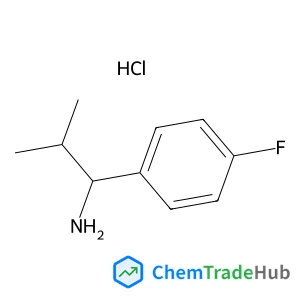
(1R)-1-(4-Fluorophenyl)-2-methyl-1-propanamine hydrochloride (1:1)
CAS番号:
1213329-40-8
分子式:
C10H15ClFN
おすすめサプライヤー





免責事項
このページに表示される学術雑誌情報は、参考および研究目的のみを目的としています。当社は雑誌出版社とは提携しておらず、投稿の取り扱いも行っておりません。出版に関するお問い合わせは、各雑誌出版社に直接ご連絡ください。
表示されている情報に誤りがある場合は、support@chemtradehub.com までご連絡ください。迅速に確認し、対応いたします。