












Topological engineering of amphiphilic copolymers via RAFT dispersion copolymerization of benzyl methacrylate and 2-(perfluorooctyl)ethyl methacrylate for polymeric assemblies with tunable nanostructures
文献情報
出版日
2018-01-24
DOI
10.1039/C8PY00029H
インパクトファクター
5.582
著者
Min Zeng, Decheng Wu, Yen Wei, Jinying Yuan
原文を見る
要旨
The influence of polymer topology on the nanostructure of amphiphilic copolymer assemblies has been less studied. In this contribution, we regulated the topology of the solvophobic block of poly(N,N-dimethylamino ethyl methacrylate)-b-poly(benzyl methacrylate-co-2-perfluorooctyl ethyl methacrylate) [PDMA-b-P(BzMA-co-FMA)] by reversible addition–fragmentation chain transfer (RAFT) dispersion copolymerization of BzMA and FMA at varying feed ratios. The influence of the variation in the polymer topology on the nanostructure of the corresponding assemblies was evaluated. With the increment of the FMA wt% within the solvophobic block, the size of the PDMA-b-P(BzMA-co-FMA) vesicles increases accordingly. Besides, for PDMA-b-P(BzMA-co-FMA) copolymers whose molecular weights of the solvophobic block range from 88 to 141k, by adjusting the feed ratio of BzMA/FMA, a rich variety of nanostructures were fabricated, including large compound micelles, large compound vesicles, hexagonally packed hollow hoops and nanoporous spheres. Our results indicate that topological engineering of the amphiphilic copolymers via RAFT dispersion copolymerization could be an efficient approach for regulating the nanostructure of polymer assemblies.
関連文献
Stabilities and electronic properties of monolayer MoS2 with one or two sulfur line vacancy defects
Yang Han, Ting Hu, Rui Li, Jian Zhou, Jinming Dong
2014-12-12
Paper
DOI: 10.1039/C4CP04319G
Reporter-encapsulated liposomes on graphene field effect transistors for signal enhanced detection of physiological enzymes
Mark Platt
2014-12-11
Paper
DOI: 10.1039/C4CP04644G
Solution vs. gas phase relative stability of the choline/acetylcholine cavitand complexes
Hassan Abdoul-Carime, Bernadette Farizon, Michel Farizon, Jean-Christophe Mulatier, Jean-Pierre Dutasta, Henry Chermette
2015-01-12
Paper
DOI: 10.1039/C4CP05354K
Galvanic deposition of Rh and Ru on randomly structured Ti felts for the electrochemical NH3 synthesis
Kurt Kugler, Mareike Luhn, Jean André Schramm, Khosrow Rahimi
2014-12-16
Paper
DOI: 10.1039/C4CP05501B
Explicit calculation of the excited electronic states of the photosystem II reaction centre
2014-12-15
Paper
DOI: 10.1039/C4CP04468A
Large-scale virtual high-throughput screening for the identification of new battery electrolyte solvents: computing infrastructure and collective properties
Tamara Husch, Nusret Duygu Yilmazer, Andrea Balducci, Martin Korth
2014-12-10
Paper
DOI: 10.1039/C4CP04338C
Laser-induced fast fusion of gold nanoparticle-modified polyelectrolyte microcapsules
Yingjie Wu, Johannes Frueh, Tieyan Si, Helmuth Möhwald, Qiang He
2014-12-09
Paper
DOI: 10.1039/C4CP05231E
Al20+ does melt, albeit above the bulk melting temperature of aluminium
Udbhav Ojha, Krista G. Steenbergen, Nicola Gaston
2014-12-16
Paper
DOI: 10.1039/C4CP05143B
Magnetic γ-Fe2O3, Fe3O4, and Fe nanoparticles confined within ordered mesoporous carbons as efficient microwave absorbers
Jiacheng Wang, Jiandong Zhuang, Qian Liu
2014-12-11
Paper
DOI: 10.1039/C4CP04228J
ReaxFF molecular dynamics simulations on lithiated sulfur cathode materials
Md Mahbubul Islam, Alireza Ostadhossein, Oleg Borodin, A. Todd Yeates, William W. Tipton, Richard G. Hennig, Nitin Kumar, Adri C. T. van Duin
2014-12-16
Paper
DOI: 10.1039/C4CP04532G
こちらもおすすめ
化合物よくある質問
2-ブロモ-9,9-ジフェニル-9H-フルオレンの主な用途は何ですか?
2-溴-9,9-二苯基芴は、医薬品、工業材料、有機合成の研究分野で応用されます。特に、レーザー材料や機能性ポリマーの合成に使用されることがあります。また、蛍光色...
474918-32-62-Bromo-9,9-diphenyl...
化合物よくある質問
四氯化铱の市場動向や研究トレンドはどうですか?
四氯化铱の市場は研究開発分野で注目されており、特にナノ技術や金属有機框架(MOFs)の分野での需要が増加傾向にあります。価格は安定しており、中国や韓国での生産が...
207399-11-9Tetrachloroiridium h...
882-06-44-Nitrocinnamic acid
化合物よくある質問
1-(4-溴-3-氟苯基)-2-氯乙酮を含む廃棄物はどのように処理すべきですか?
1-(4-溴-3-氟苯基)-2-氯乙酮 (CAS番号: 1260857-14-4) の廃棄物は専門的な廃棄処理が必要です。まず、廃棄物は密閉された容器に収集し、...
1260857-14-41-(4-Bromo-3-fluorop...
化合物よくある質問
苦参酚Kとは何ですか?
苦参酚Kは、CAS番号101236-49-1を持つ化合物で、主に天然由来の生薬から抽出されます。この化合物は、抗炎症作用や抗癌作用を持つことが報告されています。
101236-49-1Kushenol K
化合物よくある質問
POTASSIUM (1-(TERTBUTOXYCARBONYL)AZETIDIN-3-YL)TRIFLUOROBORATE を含む廃棄物はどのように処理すべきですか?
POTASSIUM (1-(TERTBUTOXYCARBONYL)AZETIDIN-3-YL)TRIFLUOROBORATE を含む廃棄物は、まず安全なエント...
1430219-73-0Potassium (1-(tert-b...
化合物よくある質問
4-庚基-4’-联苯羧酸の市場動向や研究トレンドはどうですか?
4-庚基-4’-聯苯羧酸は、特殊化学品や合成化学の分野で用いられる化学物質ですが、市場動向としては、研究開発の進展とともに需要が増加しています。また、環境配慮型...
58573-94-74'-Heptyl-4-biphenyl...
化合物よくある質問
6-ブロモ-3-メトキシ-1-フェニル-1H-インドゾールを含む廃棄物はどのように処理すべきですか?
6-ブロモ-3-メトキシ-1-フェニル-1H-インドゾールを含む廃棄物は、適切な化学廃棄処理が必要です。通常、廃棄物は密閉容器に収集され、専門の廃棄処理業者に引...
1332527-03-36-Bromo-3-methoxy-1-...
化合物よくある質問
4,4-二甲基-2-吡咯烷酮はどの業界で使用されていますか?
4,4-二甲基-2-吡咯烷酮は医薬、ポリマー、センサー、半導体などの業界で広く使用されています。特に溶媒としての性能が高く評価されています。
66899-02-34,4-dimethylpyrrolid...
51312-42-6Sodium Phosphotungst...
掲載誌
Polymer Chemistry

CiteScore:
8.6
自己引用率:
7.3%
年間論文数:
457
Polymer Chemistry welcomes submissions in all areas of polymer science that have a strong focus on macromolecular chemistry. Manuscripts may cover a broad range of fields, yet no direct application focus is required.
おすすめ化合物
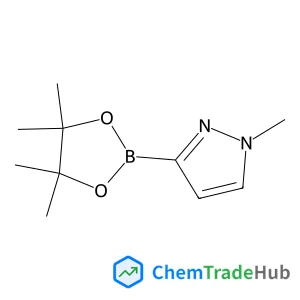
1-Methyl-3-(4,4,5,5-tetramethyl-1,3,2-dioxaborolan-2-yl)-1H-pyrazole
CAS番号:
1020174-04-2
分子式:
C10H17BN2O2
![1-Naphthalenesulfonic acid, 2-[(2-hydroxy-1-naphthalenyl)azo]-, bariumsalt (2:1) structure](https://static.chemtradehub.com/structs/110/1103-38-4-0b33.webp "1-Naphthalenesulfonic acid, 2-[(2-hydroxy-1-naphthalenyl)azo]-, bariumsalt (2:1) structure")
1-Naphthalenesulfonic acid, 2-[(2-hydroxy-1-naphthalenyl)azo]-, bariumsalt (2:1)
CAS番号:
1103-38-4
分子式:
C20H14BaN2O4S
おすすめサプライヤー





免責事項
このページに表示される学術雑誌情報は、参考および研究目的のみを目的としています。当社は雑誌出版社とは提携しておらず、投稿の取り扱いも行っておりません。出版に関するお問い合わせは、各雑誌出版社に直接ご連絡ください。
表示されている情報に誤りがある場合は、support@chemtradehub.com までご連絡ください。迅速に確認し、対応いたします。