












Metal-free, base promoted sp2 C–H functionalization in the sulfonamidation of 1,4-naphthoquinones
文献情報
出版日
2018-06-30
DOI
10.1039/C8OB00818C
インパクトファクター
3.876
著者
Ramanathan Devenderan
原文を見る
要旨
A novel, metal-free, base promoted sp2 C–H functionalization in the sulfonamidation of 1,4-naphthoquinones via a [3 + 2] cycloaddition reaction using sulfonyl azides under mild reaction conditions is reported. In this straightforward atom- and step-economical protocol, the active alkene moiety of quinone undergoes a thermal azide–alkene [3 + 2] cycloaddition followed by proton abstraction, ring opening and elimination of a nitrogen molecule to form sulfonamidation products in good yield and all the synthesized sulfonamidation derivatives exhibit good absorption and emission characteristics. In addition, the electrochemical properties of both 1,4-naphthoquinone and menadione sulfonamidation derivatives are studied and significant redox potentials are observed. Other important features of this methodology are readily accessible and easy to handle starting materials, milder conditions, reaction with a wide range of substrates and shorter reaction times with good yields.
関連文献
Ultra-fast and scalable sidewall functionalisation of single-walled carbon nanotubes with carboxylic acid
Brenda Long, Tan Man Wu, Francesco Stellacci
2008-04-16
Communication
DOI: 10.1039/B719380G
Large mixed metal nitride clusters encapsulated in a small cage: the confinement of the C68-based clusterfullerenes
Lothar Dunsch
2008-04-18
Communication
DOI: 10.1039/B803200A
Perpendicular mesoporous Pt thin films: electrodeposition from titania nanopillars and their electrochemical properties
Satoshi Tominaka, Chia-Wen Wu, Toshiyuki Momma, Kazuyuki Kuroda, Tetsuya Osaka
2008-04-21
Communication
DOI: 10.1039/B803225D
A mechanistic rationalization of unusual kinetic behavior in proline-mediated C–O and C–N bond-forming reactions
Suju P. Mathew, Martin Klussmann, Hiroshi Iwamura, David H. Wells, Jr., Alan Armstrong
2006-08-31
Communication
DOI: 10.1039/B609926B
Highly conductive Ni steam reforming catalysts prepared by electrodeposition
Francesco Basile, Patricia Benito, Pascal Del Gallo, Giuseppe Fornasari, Daniel Gary, Valentina Rosetti, Erika Scavetta, Domenica Tonelli, Angelo Vaccari
2008-04-18
Communication
DOI: 10.1039/B801645C
Reciprocal template effects in a simple synthetic system
Eleftherios Kassianidis, Douglas Philp
2006-09-05
Communication
DOI: 10.1039/B608148G
Silver-catalyzed hydrosilylation of aldehydes
Bradley M. Wile, Mark Stradiotto
2006-08-23
Communication
DOI: 10.1039/B609679D
A rare unsupported iridium(ii) dimer, [IrCl2(CO)2]2
Sanjib K. Patra, S. M. Wahidur Rahaman, Moumita Majumdar, Arup Sinha, Jitendra K. Bera
2008-05-02
Communication
DOI: 10.1039/B803632B
Novel immobilization method of enzymes using a hydrophilic polymer support
Juta Kobayashi, Yuichiro Mori, Shū Kobayashi
2006-08-30
Communication
DOI: 10.1039/B609335C
こちらもおすすめ
28770-01-62-(2-Isopropyl-1,3-o...
化合物よくある質問
「邻羟基阿托伐他汀内酯标准品」に適用される法規ガイドelinesは何ですか?
CAS番号163217-74-1の「邻羟基阿托伐他汀内酯标准品」は、GHS分類では危険物に分類されず、主にREACH規則とFDA/EPAの管理対象となります。R...
163217-74-1ortho-Hydroxy Atorva...
化合物よくある質問
メチル(3R)-3-アミノ-2,3-ジヒドロ-1-ベンゾファンラニン-5-カルボイル酸塩塩酸塩の主な用途は何ですか?
メチル(3R)-3-アミノ-2,3-ジヒドロ-1-ベンゾファンラニン-5-カルボイル酸塩塩酸塩は、医薬品や合成化学の研究に広く用いられます。また、特定の薬物の前...
2241594-15-8Methyl (3R)-3-amino-...
化合物よくある質問
トランス-4-メチルピロリジン-3-オール塩酸塩はどのように合成されますか?
トランス-4-メチルピロリジン-3-オール塩酸塩は、4-メチルピロリジンの塩酸塩化によって合成されます。一般的な合成方法では、4-メチルピロリジンを塩酸に加えて...
265108-42-7trans-4-Methylpyrrol...
化合物よくある質問
硫雜環丁烷-1,1-二氧化物は安全ですか?
硫雜環丁烷-1,1-二氧化物は安全ではありません。毒性は報告されていませんが、高温下で分解し、可燃性があるため、高圧ガスは注意が必要です。密閉した容器で保管し、...
5687-92-3Thietane 1,1-dioxide
6054-10-02H, 8H-Benzo[1,2-b
化合物よくある質問
9-ヒドロキシエリプチシネ塩酸塩はどのように合成されますか?
9-ヒドロキシエリプチシネ塩酸塩は、エリプチシネから塩酸を添加することで合成されます。選択性は高いですが、収率は約70%です。
52238-35-49-Hydroxyellipticine...
化合物よくある質問
5-塩素-2-(メチルアミノ)フェニル-(2-塩素フェニル)メタン酮の物理化学的性質は何ですか?
5-塩素-2-(メチルアミノ)フェニル-(2-塩素フェニル)メタン酮のCAS番号は5621-86-3です。この化合物は白色の結晶性粉末で、分子量は415.03で...
5621-86-3[5-Chloro-2-(methyla...
化合物よくある質問
1-[2-(4-甲氧基-苯氧基)-乙基]-哌嗪はどのように保存すればよいですか?
1-[2-(4-甲氧基-苯氧基)-乙基]-哌嗪は、直射日光を避けて暗所に、室温(15-25℃)で保管し、密閉容器に入れることで安定性を保つことができます。
117132-44-21-[2-(4-Methoxy-phen...
化合物よくある質問
2-[3-(4-甲氧基フェニル)プロピル]-4,4,5,5-四メチル-1,3,2-ドイボロロールアンの主な用途は何ですか?
2-[3-(4-甲氧基フェニル)プロピル]-4,4,5,5-四メチル-1,3,2-ドイボロロールアンは、医薬品の合成、有機合成化学、および新材料の研究で使用され...
1073371-72-82-[3-(4-Methoxypheny...
掲載誌
Organic & Biomolecular Chemistry

CiteScore:
3.4
自己引用率:
10.3%
年間論文数:
1041
Organic & Biomolecular Chemistry (OBC) publishes original and high impact research and reviews in organic chemistry. We welcome research that shows new or significantly improved protocols or methodologies in total synthesis, synthetic methodology or physical and theoretical organic chemistry as well as research that shows a significant advance in the organic chemistry or molecular design aspects of chemical biology, catalysis, supramolecular and macromolecular chemistry, theoretical chemistry, mechanism-oriented physical organic chemistry, medicinal chemistry or natural products. Articles published in the journal should report new work which makes a highly-significant impact in the field. Routine and incremental work is generally not suitable for publication in the journal. More details about key areas of our scope are below. In all cases authors should include in their article clear rationale for why their research has been carried out.
おすすめ化合物
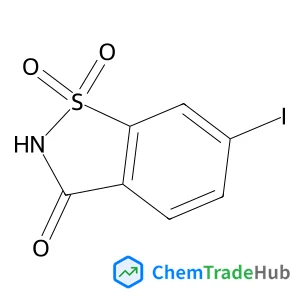
![N-[2-(4-Hydroxyphenoxy)-4-nitrophenyl]methanesulfonamide structure](https://static.chemtradehub.com/structs/109/109032-22-6-7c88.webp "N-[2-(4-Hydroxyphenoxy)-4-nitrophenyl]methanesulfonamide structure")
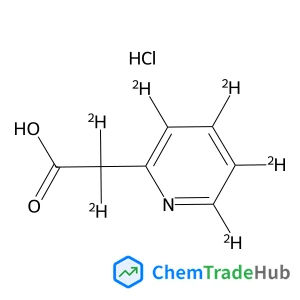
2,2-dideuterio-2-(3,4,5,6-tetradeuterio-2-pyridyl)acetic acid;hydrochloride
CAS番号:
1329799-67-8
分子式:
C7H2ClD6NO2
おすすめサプライヤー




免責事項
このページに表示される学術雑誌情報は、参考および研究目的のみを目的としています。当社は雑誌出版社とは提携しておらず、投稿の取り扱いも行っておりません。出版に関するお問い合わせは、各雑誌出版社に直接ご連絡ください。
表示されている情報に誤りがある場合は、support@chemtradehub.com までご連絡ください。迅速に確認し、対応いたします。