












![4-{2-[4-(2-Methyl-2-propanyl)phenyl]ethoxy}quinazoline structure](https://static.chemtradehub.com/structs/120/120928-09-8-d3db.webp "4-{2-[4-(2-Methyl-2-propanyl)phenyl]ethoxy}quinazoline structure")
Elastic properties of liquid and glassy propane-based alcohols under high pressure: the increasing role of hydrogen bonds in a homologous family
文献情報
出版日
2019-01-11
DOI
10.1039/C8CP07588C
インパクトファクター
3.676
著者
E. L. Gromnitskaya, V. V. Brazhkin
原文を見る
要旨
We have measured the elastic moduli of liquid and glassy n-propanol and propylene glycol (PG) under pressure by ultrasonic techniques and have recalculated similar characteristics for glycerol from the previous experiment. All three substances form a ternary homologous family with the common formula C3H8−n(OH)n (n = 1, 2, 3), where the number of hydrogen bonds per molecule increases with the number of oxygen atoms approximately as ≈2n. In turn, the enhancement of hydrogen bonding results in an increase in elastic moduli (bulk modulus for liquids or bulk and shear moduli for glasses) from n-propanol to glycerol at all pressures, while the volume per molecule Vm shows the opposite trend at atmospheric pressure in spite of an increase in the molecular size. Nevertheless, the ratios between the Vm values at pressure P > 0.05 GPa are inverted in liquids and tend to the ratios of molecule volumes which indicates a decrease of the relative contribution of hydrogen bonds to the repulsive intermolecular forces with increasing pressure regardless of increase or decrease in the number of hydrogen bonds and their strength. A similar volume behavior is observed for glasses at T = 77 K. We have also established that the relative difference between corresponding moduli of liquid or glassy n-propanol and PG is remarkably less than that between corresponding values for PG and glycerol. We explain this property by the formation of a three-dimensional network of hydrogen bonds in glycerol, where the number of hydrogen bonds per molecule is close to six.
関連文献
Advantages and limitations of diisocyanates in intramolecular collapse
Feng Wang, Charles E. Diesendruck
2017-05-26
Paper
DOI: 10.1039/C7PY00712D
Preparation of graphene/poly(2-acryloxyethyl ferrocenecarboxylate) nanocomposite via a “grafting-onto” strategy
Yan Deng, Wenbin Liu, Yongjun Li, Xiaoyu Huang
2017-12-04
Paper
DOI: 10.1039/C7PY01932G
Polymer side-chain substituents elucidate thermochromism of benzodithiophene–dithiophenylacrylonitrile copolymers – polymer solubility correlation of thermochromism and photovoltaic performance
Chiao-Wen Lin, Chao-Tsen Chen, Jan Golder
2017-05-23
Paper
DOI: 10.1039/C7PY00338B
Polymerization of alkyl diazoacetates initiated by the amidinate/Pd system: efficient synthesis of high molecular weight poly(alkoxycarbonylmethylene)s with moderate stereoregularity
Hiroaki Shimomoto, Junya Kawamata, Hirokazu Murakami, Kazuki Yamashita, Tomomichi Itoh, Eiji Ihara
2017-06-19
Paper
DOI: 10.1039/C7PY00816C
One-pot and gram-scale synthesis of biodegradable polyglycerols under ambient conditions: nanocarriers for intradermal drug delivery
Zhaoxu Tu, Sarah Hedtrich, Ali Nemati Kharat, Rainer Haag
2017-11-21
Paper
DOI: 10.1039/C7PY01470H
Discotic columnar liquid-crystalline polymer semiconducting materials with high charge-carrier mobility via rational macromolecular engineering
Bin Mu, Xingtian Hao, Jian Chen, Qian Li, Chunxiu Zhang, Dongzhong Chen
2017-04-24
Paper
DOI: 10.1039/C7PY00364A
Light-responsive polymer brushes: active topographic cues for cell culture applications
A. C. Manikas, V. Pagliarulo, P. Ferraro, S. Cavalli
2017-04-28
Paper
DOI: 10.1039/C7PY00462A
A nanoparticle-preparation kit using ethylene glycol-based block copolymers with a common temperature-responsive block
Chun Man Lee, Iren Constantinescu, Lily E. Takeuchi, Sreeparna Vappala, Ravin Narain, Takao Aoyagi
2017-11-22
Communication
DOI: 10.1039/C7PY01541K
A supramolecular peptide polymer from hydrogen-bond and coordination-driven self-assembly
Xiaomin Zhu, Rongfeng Zou, Peng Sun, Qi Wang, Junchen Wu
2017-12-05
Paper
DOI: 10.1039/C7PY01901G
こちらもおすすめ
化合物よくある質問
2-ブロモ-9,9-ジフェニル-9H-フルオレンの主な用途は何ですか?
2-溴-9,9-二苯基芴は、医薬品、工業材料、有機合成の研究分野で応用されます。特に、レーザー材料や機能性ポリマーの合成に使用されることがあります。また、蛍光色...
474918-32-62-Bromo-9,9-diphenyl...
化合物よくある質問
四氯化铱の市場動向や研究トレンドはどうですか?
四氯化铱の市場は研究開発分野で注目されており、特にナノ技術や金属有機框架(MOFs)の分野での需要が増加傾向にあります。価格は安定しており、中国や韓国での生産が...
207399-11-9Tetrachloroiridium h...
882-06-44-Nitrocinnamic acid
化合物よくある質問
1-(4-溴-3-氟苯基)-2-氯乙酮を含む廃棄物はどのように処理すべきですか?
1-(4-溴-3-氟苯基)-2-氯乙酮 (CAS番号: 1260857-14-4) の廃棄物は専門的な廃棄処理が必要です。まず、廃棄物は密閉された容器に収集し、...
1260857-14-41-(4-Bromo-3-fluorop...
化合物よくある質問
苦参酚Kとは何ですか?
苦参酚Kは、CAS番号101236-49-1を持つ化合物で、主に天然由来の生薬から抽出されます。この化合物は、抗炎症作用や抗癌作用を持つことが報告されています。
101236-49-1Kushenol K
化合物よくある質問
POTASSIUM (1-(TERTBUTOXYCARBONYL)AZETIDIN-3-YL)TRIFLUOROBORATE を含む廃棄物はどのように処理すべきですか?
POTASSIUM (1-(TERTBUTOXYCARBONYL)AZETIDIN-3-YL)TRIFLUOROBORATE を含む廃棄物は、まず安全なエント...
1430219-73-0Potassium (1-(tert-b...
化合物よくある質問
4-庚基-4’-联苯羧酸の市場動向や研究トレンドはどうですか?
4-庚基-4’-聯苯羧酸は、特殊化学品や合成化学の分野で用いられる化学物質ですが、市場動向としては、研究開発の進展とともに需要が増加しています。また、環境配慮型...
58573-94-74'-Heptyl-4-biphenyl...
化合物よくある質問
6-ブロモ-3-メトキシ-1-フェニル-1H-インドゾールを含む廃棄物はどのように処理すべきですか?
6-ブロモ-3-メトキシ-1-フェニル-1H-インドゾールを含む廃棄物は、適切な化学廃棄処理が必要です。通常、廃棄物は密閉容器に収集され、専門の廃棄処理業者に引...
1332527-03-36-Bromo-3-methoxy-1-...
化合物よくある質問
4,4-二甲基-2-吡咯烷酮はどの業界で使用されていますか?
4,4-二甲基-2-吡咯烷酮は医薬、ポリマー、センサー、半導体などの業界で広く使用されています。特に溶媒としての性能が高く評価されています。
66899-02-34,4-dimethylpyrrolid...
51312-42-6Sodium Phosphotungst...
掲載誌
Physical Chemistry Chemical Physics

CiteScore:
5.5
自己引用率:
10.3%
年間論文数:
3036
Physical Chemistry Chemical Physics (PCCP) is an international journal co-owned by 19 physical chemistry and physics societies from around the world. This journal publishes original, cutting-edge research in physical chemistry, chemical physics and biophysical chemistry. To be suitable for publication in PCCP, articles must include significant innovation and/or insight into physical chemistry; this is the most important criterion that reviewers and Editors will judge against when evaluating submissions. The journal has a broad scope and welcomes contributions spanning experiment, theory, computation and data science. Topical coverage includes spectroscopy, dynamics, kinetics, statistical mechanics, thermodynamics, electrochemistry, catalysis, surface science, quantum mechanics, quantum computing and machine learning. Interdisciplinary research areas such as polymers and soft matter, materials, nanoscience, energy, surfaces/interfaces, and biophysical chemistry are welcomed if they demonstrate significant innovation and/or insight into physical chemistry. Joined experimental/theoretical studies are particularly appreciated when complementary and based on up-to-date approaches.
おすすめ化合物
![[4-(Heptyloxy)phenyl]boronic acid structure](https://static.chemtradehub.com/structs/136/136370-19-9-ad33.webp "[4-(Heptyloxy)phenyl]boronic acid structure")
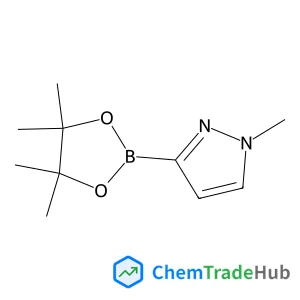
1-Methyl-3-(4,4,5,5-tetramethyl-1,3,2-dioxaborolan-2-yl)-1H-pyrazole
CAS番号:
1020174-04-2
分子式:
C10H17BN2O2
おすすめサプライヤー





免責事項
このページに表示される学術雑誌情報は、参考および研究目的のみを目的としています。当社は雑誌出版社とは提携しておらず、投稿の取り扱いも行っておりません。出版に関するお問い合わせは、各雑誌出版社に直接ご連絡ください。
表示されている情報に誤りがある場合は、support@chemtradehub.com までご連絡ください。迅速に確認し、対応いたします。