


![(3R)-3-(3-Fluorophenyl)-3-({[(2-methyl-2-propanyl)oxy]carbonyl}amino)propanoic acid structure](https://static.chemtradehub.com/structs/500/500789-04-8-20dd.webp "(3R)-3-(3-Fluorophenyl)-3-({[(2-methyl-2-propanyl)oxy]carbonyl}amino)propanoic acid structure")
Effects of the long octyl chain on complex formation of nickel(ii) with dimethyl sulfoxide, methanol, and acetonitrile in ionic liquid of [C8mim][TFSA]
文献情報
出版日
2019-01-08
DOI
10.1039/C8CP06345A
インパクトファクター
3.676
著者
Toshiyuki Takamuku, Hiroyuki Sakurai, Akira Ogawa, Atsuya Tashiro, Masahiro Kawano, Yutaro Kawazu, Koichiro Sadakane, Hiroki Iwase, Kazuhiko Ozutsumi
原文を見る
要旨
In the room-temperature ionic liquid (IL) of 1-methyl-3-octylimidazolium bis(trifluoromethylsulfonyl)amide ([C8mim][TFSA]), the complex formation of Ni2+ with molecular liquids (MLs), dimethyl sulfoxide (DMSO), methanol (MeOH), and acetonitrile (AN), has been examined using ultraviolet (UV)-visible spectroscopy. The overall stability constants log βn, enthalpies , and entropies of the equilibria have been determined to elucidate the mechanism of complex formation. From a comparison of such thermodynamic parameters of the present [C8mim][TFSA] systems with those of the previous systems of 1-ethyl-3-methylimidazolium-based IL, [C2mim][TFSA], the effects of the octyl chain of the imidazolium cation, [C8mim]+, on the complex formation of Ni2+ with MLs have been demonstrated. In [C8mim][TFSA]–ML systems, more stable complexes are formed with MLs in the sequence of AN > DMSO ≫ MeOH. This sequence differs from that of DMSO ≫ AN > MeOH in [C2mim][TFSA]. For the AN systems, the stabilities of [Ni(an)n] in [C8mim][TFSA] are higher as compared to those in [C2mim][TFSA]. In contrast, for the DMSO systems, [Ni(dmso)n] is less stable in the IL with the longer alkyl chain than that in the IL with the shorter chain. The dependence of the alkyl chain length on the stabilities of [Ni(meoh)n] is the least significant among the three MLs. These varieties of the stabilities of Ni2+ complexes with the MLs have been interpreted from the thermodynamic parameters, together with the static interactions in the [C8mim][TFSA]–ML and [C2mim][TFSA]–ML solvents observed by means of 1H and 13C NMR, small-angle neutron scattering (SANS), and infrared (IR) with an ATR diamond prism.
おすすめジャーナル

Saudi Pharmaceutical Journal

Drug Discovery Today

Journal of Natural Medicines

Russian Journal of Organic Chemistry

Acta Materialia

Russian Journal of Applied Chemistry

Organic Process Research & Development

Nature Medicine

Russian Journal of Bioorganic Chemistry

Current Opinion in Solid State & Materials Science
関連文献
Tuning phase transitions of aqueous protein solutions by multivalent cations
Olga Matsarskaia, Felix Roosen-Runge, Gudrun Lotze, Johannes Möller, Alessandro Mariani, Fajun Zhang, Frank Schreiber
2018-10-18
Paper
DOI: 10.1039/C8CP05884A
Quantifying the conceptual problems associated with the isotropic NICS through analyses of its underlying density
Guillaume Acke, Sofie Van Damme, Remco W. A. Havenith, Patrick Bultinck
2019-01-24
Paper
DOI: 10.1039/C8CP07343K
Effect of polyhedron deformation on the 5d energy level of Ce3+ in lanthanide aluminum perovskites
Quanlin Liu
2019-01-07
Paper
DOI: 10.1039/C8CP06052E
Control of TiN oxidation upon atomic layer deposition of oxides
E. O. Filatova, S. S. Sakhonenkov, A. S. Konashuk, V. V. Afanas’ev
2018-10-22
Paper
DOI: 10.1039/C8CP06076B
Visible photodissociation of the CO2 dimer cation: fast and slow dissociation dynamics in the excited state
Yuji Nakashima, Kenichi Okutsu, Keita Fujimoto, Yuri Ito, Manabu Kanno, Keijiro Ohshimo, Hirohiko Kono, Fuminori Misaizu
2019-01-10
Paper
DOI: 10.1039/C8CP07068G
Mechanical, thermal, and electrochemical properties of Pr doped ceria from wafer curvature measurements
Yuxi Ma, Jason D. Nicholas
2018-10-20
Paper
DOI: 10.1039/C8CP04802A
Plasmon-coupled charge transfer in WO3−x semiconductor nanoarrays: toward highly uniform silver-comparable SERS platforms
Xiangyu Hou, Xiaoguang Luo, Xingce Fan, Zhaohui Peng, Teng Qiu
2019-01-04
Paper
DOI: 10.1039/C8CP07305H
Theoretical modelling of the dynamics of primary photoprocess of cyclopropanone
Michael Filatov, Seung Kyu Min, Cheol Ho Choi
2019-01-08
Paper
DOI: 10.1039/C8CP07104G
Quantification of hyperpolarisation efficiency in SABRE and SABRE-Relay enhanced NMR spectroscopy
Peter M. Richardson, Richard O. John, Andrew J. Parrott, Peter J. Rayner, Wissam Iali, Alison Nordon, Meghan E. Halse, Simon B. Duckett
2018-10-10
Paper
DOI: 10.1039/C8CP05473H
こちらもおすすめ
化合物よくある質問
間溴苯甲酰腈の市場動向や研究トレンドはどうですか?
間 brom 苯甲酰腈は、合成化学や薬物化学において重要な Intermediate として使用されています。市場動向としては、その合成性と機能性により、研究開...
24999-51-7(3-Bromophenyl)(oxo)...
287966-62-5Desulfo Glucoraphani...
化合物よくある質問
Methyl 2-amino-5-(trifluoromethyl)benzoateに適用される法規ガイドラインは何ですか?
CAS番号117324-58-0の塩酸メチル2アミノ-5-トリフルオロメチルベンゼートは、GHS分類により腐食性物質と判定されます。REACH規則では、製造、販...
117324-58-0Methyl 2-amino-5-(tr...
化合物よくある質問
3-ブロモ-1,3,4,5-四水化-2H-1-ベンザアゼピン-2-オンは安全ですか?
毒性があるため、適切な安全対策が必須です。皮膚や粘膜への刺激性が強く、吸入や誤飲により健康被害を引き起こす可能性があります。取扱時にはガスマスクや手袋、眼鏡を使...
86499-96-93-Bromo-1,3,4,5-tetr...
化合物よくある質問
三氟甲基ピリジン-2-甲アミン塩酸塩は安全ですか?
三氟甲基ピリジン-2-甲アミン塩酸塩は安全性に注意が必要です。毒性は低レベルですが、直接的接触や吸入は避けるべきです。適切な手袋や防塵マスクを着用し、密閉された...
871826-12-9(5-(Trifluoromethyl)...
化合物よくある質問
1-エチル-4-(4-硝基フェニル)ピペリジンは安全ですか?
1-エチル-4-(4-硝基フェニル)ピペリジンは有毒であり、取扱には注意が必要です。保管や作業中に手袋を着用し、目や皮膚に接触しないように注意する必要があります...
115619-00-61-Ethyl-4-(4-nitroph...
化合物よくある質問
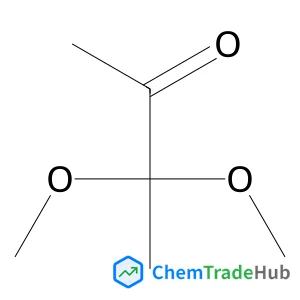
1,1-ジメトキシプロパン-2-オンは安全ですか?
1,1-ジメトキシプロパン-2-オンは一般的に低毒性ですが、皮膚や目への刺激性があるため、取扱いには注意が必要です。蒸気や液体の吸入には有害な可能性があり、適切...
6342-56-91,1-dimethoxypropan-...
化合物よくある質問
コバルト(II) 3,3'-{[(1S,2S)-1,2-ジメチルフENCYCLICALE-1,2-エチエンジイル]ビス[ニトロリルメチルイリデン]}ビス[4-オキソ-2-ペンテン-2-olate]について「に適用される法規ガイドラインは何ですか?
この化合物はCAS番号259259-80-8に対応しています。GHS分類では、毒性、燃焼性、反応性、炎症性を考慮に入れ、適切な危険性分類が行われます。REACH...
259259-80-8Cobalt(2+) (2E,2'E)-...
化合物よくある質問
「カーバミル酸, N-[8-[[2-[[2-(2,6-ジオキソ-3-ピペリジニル)-2,3-ジオキソ-1,3-ジヒドロ-1H-イソイソインドール-4-イルオキシ]アセチル]アミノ]オクチル]-1,1-ジメチレチルエステル」はどのように保存すればよいですか?
この化合物は、冷却庫で-20℃の温度、乾燥した容器に保管し、直日光から保護する必要があります。湿度の高い環境や高温は避けてください。
1950635-34-32-Methyl-2-propanyl ...
1433975-21-3FMoc-D-4-Aph(tBu-CbM...
掲載誌
Physical Chemistry Chemical Physics

CiteScore:
5.5
自己引用率:
10.3%
年間論文数:
3036
Physical Chemistry Chemical Physics (PCCP) is an international journal co-owned by 19 physical chemistry and physics societies from around the world. This journal publishes original, cutting-edge research in physical chemistry, chemical physics and biophysical chemistry. To be suitable for publication in PCCP, articles must include significant innovation and/or insight into physical chemistry; this is the most important criterion that reviewers and Editors will judge against when evaluating submissions. The journal has a broad scope and welcomes contributions spanning experiment, theory, computation and data science. Topical coverage includes spectroscopy, dynamics, kinetics, statistical mechanics, thermodynamics, electrochemistry, catalysis, surface science, quantum mechanics, quantum computing and machine learning. Interdisciplinary research areas such as polymers and soft matter, materials, nanoscience, energy, surfaces/interfaces, and biophysical chemistry are welcomed if they demonstrate significant innovation and/or insight into physical chemistry. Joined experimental/theoretical studies are particularly appreciated when complementary and based on up-to-date approaches.
おすすめ化合物
![(1S,4aR,5R,7S,7aS)-1-(beta-D-Glucopyranosyloxy)-5-hydroxy-7-methyl-1,4a,5,6,7,7a-hexahydrocyclopenta[c]pyran-7-yl alpha-D-galactopyranoside structure](https://static.chemtradehub.com/structs/817/81720-07-2-4ffd.webp "(1S,4aR,5R,7S,7aS)-1-(beta-D-Glucopyranosyloxy)-5-hydroxy-7-methyl-1,4a,5,6,7,7a-hexahydrocyclopenta[c]pyran-7-yl alpha-D-galactopyranoside structure")
おすすめサプライヤー





免責事項
このページに表示される学術雑誌情報は、参考および研究目的のみを目的としています。当社は雑誌出版社とは提携しておらず、投稿の取り扱いも行っておりません。出版に関するお問い合わせは、各雑誌出版社に直接ご連絡ください。
表示されている情報に誤りがある場合は、support@chemtradehub.com までご連絡ください。迅速に確認し、対応いたします。